The Road to 16 February 1969
How the Right and the Left Defined It
In the 1960s, İlhan Egemen Darendelioğlu, who had served as chairman of the Turkish Association for the Struggle Against Communism, described the events of 16 February 1969 as "the NATIONAL reaction, by a conscious mass that believed defending the integrity of the Homeland and Nation was a matter of honor and dignity, against communism and anarchism." According to Darendelioğlu, 16 February was "the communists' uprising, the patriots' outrage."1 For the right, then, as Darendelioğlu's own words suggest, 16 February was a "national reaction against communism and anarchism."
Yusuf Küpeli, who had served as chairman of the Federation of Idea Clubs (FKF), said that 16 February was, beyond being "a simple progressive-reactionary, religious-communist clash," rather "a fight between our people, who were waging a war of independence, and the forces in the hands of imperialism — forces that had sold out, mentally and materially, and been deceived."2 For leftists, 16 February was the day those seeking independence came under attack from pro-Americans.
The political right accused the left of being "Muscovites" — a pejorative term for pro-Soviets; the left accused the right of being pro-American. The two poles of the bipolar world formed a kind of Procrustean bed3 for Turkish politics as well, shaping the country's existing and emerging political forces to fit it, and becoming one of the powerful factors defining its framework.
In the 1960s, Necip Fazıl Kısakürek, one of the leading figures of the right-wing Islamist milieu, compared communism to "scabies" and "the Muscovite flu,"4 while Sezai Karakoç described communism as "humanity's neurosis."5 Necip Fazıl argued that "siding with America is a necessity" as protection against this disease,6 while Mehmet Şevket Eygi held that siding with America was "the lesser evil."7 The right, in this period, built its identity around anticommunism and took its place alongside America. Leftists, with their anti-imperialist stance, took their place against America and alongside the socialist countries. In cases such as the Soviet Union's invasion of Czechoslovakia, however, the left's script broke down: some applauded the invasion, others passed over it in silence, and still others criticized it.
Political Divisions and Polarization
In the 1960s, Turkey's political arena was reshaped by the influence of the bipolar world. The basic divisions that still defined Turkish politics in the 2000s took shape in the 1960s. The earlier "communist versus nationalist-traditionalist" divide gave way to the "right-left" divide. It was in this period that the terms "right" and "left" took on their present-day meaning in Turkish politics. It was also in this period that the split within the "nationalist-traditionalist" camp into "nationalists" and "Islamists" became pronounced, and separate organizations began to form along that line.
These years also saw divisions and splits within the left. The most fundamental split was between Socialist Revolutionaries and National Democratic Revolutionaries. Although the roots of this division lay in a split within the TKP (Communist Party of Turkey) in the 1950s, it was in this period that the division emerged as separate organizations. Another split on this front was the nationality-based one that took shape alongside the leftist youth organizations, through the Revolutionary Eastern Cultural Hearths (DDKO), founded by Kurdish youth. It was in this period that Kurdish youth built their own organizations.
All these divisions carved out their riverbeds in the second half of the 1960s, and those riverbeds have only deepened from that day to this. A very significant share of those doing politics under Turkey's parliamentary roof today, and those holding important positions within the state, came of age amid the conflicts of that period. It was in this process, right in the middle of these divisions, that 16 February took place.
Before turning to Kanlı Pazar itself, this book examines in detail the process of division that would give rise to it, looking closely at both the actors involved and the process itself.
How the Left and the Right Criticized Each Other
Leftist youth — under the influence of the revolutionary wave of '68 that swept and shook the world, and of the Soviet, Chinese, and Cuban revolutions along with the Vietnamese and Palestinian resistance movements — began their journey by embracing Kemalism, which they saw as anti-imperialist,8 and completed it by founding radical armed revolutionary organizations aimed at revolution. Right-wing circles, faced with these developments, acted under a mission to "save the homeland,"9 taking their place alongside America and acting as defenders of the system. The positions each side took shaped their respective colors and characters. Because of these characteristics, left and right criticized each other in turn.
In the eyes of the right, the left is "coup-friendly" because of its kinship with Kemalism, its embrace of the 27 May coup, and its vision of an alliance with the "military-civilian intellectual class." Some take this criticism further still, claiming that the entire youth movement was used and directed by coup plotters.10 These claims draw on the MDD (National Democratic Revolution) theory11 and on the alliances that some of that theory's leading proponents attempted to build with left-leaning circles within the military.12 Those who make these claims can point to examples from the youth's attitudes and actions only by disregarding the changes and transformations leftist youth underwent between the 1960s and the 1970s. Those who bring this criticism also disregard the fact that the main body of leftist youth went on to move beyond both the limits of the TİP's parliamentarism and coup-friendly rhetoric alike, building their own independent organizations.13 In the 1960s, leftist youth followed a trajectory that ran from Kemalism to socialism, and increasingly toward radical armed revolutionary organizations.14
An important criticism of the left's kinship with Kemalism also came from Kurdish youth and intellectuals at the time the DDKO was founded. Members of the DDKO criticized leftist youth for ignoring Kurdish national demands and for deferring the resolution of those demands to after the revolution.15
During this period, leftist youth defined themselves as nationalist, and the language they used in many of their statements resembled that of rightist youth. But evaluating this stance of the leftists by today's criteria, or through the rightists' understanding of nationalism, would produce misleading conclusions. The nationalism of 1960s Turkish leftists was centered on anti-imperialism, and involved taking a nationalist stance against imperialism. The rightists' understanding of nationalism, by contrast, was centered on Turkish nationalism and was inward-looking, aimed at suppressing minorities and the different national demands within the country. Without keeping this distinction and the broader contours of the process in view, it would be an oversimplification to characterize the entire trajectory of the left as nationalist or Kemalist.16
The main criticism directed at the left by the right is that of being beholden to "foreign centers." State publications frequently voice the claim that the TKP functioned as Russia's Turkish bureau.17 Yet it is well known that, in 1960s Turkey, the TKP was far from providing organizational leadership to leftist youth, that even the influence it exerted through well-known TKP figures such as Mihri Belli and Hikmet Kıvılcımlı had diminished considerably by the late 1960s, and that the youth entered into polemics with these very figures while building their own structures. For this reason, the "foreign centers" criticism directed at leftist youth remains rather weak.
Right-wing activists, meanwhile, were criticized by the left — because of their pro-American stance — as being an extension of America in Turkey, and as racist and fascist. The right's war against the left, waged under the "save the homeland" reflex, placed them in the position of defenders of the system. This, on one hand, laid the groundwork for the "counter-guerrilla" accusation that would emerge a decade later, and on the other, increasingly turned these people into the system's operators. Those who were in their twenties in the 1960s went on to gain steadily growing influence in Turkish political life. In 2000s Turkey, these actors from the 1960s occupy many posts, from the presidency to the premiership.
The "save the homeland" outlook was a shared trait of every faction of the right in the 1960s. Formations such as the Commando Camps, which emerged in the late 1960s, appear as evidence of this claim. Likewise, the "the state had it founded" debates surrounding the Mücadele Birliği (MB, Struggle Union), also established in the 1960s, are another example of the suspicion hanging over the right.18 On this matter, the views of Cemil Çiçek — a Justice and Development Party member of parliament who had once been part of the MB's ranks — can be taken into account as an "insider" perspective. Çiçek has said that not just the MB but all "groups of that kind" were founded "with the state's knowledge and involvement."19
One of the key themes uniting the nationalist-traditionalist camp was "Turkish nationalism." This shared ground persisted even after the split of the right into nationalists and Islamists became pronounced in the 1960s. The nationalists, too, went on to split among themselves over time, with one wing insisting on "Turkism" while another gradually embraced the "Turkish-Islamic synthesis." Despite all these divisions, the right's nationalism retained its inward-looking character, and it would take forty years before the right came to acknowledge the existence of different nationalities within Turkey.
The Sixth Fleet at the Center of 16 February
The U.S. Sixth Fleet stood at the center of 16 February. In the second half of the 1960s, every arrival of the Sixth Fleet was protested by leftists. In 1968, Vedat Demircioğlu and Atalay Savaş lost their lives in connection with these protests. When the Sixth Fleet returned again in February 1969, tensions had risen even further. Leftist student, worker, and professional organizations planned a series of actions to protest the Sixth Fleet. The high point of these actions would be the "Workers' March Against Imperialism and Exploitation," to be held in Taksim on 16 February.
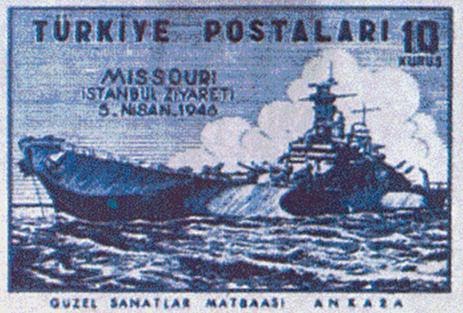
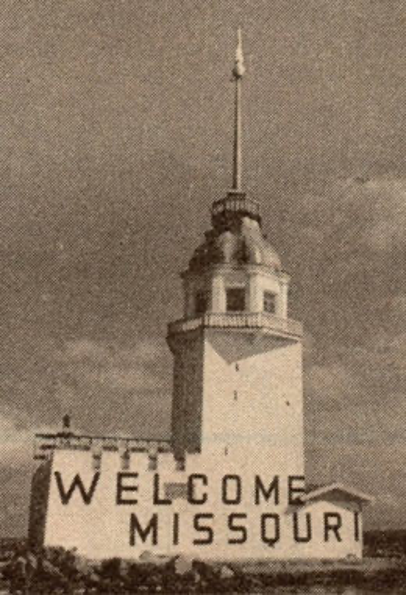
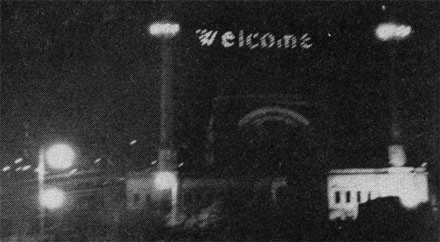
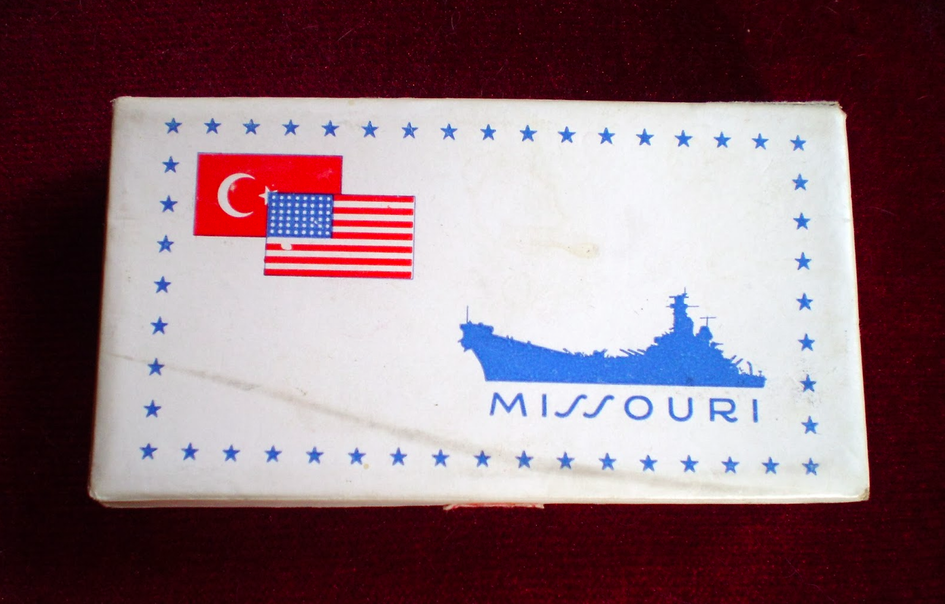
The Sixth Fleet's first arrival in Turkey was in 1946. Stamps were printed, "Welcome" was spelled out on the Maiden's Tower, and the city was specially prepared for the visit.
From 10 February, when the Sixth Fleet dropped anchor off Dolmabahçe, tensions rose day by day. Leftists staged actions against the Sixth Fleet, while rightists took on the role of its defenders. On 11 February, when leftist youth hung a red flag bearing a picture of Vedat Demircioğlu on the fire-watch tower in Beyazıt, the rightist press escalated tensions further still, splashing the headline "a red flag has been raised on the tower" across its front pages. On 14 February, rightists held a "Rally to Honor the Flag," where slogans such as "this is our last verbal warning, next comes action" and "either we silence them completely or we make them spit blood" foreshadowed what was to come.
The articles and news coverage from this period show that the newspaper Bugün, and its chief columnist Mehmet Şevket Eygi, occupied a particular place in this process. Eygi's calls for jihad against communism, and the newspaper's headlines such as "The Time Has Come to Strangle the Reds," are indicators of this particular responsibility.
On 16 February, the rally organized by leftists came under attack from rightists. The attack was organized. The details of this organization would come to light only years later. People had been brought in from other provinces for the attack; meetings had been held; two truckloads of clubs had been openly distributed to the attackers; badges had been pinned to the attackers' lapels so they could recognize one another; and coordination with the police had been arranged. In this respect, Kanlı Pazar can be seen as the first example, the harbinger, of the organized, mass killings that would begin in the 1970s.
Kanlı Pazar also marks a turning point in the process by which youth split into left and right and began to clash. In the year Kanlı Pazar took place, deaths and killings, too, were beginning to become commonplace. Looking at the publications of the period, both right- and left-wing circles claimed they were acting in self-defense. From 1968 onward, the right organized "Commando Camps,"20 while leftist youth, from 1969 onward, began traveling to Palestine to train in camps there.21 This is an ironic situation for today's right, which has come to support the Palestinian resistance through Hamas's Islamic identity. The left had embraced the Palestinian cause and built ties with Palestinian organizations from the 1960s onward, while the right, in that same period, was pro-American.
About This Book
To date, the only book written specifically about Kanlı Pazar belongs to İlhan Egemen Darendelioğlu, who served as chairman of the Association for the Struggle Against Communism in the 1960s, and it reflects the right's point of view in its crudest form. In this 1995 book, also titled "Kanlı Pazar," Darendelioğlu argues that 16 February should be called not "Kanlı Pazar" [Bloody Sunday] but "Şanlı Pazar" [Glorious Sunday].
One of the difficulties of working on this subject is the partiality of the publications and sources involved. Reading an event through a single source, or sticking to a single narrative, can lead to being misled. Books written on this subject by authors from both the right and the left are, in the final analysis, partisan. When it comes to dormitory raids carried out by both sides against each other, for instance, one side might never mention a provocative move it made first, telling the story as though the other side had started it, while the side accused of starting it might never mention the broken windows and general destruction that occurred during its own raid, describing it instead as though it were merely a visit. In this book, out of a concern to give the reader at least a relatively objective chance at analysis, events have been examined by comparing different sources; the aim has been to make events and facts visible rather than to evaluate them, leaving the evaluation to the reader.
"In the hope of living in a world without any more 'Bloody' incidents…"
Mustafa Eren, January 2012, Istanbul