Toward Kanlı Pazar Leftist Youth Movements in Turkey Between 1960 and 1970
Looking at the trajectory of leftist youth from the 1960s into the 1970s, one sees that, after passing through the stations of the CHP, TİP, and the National Democratic Revolution (MDD), they went on to found their own armed revolutionary movements. Youth who had set out to protect the Principles of Atatürk would, from the second half of the 1960s onward, come under TİP's influence and take up socialist ideals. These socialist ideals would, in turn, transform into armed revolutionary movements under the influence, on one hand, of the wave of revolution that broke out in Europe in the spring of 1968, and, on the other, of the revolutionary, socialist movements of Asia, Africa, and Latin America — Palestine, Vietnam, and Cuba above all.181
Characteristics of the Youth Movement Between 1960 and 1965
Harun Karadeniz states, in his book Olaylı Yıllar ve Gençlik [Turbulent Years and Youth], that the youth movements of 1960–1965 were almost uniform in character. He describes this "character" as "assimilating the Principles of Atatürk to 27 May, and taking ownership of and keeping alive whatever had until then been called revolution." "In other words, the youth movements between 1960 and 1965 were progressive in nature, taking a stand against conduct hostile to the Principles of Atatürk and to 27 May."183
It was only after 1965 that words such as "exploitation," "fascism," and "imperialism" began appearing frequently in the declarations of youth organizations. It was also in these years that the fikir kulüpleri [thought clubs]184 founded at universities in the 1950s became more active, and new clubs began to be founded under various names. Karadeniz says these clubs were founded "generally by intellectuals who had adopted leftist thought."185 The most active of these clubs was the Siyasal Bilgiler Fakültesi Fikir Kulübü [Faculty of Political Science Thought Club], founded at Ankara University on 4 December 1954. This club would also lead the founding of the Fikir Kulüpleri Federasyonu (FKF), which was established on 16 December 1965 through "the coming-together of 5 thought clubs affiliated with Ankara University, dominated by TİP-leaning youth."186
TİP's influence is evident in the FKF's founding, following its success in the 10 October 1965 general election, in which it won 15 parliamentary seats. After the election, TİP encouraged the spread of thought clubs in order to increase its influence among university youth. The Ankara-based FKF also carried out organizing work in Istanbul; this work resulted in the formation of a 13-member provisional committee in April 1966,187 and the founding of the FKF Istanbul Secretariat on 21 May 1966.188 The secretary of the Istanbul Secretariat was Veysi Sarısözen, Secretary of TİP's Istanbul Youth Branch.189
Transformation After 1965
1965 brought important changes for the youth movement. It was the year in which the socialist worldview, which had been spreading among intellectuals since 1960, began to be reflected in the youth movements. In saying this, I am not speaking of individual young people becoming socialists one by one, but trying to characterize the structure of youth organizations in general. Even before 1965, the socialist worldview had already begun to find adherents, and even to be adopted, among young people. But it was specifically within 1965 that the socialist worldview's reflection in the youth movements took place.190
This transformation after 1965 can be seen in the variety and content of the pieces appearing in the 17th issue, dated 1 February 1965, of Devrim Gençliği [Revolutionary Youth], the publication of the Türkiye Milli Talebe Federasyonu (TMTF): "Land Reform, Turkish-Soviet Relations, Turkey's Oil Problem, the TİP Meeting, Iran, Demirel and Beyond, Reaction, the African Revolution, Vietnam, Italy's Presidential Elections, the Private Sector and Foreign Capital, the Ereğli (Iron and Steel) Plunder, Economic Unification and the Labor Movement…"191
The famous "Johnson Letter," which holds a place in our political history, also played a part in the transformation that took place in 1965. The letter, sent by U.S. President Johnson to Prime Minister İnönü on 5 June 1964 with the aim of preventing Turkey's military intervention in Cyprus, warned — in a "crude," "humiliating" tone, almost as if scolding Turkey — that such an operation should not be undertaken, that if it were, the weapons the U.S. had given Turkey could not be used for it, and that NATO would not protect Turkey against any possible Soviet intervention prompted by it. In the same year as this humiliating letter, İnönü gave his well-known statement to Time magazine: "One day, a new world will be built under new conditions, and Turkey will find its own place in that world too."192 This process found an echo among the youth as well. A declaration published under the signatures of the chairmen of the TMTF, the İstanbul Üniversitesi Talebe Birliği, and the İstanbul Yüksek Okullar Talebe Birliği demanded "the withdrawal of the [U.S.] ambassador, so that Turkish-American relations would not take a dangerous course."193
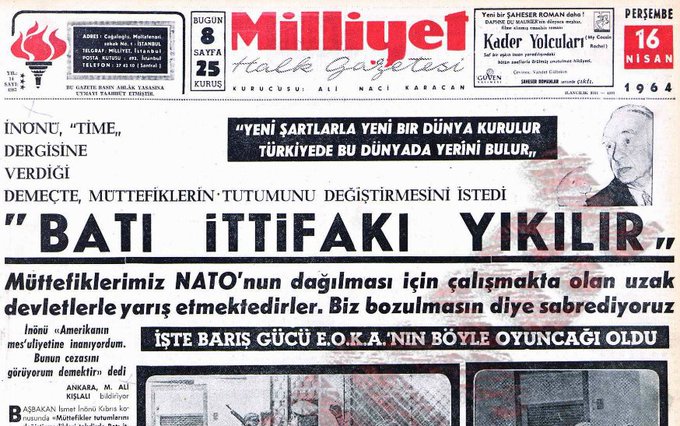
The actions carried out in 1965 also bear the mark of this "national reaction":
— In 1965, the TMTF launched a "National Petroleum Campaign."
— In 1965, the sale of soda pop was banned at the İTÜ's Taşkışla canteen, on the grounds that it was an American product.
The Magazine Dönüşüm and the Attacks Carried Out on Demirel's Orders
One of the signs of youth's turn toward socialism and their coming under TİP's influence was the magazine Dönüşüm [Transformation], first published on 22 April 1965. İsmet Özel, one of the SBF FK's administrators at the time, describes this magazine — published by "TİP-affiliated youth, most of them members of the SBF Fikir Kulübü" — as follows:194
We had a stance of wanting, for the first time, to run something ourselves — to publish a magazine ourselves, sell it ourselves — and we planned an action along these lines and published Dönüşüm Dergisi. It was a core priority of ours that the initiative belong to socialists. (…) We earned more in sales revenue than we had expected. In fact, we even founded the FKF with the money we made from Dönüşüm.
İsmet ÖzelThe magazine's first issue, whose publisher of record was Ataol Behramoğlu of the Faculty of Language, History and Geography (DTCF), carried pieces by Sadun Aren, Aziz Nesin, and Cem Eroğul, along with translated works. The magazine's editorial stated that it "would always be the voice, at home and abroad, of the people, of the exploited, of the oppressed, would attend to the reality of the university, and would explain why those who claimed to represent the youth were in fact mere tools."195
Published biweekly, the magazine drew attention when it went on sale in Kızılay Square in Ankara and Taksim Square in Istanbul under slogans such as "Dönüşüm, Against Exploitation, Imperialism, and Fascism," "Dönüşüm, the Voice of Socialist Youth, of the University Student," "Writing About America's Barbarism in Vietnam," "Sadun Aren, Aziz Nesin, Mehmet Ali Aybar Write in Dönüşüm," "Dönüşüm, Against the Rotary Press, Against the Press Barons," "The Newspaper of the Intellectual and the Worker," "Dönüşüm, the Magazine of Socialist and Intellectual Youth" — and it unsettled the right-wing AP-CKMP-MP-YTP coalition then in power. The young people selling the magazine came under attack. There are accounts and claims that Demirel himself personally ordered these attacks. Researcher and writer Suat Parlar relates one of these attacks through a long excerpt he takes from Ahmet Kahraman's book Devri Süleyman [The Süleyman Era], characterizing it as "the signal that a civil war had begun":196
Baltacıoğlu had told it this way (journalist İsmail Baltacıoğlu): in the spring of 1965, TİP was publishing a magazine called Dönüşüm. University youth sold the magazine in Kızılay Square in the evenings, at the hour when civil servants were heading home. As the young people sold the magazine on the street, they also chanted slogans: against exploitation, imperialism, fascism, transformation.
It was said, in AP circles, that Süleyman Demirel — who called these young people communists — was disturbed by what they were doing. One day, at AP headquarters, the phone rang. Barlas Küntay, Chairman of the Youth Branches, answered. In an excited voice, he said, "At your command, Mr. Chairman," and hung up. There were a few of us there. A few people from the youth branches, and myself. Since I worked at a pro-AP newspaper, they counted me as one of their own. Küntay said: that was Süleyman Bey. He says the communists have gone too far, that they're disturbing the public in Kızılay Square in the evenings. He's ordering that the necessary be done… He immediately called the youth branch administrators to a meeting… Barlas Küntay announced the chairman's instructions: Our chairman's instructions are definite. We will not surrender the square to the communists. We will disperse them. The police, too, have been given the necessary instructions to assist us. Now I want you to gather as many men as you can find.
The AP youth branches' preparations for the attack continued for days. Idle, unemployed, hulking men were hired from the shantytowns of Altındağ. The assault force thus formed was meant to be reinforced and strengthened with university youth… Help was requested from the CKMP, the coalition partner then under Türkeş's leadership. An alliance was struck with the CKMP to fight the communists.
Ahmet Kahraman, quoted in: Suat ParlarThe attack took place on 8 June 1965. A group chanting slogans such as "Nationalist Turkey" and "Down with the Communists" attacked the young people selling the magazine with the clubs in their hands. The police joined in this attack as well. The attack was led by Yılmaz Yalçıner, Chairman of the CKMP Youth Branches.197 Following the attack, the Dönüşüm-affiliated youth who had been attacked were taken into custody. Among those detained were Uğur Mumcu, Ataol Behramoğlu, Hüseyin Ergun, and Orhan Apaydın.
Newspapers published on 13 June reported that the government's "Committee for the Struggle Against Extreme Currents" had convened and discussed "leftist currents" and the "Kızılay Events."198 Following this work, a new bill was drafted to combat currents characterized as "extreme." What happened fit the saying that the thief accuses the homeowner first. The SBF FK published a declaration on this bill:199
The Minister of the Interior demonstrated a fresh instance of an anti-democratic method by submitting to the Council of Ministers a report demanding "immediate and decisive measures" against extreme leftist currents. The fabricated term "extreme leftism," used in reality to suppress the progressive views in our country, is in fact a symptom of the anxiety that arises from university youth attending to the problems of the homeland. (…) What all these preparations are ultimately aimed at achieving is plain: that the youth sit quietly, not cry out against those who steal and bargain over the country's wealth, not defend freedom and democracy. (…) We declare to the Turkish people, in the birth pangs of happier days, that we stand against exploitation and imperialism always, and will remain upright even at the cost of our own existence.
Declaration of the SBF Fikir KulübüAfter 5 issues, Dönüşüm suspended publication, on the grounds that the debates and clashes stirred up around the magazine served the interests of "the juntaists."200 The magazine's 5th issue addressed the attacks against it directly:201
The incidents provoked during our magazine's biweekly sale in Kızılay have shown an increasing tendency to develop and clarify. (…) DÖNÜŞÜM is a symbol of the years in which Turkey came to know an unbanned left. In a sense, it is the first step of the youth movements on the left.
Dönüşüm magazine, Issue 5After suspending publication, Dönüşüm was relaunched under the editorship of Abdullah Nefes, but its second life did not last long either.
From Progressive–Reactionary Polarization to Rightist–Leftist Polarization
As the youth movement took on a "socialist" character after 1965, the nature of the divide within the youth began to change as well. "The division that, up to 1965, had mostly taken the form of progressive versus reactionary youth, slowly took, after 1965, the form of leftist versus reactionary, and increasingly, rightist versus leftist."202
As the youth described as "leftist" drifted away from the CHP and grew closer to TİP, the youth described as "rightist" fell under the influence of the AP and the CKMP. The AP made use of the CKMP's active members as well, putting them forward for its own purposes while turning a blind eye to their unlawful conduct.203
Necip Fazıl Kısakürek compares this turn of youth toward TİP, and thus toward socialism, to "scabies" or "the Muscovite cold," and says that there are now only two generations left:204
The most terrifying disease this revolution has produced is the scabies of socialism… As I mentioned a moment ago, I call it scabies, or the Muscovite cold… It has swept over everything, the way the Spanish flu once did, engulfing the whole world. (…) Yes! There are now only two generations left: one, the communists, and the other, us, the rootists…
Necip Fazıl KısakürekLikening "communism" to a disease was, in that period, a widespread stance in nationalist-conservative, traditionalist circles. Sezai Karakoç, too, characterizes communism as a "mania of hunger" and "humanity's neurosis":205
Communism is a mania of hunger. The worldview, in that moment, of a person whom hunger has struck to the head. Communism is a NETWORK OF CONVENIENCES the maniac has invented to satisfy himself and to silence his own crises. (…) Communism is a neurosis of humanity. And the eruptions of this neurosis are world wars.
Sezai KarakoçThe meanings Karakoç attaches to the terms "right" and "left" are also worth noting. In his writings from 1963–1964, Karakoç grounds these terms in the Quran, adding:206
In Islamic thought, the rightist is the believer — that is, the mü'min — the one who carries Islamic belief, thought, and appearance. In other words, the constructive person. The leftist, by contrast, is the denier, the rejecter — one whose beliefs, thoughts, and appearance stand not only against Islam but against anyone who is not Islamic. In other words, the destructive person.
Sezai KarakoçIn other writings, Karakoç continues attaching negative meanings to the left, likening the right to "art" and the left to mere craft, or saying that the left represents "Satan." According to Karakoç, Adam's being in Paradise represented a rightist mode of existence, but Satan, representing the left, entered the picture, and the fall from Paradise took place. The Fall is the revolution of the left.207
1966: Turning Organizations "Two-Headed," and Clashes
The FKF's organizing efforts intensified in 1966. Five more thought clubs joined the FKF.208 The FKF held film days, and seminars were organized with the participation of TİP's leading figures.
The standout action of 1966 was the "Dean Rusk Affair." U.S. Secretary of State Rusk came to Ankara on 19 April to attend CENTO meetings. The FKF decided to protest "American imperialism, NATO, and CENTO." During the protest demonstrations, 74 young people were taken into custody and referred to court. The detained students were released on the bail of Prof. Dr. Muammer Aksoy.209 Rusk's visit also led to clashes between FKF- and TİP-affiliated youth and rightist youth. A day after the visit, a clash broke out between FKF youth protesting the detentions and Rusk, and youth affiliated with the Milliyetçi Türk Gençlik Teşkilatı, led by Yılmaz Yalçıner. Two FKF students were stabbed, and there were injuries on both sides. Young people staging a protest in Kızılay in front of AP headquarters and the USIS (American Information Center) were attacked by people shouting, "Do you want to sell the country to the communists?" Another clash took place in front of the U.S. Embassy Library.210 While all these clashes were taking place, the MTTB's deputy chairman issued a statement saying, "The hospitable Turkish youth condemns this accursed incident, and welcomes Dean Rusk."211
Another protest directed at America took place at the end of the year. On 12 November, the FKF took part in a rally called "The Turkish People's Uprising Against the Americans," organized by the Türkiye İş Sendikası to protest the pressure placed on workers employed at American bases. At the rally's end, protesters continuing to demonstrate in front of the USIS and trying to breach the barricade were attacked by "AP members and nationalist youth" chanting "down with the communists." 15 people were wounded, and 26 of those who took part in the rally were detained. Demirel declared that "those who sing songs of independence in the streets are engaged in treachery and delusion," while 6 of those detained were placed under arrest.212
Participation in this rally took place against the backdrop of the tug-of-war within the FKF between TİP-influenced youth advocating "Socialist Revolution" (SD) and youth advocating "National Democratic Revolution" (MDD). A faction within the FKF did not support the FKF's participation in the rally.213
Faced with youth increasingly becoming a dynamic force and turning toward socialism under TİP's influence, the AP government tried to bring these organizations under its own control by making them "two-headed":214
The turning of the İnşaat Fakültesi Talebe Cemiyeti [Civil Engineering Faculty Student Association] into a two-headed body was only the beginning; as I mentioned earlier, after the İnşaat Cemiyeti, the İTÜ Talebe Birliği and, in 1966, the TMTF were made two-headed, with at least one faction, in each case, serving as the government's mouthpiece within that organization. For the AP government, the matter of turning organizations two-headed was not confined to youth organizations. As is known, the Union of Chambers was later made two-headed as well. Necmettin Erbakan, chairman of the faction opposed to the government of the day, was removed from the Union of Chambers by police intervention.
To summarize briefly, an important point worth dwelling on is the method that governments apply — and can reapply at any moment — against organizations not of their own making. When a government turns an organization two-headed, it has, at the very least, sabotaged any work within it that might work against its own interests.
Harun KaradenizYouth Actions in 1967
1967 was the year in which youth began openly declaring their "socialist" identity, and, as they saw it a requirement of this identity, took part in workers' and peasants' actions. This can be seen clearly in a piece titled "Socialist Youth Action," appearing in the second issue, dated 18 January 1967, of Kavga Bülteni [Struggle Bulletin],215 the FKF's publication:216
We, socialist youth, know that socialism in Turkey will be built together with the people. It is clear that conduct and struggles cut off from their roots, separate from the people, will bring no benefit to us, to our people. For years, youth and intellectuals have always positioned themselves against the people, finding their dress and their way of life strange, always finding themselves at odds with the people in every effort they made. Because they were never able to attend to the underlying realities.
Our greatest task today is to show the people, through our actions as well, that we are separate from the "snobbish youth," the "necktie-wearing intellectual" set. The people have always stood against these two strata. The surface-level reason for this opposition may seem quite trivial. But it is clear that, at bottom, the reasons lie in "the bread question, the struggle to survive"; the people know these people as those who oppose their "vote." Socialist Youth must be able to show that they are separate from these, that they always stand together with the people.
Kavga Bülteni, 18 January 1967The word "socialism" was now frequently found in youth's declarations, and their actions reached new dimensions in 1967. Boycotts were organized. The İstanbul Teknik Üniversitesi Talebe Birliği (İTÜ TB), the İstanbul Teknik Üniversitesi Teknik Okulu Talebe Birliği (İTÜTO TB), the İstanbul Yüksek Teknik Okulu Talebe Birliği (İYTO TB), and the Orta Doğu Teknik Üniversitesi Öğrenci Birliği (ODTÜ ÖB) were particularly active. They formed alliances among themselves, taking joint stances and joint action on many issues, and together carried out the "Private Schools Must Be Nationalized" march between Istanbul and Ankara.
Harun Karadeniz says the following about 1967:217
(…) After 1960, young people who had defended, first, freedom, and then economic issues and the country's development through an anti-imperialist stance, came, from 1967 onward, to regard standing alongside the working classes as their duty — in other words, they began to defend the interests of the working people.
Harun KaradenizSome of the actions and activities of youth in 1967 are as follows:
— In 1967, a strike took place at the Singer factory in Maltepe, Istanbul. This strike was broken by harsh police intervention. The TMTF, İTÜ TB, İYTO TB, İTÜTO TB, and ODTÜ ÖB took an interest in this strike and prepared a pamphlet titled "The Game Behind Singer-Branded Goods, and the Strike."
— When it was learned that olive oil rejected by Italy for containing machine oil was being sold to the public in Anatolia, a trip was made to the Aegean to investigate. The Ankara Üniversitesi Talebe Birliği (AÜ TB) printed a booklet titled "The Olive Oil Fraud and Its Aftermath."
— A health survey was carried out in the Harran Plain of the Urfa region, and a pamphlet titled "The Provinces Hell Forgot" was prepared.
— A trip was made to the village of Atalan to support the peasants in a land dispute that had broken out there between landlords and peasants.
— The İTÜ TB printed the 1960 Constitution with the words "The Constitution Is Open to Socialism" on its cover.
— After a bill was submitted to parliament proposing that land that had lost its forest status be returned to its former owners, and after Americans showed interest in acquiring certain forest areas in the Black Sea Region, the FKF organized a march titled "The Forests Belong to the People, They Cannot Be Privatized," beginning at Tandoğan Square and ending at Cemal Gürsel Square, on 8 May.
— The FKF declared 19–27 May "Turkish Revolution Week" and organized several events.
— In July 1967, the TMTF assisted street vendors in organizing a march.
— In November 1967, a march for "Private Schools Must Be Nationalized" was organized from Istanbul to Ankara. The march began on 7 November and ended on 20 November. During this period, a boycott was declared at the İTÜ. Around 150 students took part in the march. Rallies were held in every province and district along the march route.
— After TİP deputy Çetin Altan's parliamentary immunity was targeted for removal, the "First Awakening Rally" was held on 8 July 1967. Despite the rally, Altan's immunity was lifted on 21 July.
1967 was also a year in which clashes and attacks increased:218
After the TMTF was made two-headed, Ekrem Özer, a rightist elected chairman at the Istanbul congress, distributed a declaration at the İTÜ TB's building in Gümüşsuyu on 2 January, and shouted, "If you interfere with the Federation's affairs, we'll make things bad for you" — whereupon the youth of the leftist-led İTÜ TB raided the MTTB, leading to a clash with MTTB members. The MTTB then raided the İTÜ TB in return. The situation continued with mutual raids. Many were wounded in the MTTB's raid on the Gümüşsuyu dormitory. Afterward, a march went first to Taksim, and two days later, with faculty members also taking part, to Beyazıt.219
Some of the protesting youth were taken into custody, and some were placed under arrest. The 10,000 lira needed to secure the arrested students' release was provided by İTÜ Rector Prof. Bedri Karafakioğlu.220221
Another important development of 1967 for the FKF and student youth was the closure and expulsion orders issued against them. Closure orders were issued against the Siyasal Bilgiler Fikir Kulübü, the Eskişehir İktisadi ve Ticari İlimler Akademisi Fikir Kulübü, and the Çapa Yüksek Öğretmen Okulu Fikir Kulübü. Administrators of the DTCF Fikir Kulübü received six-month expulsions, while founders of the Çapa Yüksek Öğretmen Okulu Fikir Kulübü (YÖO FK) — İbrahim Kaypakkaya among them — received one-month expulsions.
Another act of hostility, this one originating with university administrations, showed itself at Atatürk University in Erzurum. In the room where students belonging to the İktisat Fakültesi Fikir Kulübü stayed at the Atatürk Üniversitesi Öğrenci Yurdu, a hidden microphone was found, its cable running all the way to the dormitory administration.
The actions that defined 1967, however, were the protest actions over the Sixth Fleet's arrival and the "Eastern Rallies" organized by TİP.
June 1967: The Sixth Fleet Arrives
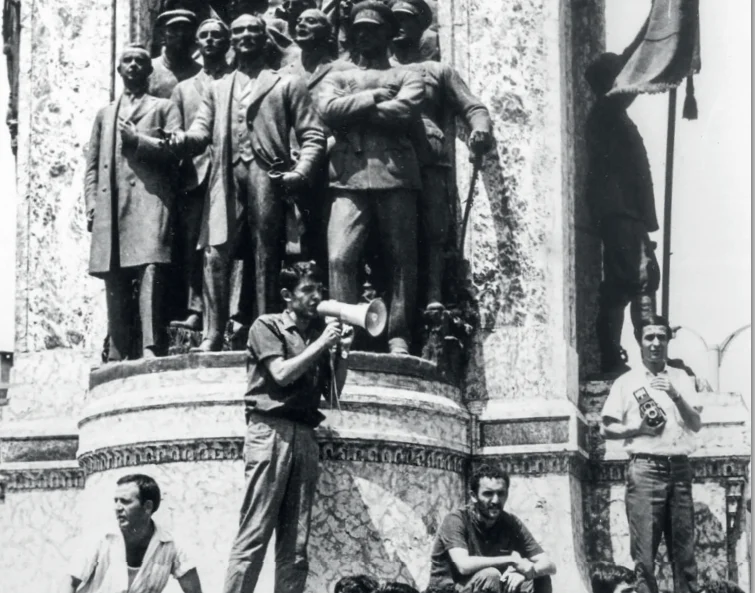
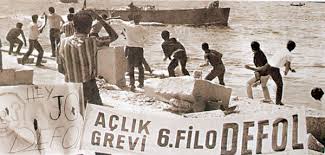
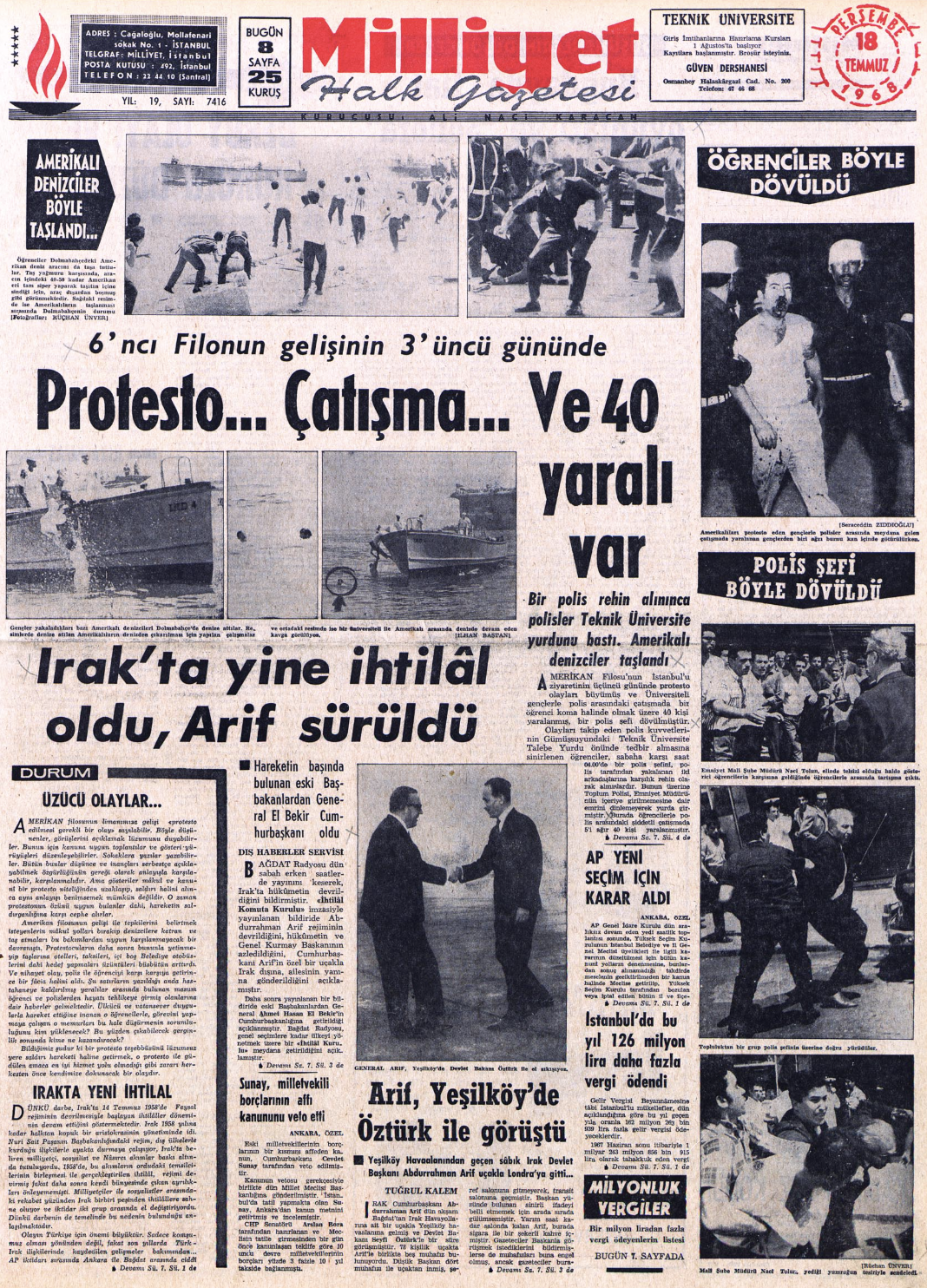
The Sixth Fleet anchored in Istanbul's harbor toward the end of June. Its arrival also set off protest demonstrations by leftist youth. Following the souring of relations in 1965, the Sixth Fleet's arrival was no longer welcomed, and increasingly provoked protests. First, the wreath the Sixth Fleet Command had laid at the Taksim Monument was burned, following a meeting organized by the TMTF's deputy chairman and the chairmen of the İTÜ student unions. In its place, a wreath was left bearing the words "Let Imperialism's Bloody Hand Not Reach Toward Our Ata — It Will Be Broken." The police removed this wreath an hour later. In response, students left a new wreath bearing the same inscription. On 24 June 1967, a march was organized from Beyazıt to Taksim to protest the Sixth Fleet. Passing through Dolmabahçe, the American flag flying on the quay was lowered and a Turkish flag raised in its place. More than 10,000 people took part in the rally held in Taksim. That evening, a group of young people was beaten by police in the middle of the street.
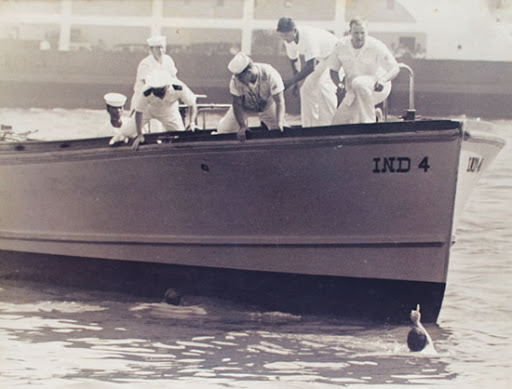
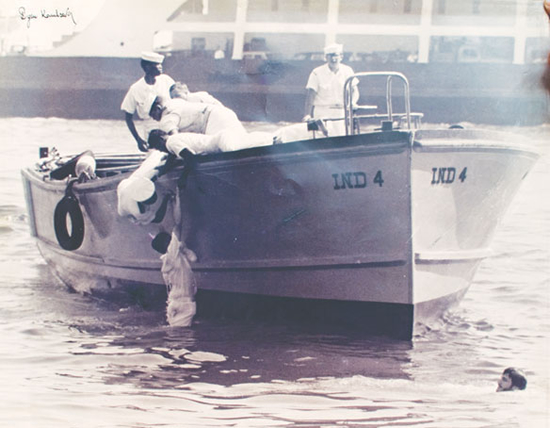
Another action carried out continually during the Sixth Fleet's time in Turkey was snatching the caps off American sailors who came ashore and wandered about. This action, in particular, continued in the evenings as a sustained campaign.
October 1967: The Sixth Fleet Returns to Istanbul
The Sixth Fleet, having left Istanbul after a stay in June, returned to Istanbul's harbors in October. Leftist youth organizations staged a sit-in at Dolmabahçe on 7 October to protest the Fleet's renewed arrival. Because of this action, American sailors could not come ashore that day.
The İTÜ TB published a declaration protesting the Sixth Fleet's arrival:222
As is known, America is sabotaging our national economy on every front, and, together with its local partners, shamelessly exploiting all our resources, both above and below ground, and is a principal cause of our underdevelopment.
Beyond this, for the spoiled American and the American soldier, Saigon and Turkish ports make little difference. They use our beautiful cities as a center for sexual release, and can pose for the cameras of the best-selling newspapers with Turkish girls in their laps.
Once again, from 7 October until the imperialist fleet leaves, an attempt will be made to make Istanbul's streets resemble the streets of Saigon.
We, Turkish youth, are resolved not to allow this this time. And as we call all nationalist forces to resist America, we believe that America's true face, as elsewhere, has now been exposed in Turkey too. This game will not go on much longer. It cannot.
The Turkish Nation will once again teach them the lesson they deserve, and, should they not depart in a civilized manner, will show the whole world once more that it is no less honorable than the people of Vietnam.
No one will be able to hold back Atatürk's nation from its struggle to reach the level of a civilized people.
If America is our enemy, we have no fear; we, too, are its enemy. The time has come to meet America with America's own methods. The future is bright, is happy. It is ours.
Declaration of the İTÜ Talebe BirliğiYouth's protest actions continued when 4 young people, members of the FKF Istanbul Secretariat, pitched a tent at Dolmabahçe on 11 October and began a hunger strike to protest the Sixth Fleet. Five hours into the hunger strike, the young people were taken into custody, and in response, a new hunger-strike tent was pitched in Taksim Park on 12 October, where five people — two of them workers — began a hunger strike. Numerous organizational leaders, along with the poets Fazıl Hüsnü Dağlarca and Şükran Kurdakul, joined this action in support.
As the Sixth Fleet's commander, Vice Admiral William I. Martin, said, "The Sixth Fleet has been coming and going from Turkey for 20 years. These visits are always made in friendship. We could not understand the meaning of this protest. We are always Turkey's friend, and wish to remain its friend,"223 the protests continued in the form of American sailors being roughed up wherever they were seen, their caps being taken, and eggs being thrown at their heads. Many protesting students were brought to court over these protests. 7 American soldiers were also referred to court, on charges of a knife attack, harassment, and fighting.224
In response to these statements and actions by the young people, writer and politician Orhan Seyfi Orhon wrote a piece in the newspaper Son Havadis defending the Sixth Fleet:225
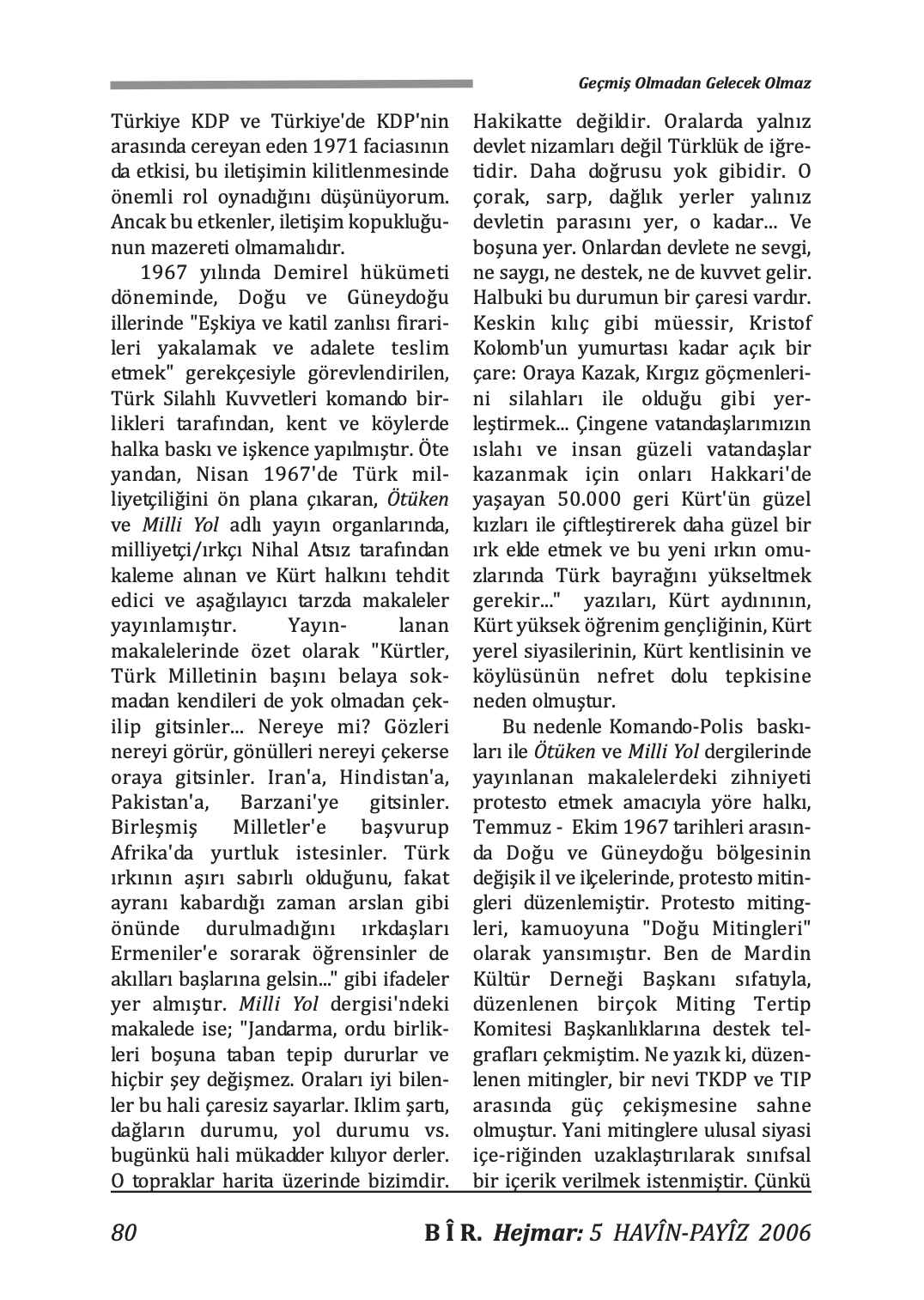
"In my view, the only remedy is to meet communist provocations with the same weapon. Are they staging a sit-in rally to keep the friendly, allied American admiral from coming ashore at Dolmabahçe? Then let nationalist youth stage a welcoming demonstration, placards of friendship in hand! Against 'American dog, go home,' let there be 'Welcome, our American friends!' Are they attacking American students? Let us invite the American students to a soirée. Are they throwing stones? Let us hand out bouquets! Are they cursing? Let us applaud… Nationalist youth against the leftists…"
Orhan Seyfi Orhon, Son HavadisOn 15 October, a protest rally was held in İzmir as well, where ships belonging to the Sixth Fleet had anchored. The rally did not pass without incident. A hunger strike was also attempted here, but permission was not granted.
The protests and the hunger strike came to an end on 17 October, the day the last of the Sixth Fleet's ships departed, with the burning of an American flag in Taksim.
Anti-NATO Demonstrations
The final protests of 1967 targeted NATO. On 9 December 1967, an anti-"NATO and America" demonstration was organized in Ankara by the FKF, the ODTÜ ÖB, the Barış Derneği [Peace Association], the Ankara Üniversitesi Ziraat Fakültesi Öğrenci Derneği, and the SBF Öğrenci Derneği. Statements made at the demonstration declared that Turkey's withdrawal from NATO was necessary, and that, as youth, they would struggle until America left Turkey.226 This protest was not the first directed at NATO, either. In September, when the defense ministers of seven NATO member states came to Turkey for a NATO Nuclear Planning Group meeting, anti-American declarations were distributed in Kızılay on 29 September 1967, the day a dinner was held at the Ankara Orduevi for U.S. Secretary of Defense Robert McNamara. The declaration bore the signatures of the FKF, the Türkiye Devrimci Büro İşçileri Sendikası, the Basın-İş Sendikası, the Bank-İş Sendikası, the Türkiye-İş Sendikası, the Ankara İşçi Fikir Kulübü, the Devrimci İşçi Sendikaları Konfederasyonu (DİSK), the Turizm-İş Sendikası, the Lastik-İş Sendikası, and the ODTÜ Öğrenci Birliği.
While leftists protested NATO, the right defended it, saying that the NATO protests were carried out to make people forget the "true enemy" — that is, communism. The lines written by Tarık Buğra — a journalist and writer whose name is well known in Turkish literature — in the rightist newspaper Yeni İstanbul of the period, "So it's NATO, so America might intervene. That's just talk. This talk is meant to pull you away from your target, to make you forget the true danger, the true enemy,"227 are an example of this stance.
September–October 1967: TİP's Eastern Rallies
TİP had taken an interest in the "Eastern Question" since its founding. A section of the party program adopted in 1964 was titled "Development of the East." Sadun Aren, who held a leadership role in the party and was elected a deputy from Istanbul in the 1965 election, says that although the Political Parties Law forbade parties from stating that Turkey contained minorities based on language, religion, or ethnic origin, TİP approached the matter "cautiously," while nonetheless noting that Kurdish-speaking citizens lived in the country's eastern regions, that they faced discrimination on account of this trait, and that the region was, moreover, underdeveloped.228 TİP's views on this matter would show themselves even more clearly at its 4th Congress, held on 29–30 October 1970. The decision taken at this congress can be seen as remarkably current, bold, and progressive even for 2000s Turkey:229
That the Kurdish people live in the east of Turkey, and that the ruling classes' fascist power, dominant over the Kurdish people from the outset, have applied a policy of oppression, terror, and assimilation toward them, one that has at times taken on the character of bloody persecution;
That one of the fundamental reasons the region inhabited by the Kurdish people lags behind Turkey's other regions is, in addition to capitalism's law of uneven development, a result of the economic and social policy pursued by the ruling-class governments that have taken into account the fact that the Kurdish people live in this region;
That, for this reason, treating the "Eastern question" as merely a matter of regional development is nothing but an extension of the ruling class's chauvinist-nationalist views and stance;
That it is a natural and necessary revolutionary duty for our party — the relentless enemy of every kind of antidemocratic, fascist, oppressive, chauvinist-nationalist current — to support the Kurdish people's struggle to exercise their constitutional rights of citizenship and to realize all their other democratic aspirations and demands;
That, in order to unite the Kurdish people's struggle to express and realize their developing democratic aspirations and demands with the struggle for socialist revolution carried out under the leadership of the working class and its vanguard organization, our party, into a single revolutionary wave, Kurdish and Turkish socialists must work shoulder to shoulder within the party;
That ensuring the racist-nationalist-chauvinist-bourgeois ideology applied against the Kurdish people is razed to the ground among party members, socialists, and all workers and other laboring masses is a fundamental and ongoing cause of the party's ideological struggle and development;
The party hereby accepts and declares that it approaches [the Kurdish question] from the standpoint of the requirements of the working class's struggle for socialist revolution.
Decision of TİP's 4th Congress, 29–30 October 1970To grasp the significance of TİP's statements here, one must look at the dominant understanding of the 1960s. As Cemal Gürsel said, "Everyone living on Turkish soil is a Turk… If anyone is not a Turk, they can leave," the Turkist Nihal Atsız, too, was echoing Gürsel's call in 1967, the very year TİP was organizing its Eastern Rallies:230
But even if they were a hundred percent majority, their dreams of founding a state in any region of Turkey will remain dreams — like the Greeks' dream of Byzantium, or the Armenians' dream of a Greater Armenia… So let them clear out, before they bring trouble upon the Turkish nation's head, and before they themselves are destroyed. Go where, you ask? Let them go wherever their eyes see, wherever their hearts pull them. Let them go to Iran, to Pakistan, to India, to Barzani. Let them apply to the United Nations and ask for a homeland in Africa. Let them learn, by asking their fellow race, the Armenians, that the Turkish race is exceedingly patient, but that when its buttermilk froths over, there is no stopping it, like Kağan Arslan — and let them come to their senses.
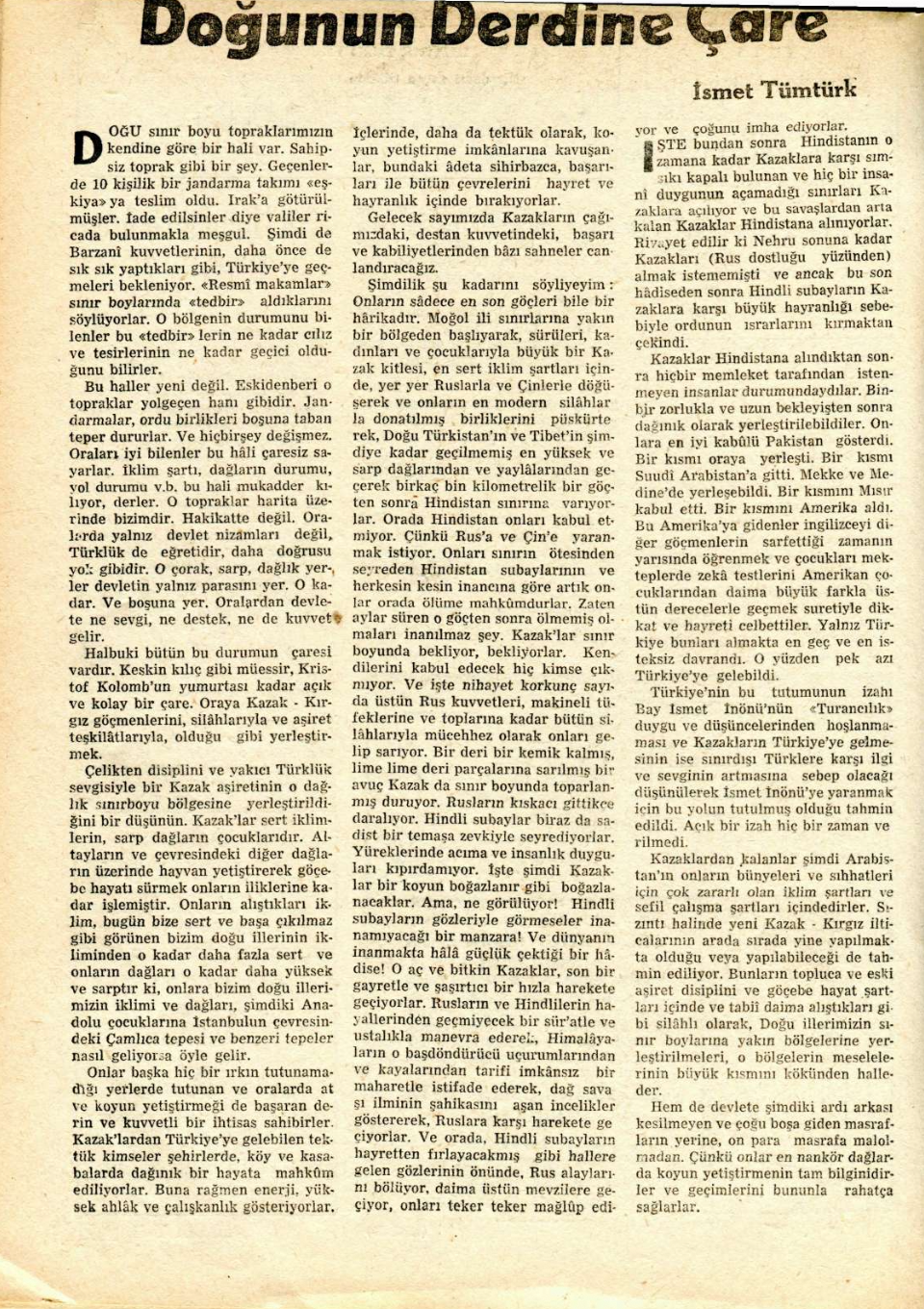
Nihal Atsız, Ötüken, No. 10, 1967The magazine Milli Yol, published by the Turkist İsmet Tümtürk, was, like Ötüken, where Nihal Atsız's writings appeared, another publication in which anti-Kurdish pieces were printed. One of these pieces is instructive for showing just how far racism can go:231
The gendarmerie, army units trudge about there in vain. And nothing changes. Those who know those parts well count this state of affairs hopeless. They say the climate, the state of the mountains, the state of the roads, and so on, make today's condition inevitable. That soil is ours on the map. Not in reality. In those parts, not only the state's order, but Turkishness itself is precarious — indeed, practically absent. Those barren, rugged, mountainous places only eat away at the state's money. That's all. And they eat it for nothing. From those parts, the state receives neither affection, nor support, nor strength. And yet there is a remedy for this state of affairs. A remedy as effective as a sharp sword, as plain and simple as Christopher Columbus's egg. To settle Kazakh-Kyrgyz migrants there, as they are, with their weapons and their tribal organization…
İsmet Tümtürk, Milli Yol, No. 13, p. 14, 20 April 1967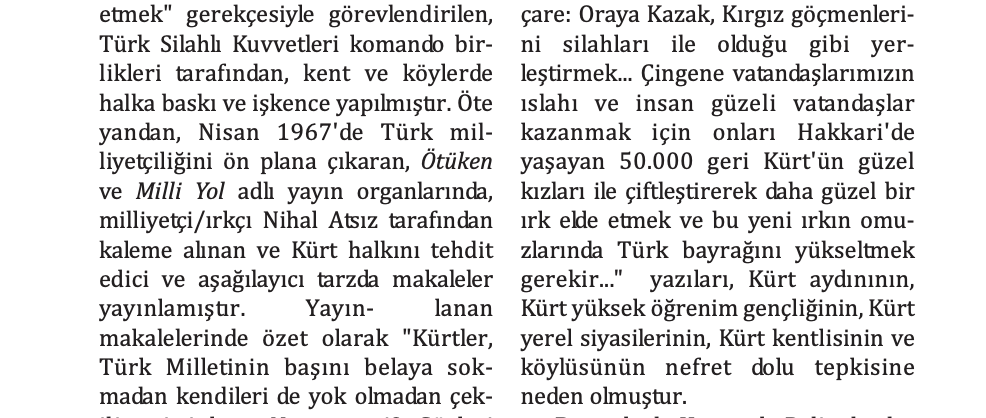
In response to these calls to "clear out," summed up in the slogan "Love It or Leave It," the "19 Doğulu Yüksek Tahsil Derneği" [Association of 19 Higher-Education Students from the East] published a declaration of their own, stating that it was in fact the racists who wanted to divide the country, and that they wanted "unity and brotherhood within Turkey, within the framework of the Constitution":232
Who is destroying whom, who is bringing trouble upon whose head? And who is expelling whom? No force has ever existed, nor ever will, that could expel from this soil those who have lived upon it since the earliest ages of history. Those who truly deserve to be expelled are the dreamers who intend to set peoples against one another. As young people from the East, we have no intention of putting forward the "Kurdish cause," with the cunning of a wolf, in the form of a case about Turkey's Eastern provinces. We stand against the mentality that seeks to exploit the existing differences of race, language, religion, and sect among citizens, so as to divide them into hostile camps for the sake of continued economic exploitation. We reject with hatred fascism, racism, and sectarianism — the political-sphere reflection of spiritual exploitation. It is our motto to establish unity and brotherhood in Turkey, within the framework of the constitution.
Declaration of the 19 Doğulu Yüksek Tahsil DerneğiIn these years, when Kurds were either denied outright or regarded as a backward race in need of reform, TİP's stance was a bold one. To bring this "issue" onto the public agenda, TİP decided, in 1967, to hold a series of rallies in the region. As part of these rallies, leading TİP figures Mehmet Ali Aybar, Behice Boran, and Tarık Ziya Ekinci traveled to the region. The rallies held were, in order:233
— 16 September 1967: Diyarbakır
— 24 September 1967: Silvan
— 1 October 1967: Siverek
— 8 October 1967: Batman
— 15 October 1967: Tunceli
— 22 October 1967: Ağrı
The final rally was held on 19 November in Ankara. Some student organizations, the FKF foremost among them, supported these TİP-organized rallies. In a declaration distributed in Batman under the signatures of the FKF Istanbul Secretariat and student associations from Malatya, Diyarbakır, Adıyaman, Derik, Siverek, Midyat, Urfa, Siirt, Tunceli, Nusaybin, and Karakoçan, they stated that they were "closely following the rallies held and to be held, and the reactions to them, in the Eastern and Southeastern provinces"; that they welcomed with joy "this noble resistance of the East's long-suffering people"; that they accepted "the fact that ethnic characteristics, alongside the social and economic conditions bound up in this historical process, play a particular role in the East's underdevelopment and in the political pressure imposed upon the East"; and, finally, that this awakening was "not a fight between brothers, but the uprising of the oppressed against their oppressors."234
Following these rallies, held in 1967 and known as the "Eastern Rallies," further rallies were held in the region in 1968, 1969, and the 1970s. Among the organizers of these later rallies were the soon-to-be-founded Devrimci Doğu Kültür Ocakları (DDKO).235 TİP's Eastern Rallies would also pave the way for a new form of organization: from 1968 onward, the founding of the DDKOs would come onto the agenda.
The Devrimci Doğu Kültür Ocakları (DDKO)
The Eastern Rallies, which began in 1967, gave rise, among Kurdish university youth, to ideas of establishing a new organization specific to "the East." İsmail Beşikçi, too, says that "national sentiments began to develop and flourish among university students after the 1967 Eastern Rallies," and that he heard of efforts made in this direction beginning in early 1968, which came to fruition in the spring of 1969.236 The Ankara DDKO and the Istanbul DDKO were founded first. These were followed by the founding of the Ergani, Silvan, Batman, and Diyarbakır DDKOs.
The founding of the DDKOs was also influenced by the Türkiye Kürdistan Demokratik Partisi (TKDP),237 founded on 11 July 1965 as the Turkish branch of Barzani's Kürdistan Demokrat Partisi (KDP), and by the autonomy agreement signed on 11 March 1970 between Iraqi President Saddam Hussein and the Kürdistan Demokrat Partisi (KDP). "This agreement had a morale-strengthening, uplifting effect among Kurds."238 Following the 12 March coup, two important cases were heard before the military court of the Diyarbakır-Siirt Provinces Martial Law Command: one was the DDKO case, the other the Türkiye Kürdistan Demokrat Partisi case.239 Some individuals were tried in both the DDKO and the TKDP cases. A third case was the Dev-Genç case.
During this period of the DDKO, there was not yet any "ideological unity" to speak of. Beşikçi notes, somewhat critically and with a touch of caricature, that some DDKO members would say, "We are socialists, we are revolutionaries, we are internationalists, we are not nationalists — demanding language rights, cultural rights, emphasizing Kurdish, that's nationalism. We are not nationalists, we are revolutionaries, socialists, internationalists…" He says that young people from TİP circles in particular held the view that "once the socialist revolution is achieved, once socialist society is established, these problems will resolve themselves. What matters is working toward socialist revolution. Not dividing society's forces, looking at problems from a class perspective."240
Among the "defendants" in the DDKO trials, which began in 1971, were, alongside students, intellectuals and writers — some of them academics — including writer Musa Anter, Dr. Tarık Ziya Ekinci, Dr. Naci Kutlay, lawyer Canip Yıldırım, writer Mehmet Emin Bozarslan, and writer Abdurrahman Uçaman.
Actions of 1968
1968 was the year in which the momentum of youth actions increased, in which actions grew steadily harsher through boycotts and occupations, and in which, with the killing of Vedat Demircioğlu, the leftist youth movement gave its first "martyr." This visible activity was only the surface of the water. It was made of waves… Underneath, there was another kind of movement, a tug-of-war. Youth began trying to move beyond the bounds of the "parliamentarism" of TİP, which was trying to keep them under its control through the FKF, and began gathering around the National Democratic Revolution (MDD) thesis and its theorist, Mihri Belli.241 This showed itself, on one hand, in the creation of organizations outside the FKF,242 and, on the other, in a power struggle within the FKF itself.
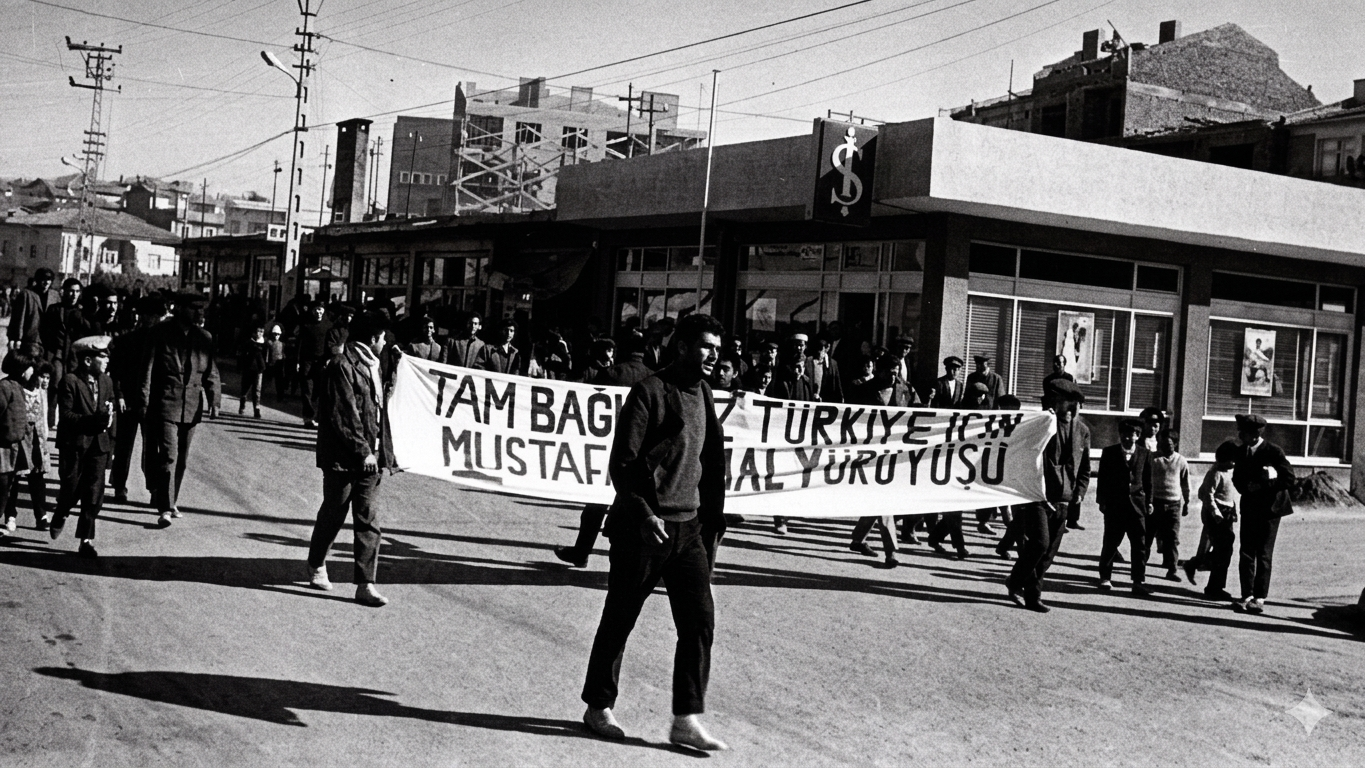
The developments of 1968 also had external causes. The excitement of the "'68 Movement," which had broken out in Europe and was beginning to sweep and shake the world in wave after wave, found an echo among the youth of our own country as well. At the same time, under the influence of the Vietnamese "war of national liberation," reactions against American imperialism produced an effect that heightened "national awakening." Following the letter U.S. President Johnson sent to Prime Minister İnönü on 5 June 1964, the anti-American sentiment that had surfaced in our country took on a new dimension in 1968. Following the anti-NATO protests first organized in Turkey in the last months of 1967, a "No to NATO Week" came onto the agenda in 1968, and the "Mustafa Kemal March" was held from Samsun to Ankara.
Another important event of 1968, one that was also a manifestation of the fragmentation within the Turkish left, was the founding of the Devrimciler Güçbirliği (Dev-Güç) [Revolutionaries' Force Union]. Following a call issued in the magazine "Türk Solu" [The Turkish Left], where Mihri Belli held influence, the "Devrimci Kuruluşlar Güçbirliği İcra Komitesi" [Executive Committee of the Force Union of Revolutionary Organizations], known as Dev-Güç, was formed on 27 March 1968 with the participation of 29 organizations. Kadri Kaplan, a Natural Senator and former MBK member, was appointed chairman of this committee. Since TİP regarded these efforts as "junta preparation," it kept its distance from Dev-Güç.243 However, because Doğu Perinçek, from the MDD camp, was elected Chairman at the FKF's 2nd Congress, held on 23–24 March 1968, the FKF Head Office decided to join Dev-Güç, and did so.244
1968 was, for every segment of the Turkish left, both a leap forward and a period of upheaval. It was in 1968 that both revolution and counter-revolution first began to manifest themselves on a mass scale.
With TİP's "exclusion" of FKF youth — running parallel to its own internal dynamic's "tendency" — this youth, drawn within the lines of a petit-bourgeois foundation, found itself squeezed between the parliamentarism from whose "hegemony" it had freed itself and outright coup-mongering. Trying to organize its social uprising within this "narrow" and "shifting" space by developing extraordinary "techniques" and "instruments," it acquired for itself a new "identity" — one that would also, in the end, "bring about its own demise." With an "astonishing" foresight, it chose the one and only method that would "astonish everyone": "empiricism"; those with a good "empirical record" "leapt to the front." "Intellectual revolutionism," "intellectual leadership," and the "naivety" and "gentility" that came with them lost some of their popularity and importance; people began dealing directly with the realities behind issues, and theory began to be looked down upon. Almost the following view prevailed: "A revolutionary is one who wishes to fight for the revolution." Anyone who preferred debate was weak and flawed.
(…) As 1968 began, the seeming "unity" of Turkey's socialist movement was also coming to an end. The seeds of division had been sown during the 1951 arrests; in the years that followed, they were "fed" by the "conflicts" within the TKP, and readied for "birth." When, in '68, the whole globe was electrified by a wave of excitement and revolution drew near enough, everywhere, to be "touched by hand," "it," too, "opened its eyes" to the world. The MDD line — one of the branches of this division — and its leader, Mihri Belli, "took under their guidance" the socialist youth who were then arming themselves with this new "identity."245
Erol Korkmaz, Kafa Tutan Günler1968 was also the year in which preparations were made for the deaths that would become commonplace a year later:
1968 is the year in which reaction organized itself in Turkey, in which fascist commando camps rapidly multiplied, and in which rightist, fascist attacks were at their most intense. Politicians were making efforts to pit rightist youth against revolutionary youth. Through false reports such as "The Quran was burned in Kadıköy" and "The homeland is slipping away," rightist youth are being set loose upon revolutionaries.246
N. Alper Kepenek, Oy Cihan Bizim CihanThe first of these attacks took place at the "Eastern Night," and continued afterward at the Constitution Rally. Within 1968, young people who organized "No to NATO Week" also became targets of attacks. The truly systematic attack, however, was carried out in the final month of 1968, with the aim of seizing the dormitories.
January 1968: The "Eastern Night" and the Attack
On 25 January 1968, the FKF Istanbul Secretariat organized the "Eastern Night" at the Spor ve Sergi Sarayı, together with "the local student associations of the Kurdish provinces" — an event that journalist and writer Ragıp Zarakolu, who was himself among the young people present that night, would years later describe as "the magnificent meeting of socialist youth and Kurdish youth."247 Later in the evening, rightist youth attacked the event with bottles of ammonia and acid in hand.
Rightist students, gathered at the Milli Türk Talebe Birliği under the leadership of two "fedai" known for storming meetings, had completed their preparations: to recognize one another, they would wear a visible safety pin on their lapel,248 and use the word "Operation" as their password. Once one of them shouted "Down with the communists," they would launch their attack with clubs, pistols, and bottles filled with acid and ammonia.
About a hundred and fifty militants, scattered among the audience, began setting off Molotov cocktails and smashing the bottles they had brought while the Diyarbakır team was performing a folk dance. A dense smell and cloud of nitric acid and ammonia filled the air. Meanwhile, stones thrown from outside shattered the hall's windows. One of the well-known "fedai" was caught by the young people who had organized the event. In response, he drew his pistol and fired twice, wounding two young people. Another attacker used a knuckle-duster to wound a young man in the eye.
The riot police present at the scene apprehended and removed only seven people. These, too, were released, on the grounds that their addresses were known.
As the attackers came outside, they were greeted by their friends waiting at the door with the words, "May your holy struggle be blessed." The next day, sympathetic newspapers presented the incident as a great victory…249
Alpay Kabacalı, Türkiye'de Gençlik HareketleriFollowing the attack, the FKF Istanbul Secretariat issued a statement drawing attention to what lay ahead in 1968 and stating that they expected the attacks to continue:250
We believe these events have been specifically organized by certain circles in 1968, a year in which important decisions will be made. It would be a grave mistake to think that those who attacked our friends selling newspapers in the square in Ankara, and those who raided the Economics Faculty Night and the Eastern Night in Istanbul, will stop at this point. Against this, all revolutionary forces must unite and defend their rights to the very end. Tomorrow's strong Turkey belongs to the Turkish people, who will prevent these attacks and establish an order oriented toward equality.
Statement of the FKF Istanbul SecretariatA development confirming the FKF's statement that the attacks would continue took place on 4 February. İbrahim Çetinkaya, Chairman of the AP Provincial Youth Organization, at a press conference he held, all but declared that "the hunt had begun," with the words, "Should it prove necessary, conscious nationalist youth will go on a communist hunt across the country today."251
February 1968: The Awakening Rallies and the Attacks
On 20 February, during budget deliberations in parliament, TİP deputies Çetin Altan, Yunus Koçak, Sadun Aren, Rıza Kuas, Kemal Nebioğlu, Tarık Ziya Ekinci, Ali Karcı, and Cemal Hakkı Selek, while stating their views, came under attack from AP deputies. This attack, which left the carpets and the marble floors soaked in blood, could only be stopped when CHP deputies intervened. The attack provoked a reaction among leftist youth. On 23 February 1968, the FKF, the ODTÜ ÖB, the İTÜ TB, the İTÜTO TB, the İYTO TB, the Ankara Üniversitesi Ziraat Fakültesi Talebe Birliği, the Ankara Üniversitesi SBF Öğrenci Derneği, the ODTÜ Sosyalist Fikir Kulübü, the ODTÜ Sosyal Demokrasi Derneği, and DİSK laid a wreath at the Atatürk Monument in Taksim on 24 February, and published a declaration announcing that they would hold a rally on 24 February. The declaration stated: "Against the irresponsible, insolent campaign of oppression carried on by the enemies of democracy, the time has come for those who stand with the Constitution, with the people, to show their true strength, and to say stop to these inhuman acts. This is the greatest duty falling upon the whole of the Turkish people."252
The "Constitution Rally" called for in this declaration was held in Ankara on 24 February. At the rally, attended by İlhan Selçuk and Çetin Altan among others, young people carried placards reading "Fascism Came Through Blow After Blow, It Will Leave the Same Way," "The Blood That Flows Will Drown the Tyrants," "We Grow Stronger With Every Beating," "You Are Playing Your Last Card," "Mustafa Kemal's Bursa Speech Was Written for Today," and "No Power Can Stop the Course of History."253 When those taking part in the march reached Gürsel Square, they came under attack, to the chants of "death to the communists," "down with the communists," and "communists to Moscow," from AP-affiliated youth who had made preparations in advance, and a group of young people under the leadership of MTTB deputy chairman Atilla Özer.254 50 people were wounded. A day after this attack, one of the "rightist" newspapers ran the headline, "The People Gave the Leftists a Beating." The second of the "Awakening Rallies" was held on 25 February, in Taksim Square in Istanbul. More than 30,000 people attended the rally, at which Mehmet Ali Aybar and Çetin Altan also spoke. The demonstration opened with cries of "We Will Come, We Are Coming, It Is Near," and the İTÜ Talebe Birliği chairman, giving the opening speech, declared: "We will struggle to the very end against those who deceive the children of the people and beat them with stones and clubs, and we will drive them out of this homeland." A group of about 100 rightists, carrying placards reading "Turkey Will Not Become a Second Vietnam," "The Dog That Is to Die Begins to Howl," and "We Will Not Harbor Nazım Hikmet's Grandchildren in Turkey," tried to stir up trouble at this rally as well, but police surrounded the group before matters could escalate.255
Another event held in February was the "Aid Campaign for the Vietnamese People," organized by the FKF, the İTÜ TB, the İTÜTO TB, the İÜİF TC, and the İÜOF TC. Another event related to Vietnam, held in Ankara, came under attack as well. On 25 February, during the closing of an exhibition titled "American Savagery in Vietnam," organized by the FKF and the ODTÜ Öğrenci Birliği at the Altındağ TİP District Center, a clash broke out between rightist youth and those attending the exhibition.
March 1968: The Rearing-Up Rallies
"This is our final intellectual warning. Now it is time for a practical warning."
In response to the Awakening Rallies, the MTTB began organizing "Rearing-Up Rallies" [Şahlanış Mitingleri]. The first of these was held in Erzurum on 12 November 1967. Following the Awakening Rallies, new Rearing-Up Rallies were organized in Istanbul, Ankara, and İzmir. The Istanbul rally was held on 3 March, with the participation of "18 student organizations, 11 unions, 80 associations, 10 branches of the Association for the Struggle Against Communism, and 14 nationalist bodies."256 At the rally, "jihad" was declared "against those who wish to turn the country into another Cuba or Vietnam." Following the march that was held, the association's chairman declared, "This is our final intellectual warning. Now it is time for a practical warning."257 Necip Fazıl Kısakürek, who also attended the rally, gave a speech calling on the youth to resist the approaching "danger of communism":258
O noble youth, plaintiff of the Turkish spiritual root, which we liken to a pure, polished marble column carved like a diamond, and which we know has since been fitted with a covering of rotten, crumbling planks in pursuit of the fantasy of Westernization… Communism, as a whole, has now arrived at Turkey's very door. Youth must not enter into any expectation of a people that cannot even intuitively grasp the difference between the setting sun and the tar of dawn… Talk within the ranks of work is work only on the scale of a gesture…
Necip Fazıl KısakürekThe second Rearing-Up Rally was held in Ankara on 30 March. Alongside the MTTB, individuals affiliated with the TKMD and the CKMP Youth Branches also took part in the rally. The slogans chanted most at the rally were "Long Live Our Army, Islam Is Our Path," "Communists to Moscow," "Çetin Altan to Moscow," and "Muslim Turkey." CKMP-affiliated youth, for their part, carried placards reading "First the Captive Turks, Then Vietnam," "The Turk's Eternal Enemy Is the Muscovite," "O Turk, Tremble and Come to Your Senses," "As Muslim as Mount Hira, As Turkish as the Tanrı Mountains," and "Where Are the Crimean Turks?" Mustafa Özel, a member of the organizing committee who spoke at the rally, characterized those marching as an "Islamic Army":259
The Turkish Nation comes, rearing up. The three-starred flag comes, waving above the Turkish Nation. What comes is the Islamic Army. The true reaction is communism. The greatest backwardness is communism.
Mustafa Özel, member of the organizing committeeMarch 1968: The Protest of the AIESEC Meeting, and the First Arrests
On 7 March, upon learning that a meeting of AIESEC260 — attended by representatives from 44 countries — was to be held at the Faculty of Science conference hall in Istanbul, young people organized a protest. Because of the protest, the Minister of State was unable to give his speech. Following the protest, some of the protesting students — Deniz Gezmiş among them — were taken into custody and placed under arrest. Mustafa Lütfü Kıyıcı, one of the arrested students, would say years later of this period of detention: "Until this incident, prison was a taboo for us. We didn't know what prison was. And because we didn't know, we were afraid of it. Until then, whenever we were caught by the police over some incident, we would be released the same day, either at the police station or at the prosecutor's office. It was with this incident that we first learned the reality of prison."261 Those arrested were released on 2 May.262
Efforts at Unity on the Right and the Left: The Nationalist Organizations Consultative Meeting and the Türkiye Devrimci Güç Birliği
The "nationalists" took a step toward unity in March 1968 with the Nationalist Organizations Consultative Meeting. At this meeting, organized in Bursa on 23–25 March by "nearly 20 nationalist organizations," the aim was "to determine the measures to be taken against extreme leftist currents, and to exchange views."263 At the meeting, organized with the support of chambers of commerce and industry and tradesmen's organizations as well, it was "declared that a campaign would be launched throughout the country on the path of God and the Quran. It was resolved that the work of nationalist, traditionalist organizations would be supported, organized by wealthy Muslims."264
The "revolutionaries," for their part, took a step toward coming together around the same time the rightists were organizing their second Rearing-Up Rally. The 27 Mayıs Milli Demokratik Devrim Derneği called on revolutionary forces to unite for "a fully independent and genuinely democratic Turkey." 20 organizations, the FKF among them, came together and, on 27 March 1968, announced the founding of the Türkiye Devrimci Güç Birliği (Dev-Güç) in a declaration:265
We believe that victory will belong to Atatürkists of positive thought, and that our exalted Turkish people will break this chain of calamities that shadows their destiny and, within a free-thinking and just social order, through the strength of their own reason, resolve, and labor, will find the means to march swiftly along the bright path of contemporary civilization. We likewise believe that our great nation, which raised the banner of the war of liberation under the leadership of our great Ata, will continue to carry forward the national ideal as a single whole.
The goal is the struggle against all forces hostile to the Turkish people, in order to establish a fully independent and genuinely democratic Turkey.
27 Mayıs Milli Devrim Derneği Chairman Mucip Ataklı, TÖDMF Chairman Prof. Bahri Savcı, TMTF Chairman Sencer Güneşsoy, on behalf of DİSK Uğur Cankoçak, on behalf of TGMT Nusret Selen, on behalf of TÖS Ahmet Cenan, FKF Chairman Doğu Perinçek, AÜ TB Chairman Bilal Moğol, AÜYO TB Chairwoman Necla Macit, TDD Chairman A. Emre Egesel, ODTÜ ÖB Chairman Mustafa Akgül, Mülkiyeliler Birliği Chairman Mehmet Can, HÜÖB Chairman Tevfik Akoğlu, Faculty of Medicine TD Chairman Mesut Kırgız, AÜZF TC Chairman Aziz Ekşi, DTCF TC Chairman Celal Karpit, ETYÖO Chairman İsmail Baysal, on behalf of SBF ÖD Zafer Kutlu, ODTÜ SFK Chairman Sinan Cemgil, and AÜ Faculty of Science Student Organization Chairman Ömer Özturgut.
Dev-Güç founding declaration, 27 March 1968Those who founded Dev-Güç also stated, in the "Revolutionary Force Union Program" they announced, that they would henceforth "exercise their right to self-defense":266
Since it has now become plain that the government offers no security whatsoever, nor has any intention of offering any, for citizens exercising their constitutional rights in the form of assembly and demonstration marches, it has become a natural right for individuals and revolutionary national organizations to defend themselves, by the same methods, against the aggression of un-national circles — and they will act accordingly.
Revolutionary Force Union ProgramThe efforts at unity, and the events that took place, are signs that the language being used, and the stances being taken, were steadily hardening and turning toward violence. The events that took place a month later, on the anniversary of the 29 April incidents, would be another sign of this.
The Anniversary of the 29 April Events, and the Attacks That Took Place
To mark the anniversary of the 29 April 1960 events,267 Dev-Güç organized a demonstration in Ankara. Among the speakers at this demonstration, attended by thousands, were Aziz Nesin, İlhan Selçuk, Dev-Güç Executive Board Chairman and Natural Senator Kadri Kaplan, TMTF Chairman Sencer Güneşsoy, and FKF Secretary-General Ömer Özer Turgut. As the demonstration continued, it was met with a protest from a rightist group that included MTTB Chairman İsmail Kahraman and Deputy Chairman Atilla Özer. Shouting "Down with the communists," this group, armed with stones and clubs, attacked the demonstrators, and a clash broke out. This attack and the clashes continued as the rally dispersed, and continued further that evening at the SBF canteen and, a day later, in Cebeci. Following this incident, the Türkiye Milli Gençlik Teşkilatı (TMGT), the TMTF, the FKF, the AÜYO TB, the AÜTB, the AÜ ÖB, the ODTÜ ÖB, and the Hacettepe Üniversitesi Öğrenci Birliği published a declaration condemning the police's conduct and stating that they had acted in "self-defense" against the attack:268
The 29 April commemoration ceremony, a lawful and legitimate gathering, was subjected to an attempt at dispersal by reactionary and traditionalist aggressors — fed and incited by the partners of the imperialists within our homeland — hiding themselves, unfortunately, beneath the cloak of nationalism, to which all of us are sincerely devoted. In the face of the police's protection of the aggressors and their failure to prevent the attack, youth fighting for an independent and democratic Turkey — with no intention whatsoever of obstructing the police in the performance of their duty — found themselves in a state of self-defense, and struck a crushing blow against the aggressors. As long as these unlawful acts, undertaken by sellouts against the Turkish people's struggle for independence, are not prevented by the police and are instead tolerated, revolutionary youth, left in a state of self-defense, will secure their own safety through their own strength. They have proven, in these recent events, that they possess this strength.
Joint declaration of the TMGT, TMTF, FKF, and other organizationsThe idea expressed in this declaration — that "revolutionary youth will secure their own safety" — is the expression of a new orientation, and an important one. Within only a few years of setting out on this path, guided by the idea of "self-defense," "revolutionary youth" would go on to found "revolutionary organizations" advocating armed struggle. What follows in the declaration can be read as one of the signs that leftist youth were beginning to break away from a state they saw as protecting the rightists:
The police, whose duty was to protect a legitimate and lawful gathering, failed to perform their duty, sheltered the American-lackey aggressors, and even, at times, joined them in attacking revolutionary youth and the people. During Aziz Nesin's speech, the police attacked with truncheons in an attempt to disperse the gathering, and, as an expression of the confidence felt toward the Turkish police, cut off the electricity we had drawn from the police station, in an attempt to sabotage the gathering. They turned a blind eye to the unlawful counter-rally held by hooligans who had nothing to do with student life. We ask: is it true that the megaphone used by these superstition-mongering hooligans, lackeys of imperialism, belonged to the police? The public's confidence in the impartiality of the security forces has been damaged, and the freedoms of thought and assembly brought by the 27 May Constitution have been violated. We call upon all institutions of the Republic and all guarantor bodies of the Constitution to fulfill their duty.
Joint declaration (continued)A day later, the headline of Cumhuriyet's report on the incident read: "Bloody Events Broke Out at the '29 April' Rally When 'Nationalist Youth' Intervened." The newspaper reported that 55 people, 15 of them police, were wounded, and 56 people were taken into custody. 11 of those detained were brought to court. Of these 11, 8 were leftist university students, one was the Chairman of the CKMP Central District Youth Branch, one opposed the demonstration, one was self-employed, and one was a naval petty officer.269
Anti-NATO Events and "No to NATO Week"
Following the "No to NATO" campaign TİP had launched in December 1967,270 student youth organized campaigns against NATO in 1968 as well. The FKF, together with the Student Associations of Istanbul University's Faculties of Economics, Forestry, and Dentistry, the İTÜ ÖB, the İTÜTO TB, and the ODTÜ SFK and ODTÜ Student Associations, announced in a declaration issued on 2 April 1968 that they were launching a "No to NATO" campaign. While the FKF Head Office, then under MDD-ist chairmanship, was part of this campaign, the FKF Istanbul Secretariat, under TİP's influence, together with the TÖS Istanbul Branch and student associations, organized "No to NATO Week" between 14 and 19 May. The campaign's program of action was as follows:271
— 14 May: Press conference in Taksim at 11:00. Speeches, folk dances, and an evening with folk poets at the Taşlıtarla Dörtyol Yıldırım Cinema at 18:00
— 15 May: A conference titled "Imperialism and NATO," given by Çetin Özek in Gümüşsuyu at 16:30
— 16 May: No to NATO evening in Pendik, with speeches, folk dances, and folk poets
— 17 May: No to NATO evening in İstinye at 18:00, with speeches, folk dances, and folk poets
— 18 May: No to NATO evening in Gebze at 18:00, with speeches, folk dances, and folk poets
— 19 May: Open panel at the Açıkhava Tiyatrosu at 19:00; speakers Aziz Nesin, Çetin Özek, Selahattin Hilav, and representatives of the parties
The text of the declaration read at the 14 May press conference was as follows:272
Imperialist America, which can sustain its existence only by exploiting poor countries, sought a military guarantee to keep this system of interests going, and founded NATO. 1949.
By manufacturing a bogeyman, it frightened the countries it plundered with the danger of "communism." And it drew them into this organization as allied powers. Strange as it may seem, Turkey — the country that had waged the first war of liberation against imperialism anywhere in the world — fell for this scheme and joined NATO, the chief enemy of wars of liberation and imperialism's instrument of exploitation. 1952.
From that day to this, NATO has always worked against us. Our army, which waged the first war of liberation against imperialism, was later prevented, because of our membership in NATO, from even protecting our own interests in Cyprus.
Because of the centralized NATO chain of command the imperialists have set up above it, Turkey has no possibility, from within NATO, of rising up and seeking new arrangements.
For these reasons, it is essential to say no to NATO, the military extension of imperialist America's sick economic structure.
We say no to NATO, because we stand against America. We say no to NATO, because we stand with the interests of the great mass of working people — that is, of the majority of Turkey.
The organizations below, declaring 14–19 May "No to NATO Week," are opening the week today, in front of the monument of independence hero Mustafa Kemal, by burning the emblem of NATO, which holds us in dependency.
Our aim is to take the question of independence out of being merely a matter for us, the youth and the intellectuals, and make it the cause of our working people. Because the people have always prevailed in the end. This is how it was in Vietnam, and this is how it will be in Turkey.
İTÜ ÖB, TÖS İst. Şubesi, İÜ.İkt. Fak. TC, İY Tekniker O. TB, Ege Ü. Fen. Fak. TC., ODTÜ İda. İl Fak. ÖD, İTÜTO TB, FKF. İst. Sek, İÜ. Orm. Fak. TC, İÜ Cer. Tıp. Fak. ÖC, ODTÜ Müh. Fak. Elk. ÖD, İYTO TB, İAYTO TB, İÜ Diş Hek. Fak TC, Siyasal Bil. Fak. ÖD, Halk Ozanları Der., ODTÜ Mak. Müh. ÖD
Declaration of No to NATO Week, 14 May 1968These statements and meetings did not pass without incident. Young people who, from 13 May onward, began writing graffiti and putting up posters in the streets came under attack from "reactionaries" and "fascists," even as they were also being taken into custody. On the night of 13 May alone, 106 students were taken into custody by police from 14 local police stations. At the evening event in Taşlıtarla, a few people tried to cause trouble; in İstinye, pressure was placed on the owner of the cinema hall where the evening event was to be held; in Pendik, a group of AP and CKMP members attacked an evening event held at a tea garden, and the bus carrying those attending the event was pelted with stones.
While leftists chanted "No to NATO" and "Yankee Go Home" and organized campaigns to this end, the rightists' view of NATO and the U.S. was quite different:273
Of course I won't say "Go Home," since he didn't come here by force — I invited him, he's my friend, my ally, my companion, my guest. He has no designs on my soil, my freedom, my rights, my life, my existence. He gives weapons, gives goods, gives money, gives every kind of aid; my strength has grown because of him, I am developing thanks to him.
Kal, K., Tercüman, 20 May 1967June 1968: Occupations at the Universities
The occupations that began in June 1968 are regarded as the actions that led an entire generation in Turkey to be called the "'68 Generation."274 These occupations first broke out at Ankara's Faculty of Language, History and Geography, and then spread to Istanbul University. In the occupations in Istanbul, the name "Deniz Gezmiş" became increasingly well known. These occupations later spread to faculties and higher schools across many parts of Turkey.
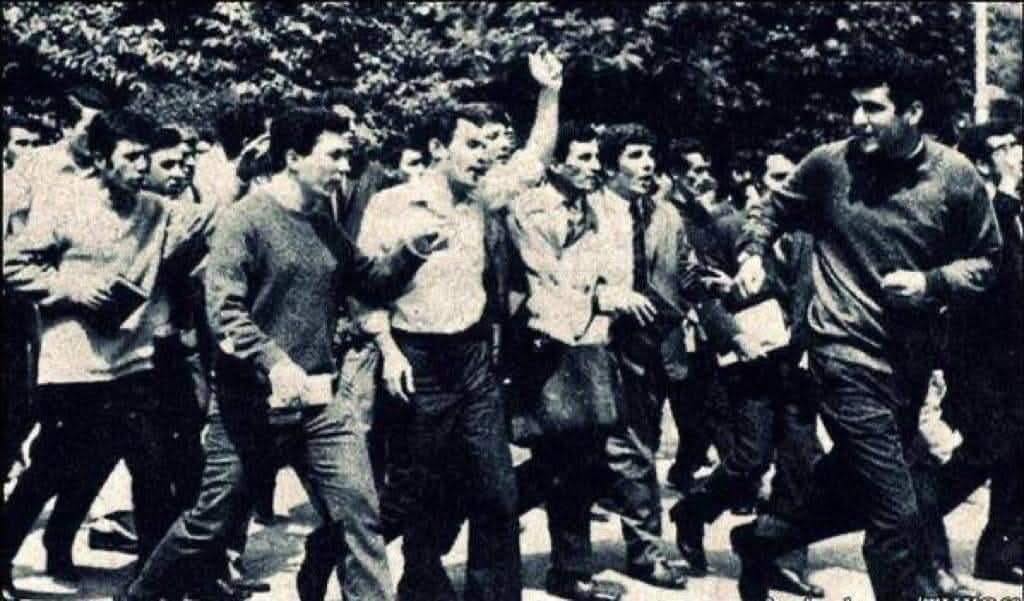
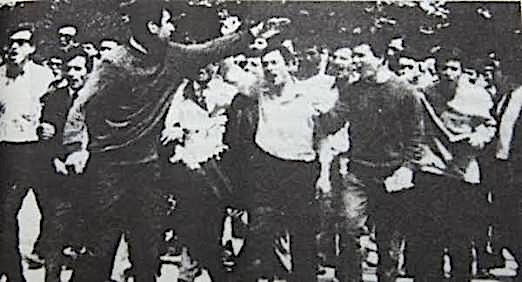
The university occupations spread across the whole country in June 1968. During these actions, almost every university, higher school, and university department published countless declarations. The one thing common to all these declarations was "student participation in administration." In one sense, the events that broke out in 1968 rejected the existing system of education. Everything from the way universities were organized to the goals they pursued was criticized, and new values were put forward.
Karadeniz, H. (1975)Following the spread of the occupations, the "İşgal Üst Komitesi" [Supreme Occupation Committee] formed to coordinate them set out its demands for university reform in a declaration:276
1- As young people studying with the people's money, we say: a) Education must be oriented toward the people, b) Scientific research must reflect the country's realities, c) The system of instruction must be freed from rote copying, and made to fit Turkey's realities.
2- Students must, absolutely, take part in administration, and must have a voice and a vote in it.
3- Students' economic and social problems must be brought to a definitive resolution: a) Scholarships and loans must be adjusted to today's conditions, b) Oversight of the Türk Eğitim Vakfı must be handed to an inter-university board, c) The university must establish a new body to secure internships and jobs for students, d) To resolve the housing problem of higher-education youth, quality, affordable dormitories must be opened, funded with adequate budget allocations, e) The nutrition problem must be addressed in a way that is affordable, of good quality, sufficient, and consistent.
4- Faculty members at state universities must not take on any outside position for material gain. The selection of teaching assistants must be freed from arbitrariness and placed on a just footing.
5- Language instruction is flawed and inadequate. This practice must be reorganized.
Declaration of the İşgal Üst KomitesiThis declaration was later developed by the İstanbul Üniversitesi İşgal Komiteleri Yüksek Konseyi into a more detailed, 48-page pamphlet, which they called the "White Book," and presented to the rector of Istanbul University. The university administrations agreed to discuss the "reform draft" the students had prepared, and to set up joint commissions, faculty by faculty, to produce solutions tailored to each faculty's specific conditions and problems. Following this, the occupations came to an end on 25 June.
July 1968: The Sixth Fleet Returns. Vedat Demircioğlu…
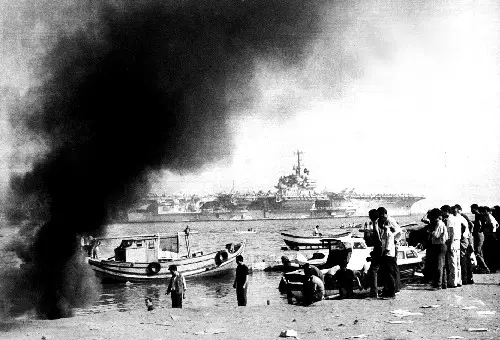
While the heat of June's boycotts and occupations still lingered, the Sixth Fleet came to Istanbul once again. On 15 July 1968, the aircraft carrier "Independence," part of the Sixth Fleet, along with five destroyers, anchored at Dolmabahçe, Istanbul. As the Sixth Fleet, arriving in Turkey for an 8-day visit, was saluted with a 21-gun salute, a group of İTÜ students gathered on the quay protested the Sixth Fleet by raising a Turkish flag at half-mast on an empty flagpole. The students were, by now, experienced in protest actions against the Sixth Fleet.
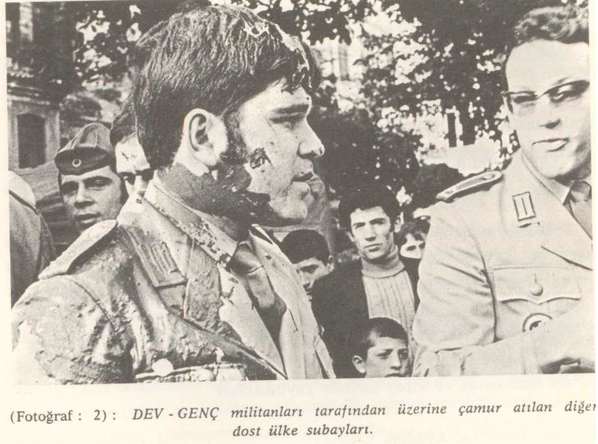
[I]n various parts of the city, particularly in Beyoğlu, home to entertainment venues, brothels, and houses of assignation, the "traditional" "anti-imperialist" forms of action against American sailors — cursing them, snatching their caps and throwing them, trampling them, throwing red ink on them, hurling firecrackers, slashing their uniforms with razors, cornering and beating them — would once again be carried out; but this time, in order to turn the Sixth Fleet's arrival into an anti-imperialist demonstration, and to present a organized, conscious stance rather than spontaneous, ordinary reactions, 76 organizations held a meeting at the İTÜ on 15 July 1968.
Korkmaz, E. (2001), pp. 125–126Following the 15 July meeting, actions targeting the Sixth Fleet and American soldiers increased further on 16 July. Clashes broke out between police and students that same day. 29 students were taken into custody. On the night connecting 16 July to 17 July, as police intervened in a fight between American soldiers and İTÜ students and began detaining students, the students seized the police superintendent caught among them as a hostage and exchanged him for the detained student. Following this incident, the police, having made preparations, carried out the bloodiest intervention against student youth up to that point. Following the İTÜ Senate's ruling that "the dormitory building could not be considered an extension of the university and therefore could not benefit from the guarantee of autonomy," the Talebe Birliği and dormitory buildings were raided at around 04:30 in the morning. Following this raid, 47 students were taken to the hospital, and 30 students were placed under arrest. One of the wounded students taken to the hospital was Vedat Demircioğlu, who had been thrown from a second-floor window. Demircioğlu lost his life at the hospital where he was taken. Vedat Demircioğlu was the first person to lose his life in connection with the Sixth Fleet protests. But he would not be the last.
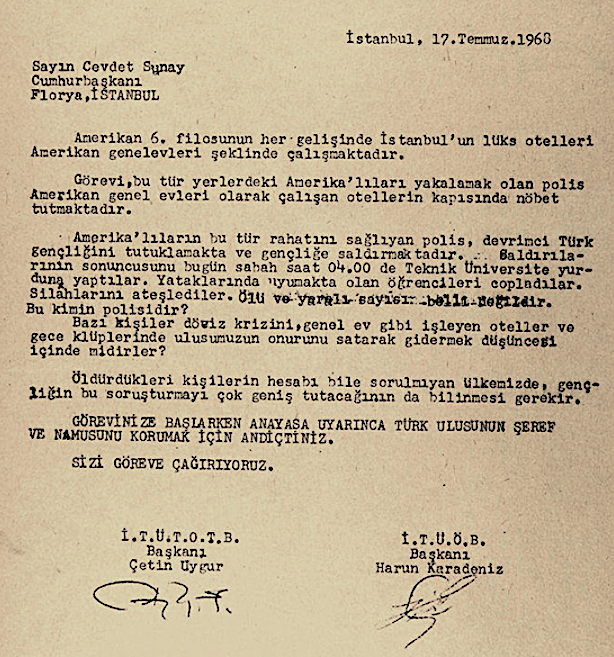
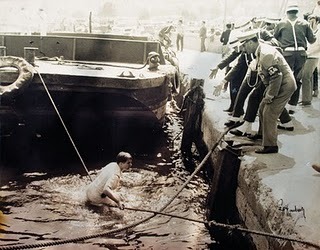
On the morning after the dormitory raid took place, students from many universities gathered at the İTÜ. The crowd first marched to Taksim, chanting slogans protesting both the Sixth Fleet and the dormitory raid. As the crowd returned to the İTÜ dormitory after the protest demonstration, a disagreement broke out between TİP-influenced FKF members and youth belonging to the Devrimci Öğrenci Birliği (DÖB), led by Deniz Gezmiş. Although the FKF members wanted the march to end, the DÖB youth set off marching toward Dolmabahçe, set fire to the American soldiers' liaison offices on the quay, and threw the American soldiers they caught into the sea. The young people's standoff at Dolmabahçe lasted for hours, and came to an end around 21:00 that evening with a police intervention using truncheons.
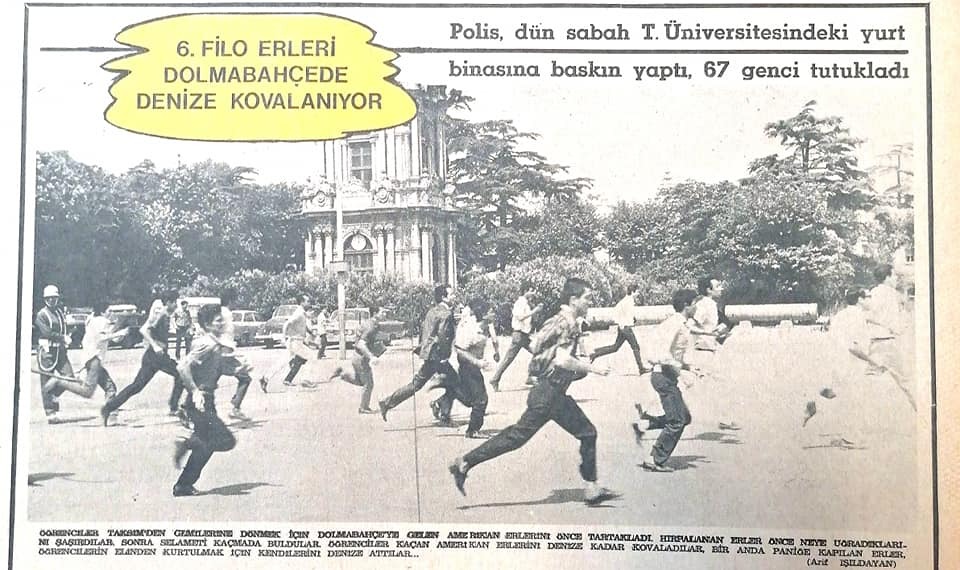
On 18, 19, and 20 July, demonstrations protesting the raid were held in Istanbul, Ankara, İzmir, Trabzon, Eskişehir, and Amasra. Institutions such as the American Information Center and the American Library were pelted with stones. Police intervened in the demonstrations that were held.
On 20 July, the FKF, İTÜ ÖB, İTÜTO TB, and İYTO TB organized a rally titled "War Against American Imperialism for the Sake of Peace" in Beyazıt Square, to protest the Sixth Fleet and the raid. MDD-supporting youth taking part in the rally also protested the rally's own organizers with the slogan "No More Talk, Only Action." The division within the movement was becoming increasingly apparent.
Following news that Vedat Demircioğlu had lost his life on 24 July, protest demonstrations were organized in Istanbul and Ankara. First, a group of 30–40 İTÜ students left a wreath bearing the word "Murderers" at the Istanbul Governor's Office. The police took 10 of these students into custody. FKF members and DÖB members held separate marches. FKF-affiliated youth gathered in front of the TİP building in Aksaray and at the İTÜ, and, with black armbands on their sleeves, set off marching toward the Governor's Office. When they encountered police, the young people decided to sit down rather than clash, and 47 of them were taken into custody. DÖB-affiliated youth, meanwhile, gathered in front of Istanbul University carrying a symbolic coffin, and set off marching, but were blocked at Çemberlitaş. A clash broke out between the police and the young people. As the events escalated, military units were also called in to intervene.
Vedat Demircioğlu's body, having been taken away, was buried in his hometown of Konya on 25 July.
While all these protest actions were underway, the police were not the only ones leftist youth found themselves face to face with. As if to give substance to Mehmet Şevket Eygi's words in his column of 18 July — "We must prepare feverishly. All anticommunist university students must be ready to struggle against the communists. In the coming months, historic events, great turmoil, may in all likelihood occur. Those who say 'not my problem' will be the first to be crushed"278 — rightists entered into "struggle" against leftists. Young people returning to the FKF Istanbul Secretariat after the 20 July rally held in Beyazıt came under attack from youth affiliated with the Mücadele Birliği's Istanbul Sancak. 2 young people were wounded with knives. Also, in Konya — Vedat Demircioğlu's hometown — before a rally titled "Condemning American Imperialism," which leftist students, together with representatives of TÖS, TÖDMEF, and the FKF, wanted to hold, a nationalist-conservative group that got wind of the rally destroyed the Teachers' Association, TİP's Konya Provincial Center, and printing houses, bookstores, newspaper offices, entertainment venues, and casinos.279
Another development that came to light during all these actions was the division within the youth itself. Within the FKF and the youth organizations at universities, the question of whether TİP supporters or those adopting the "National Democratic Revolution" thesis would hold sway now showed itself as a matter of internal struggle and a division of power. Among the students coming to the fore, Deniz Gezmiş, and, later, Mahir Çayan and İbrahim Kaypakkaya — names that would become widely known — sided with the MDD. Although TİP managed, at its general executive board meeting of 14 July 1968,280 to secure the FKF leadership for a student from its own circle, this state of affairs would not last long, and TİP's influence within the youth movement would steadily decline from this period onward.
27 July 1968: The Death of Atalay Savaş, and the "We Will Avenge You" Rhetoric
Those detained during the protest actions held in Ankara following Vedat Demircioğlu's death were brought before the Ankara Courthouse on 27 July. Students who came to observe the hearings also faced police intervention. During the police's baton intervention, Atalay Savaş, trying to flee, fell under a minibus and, taken to the hospital gravely wounded, lost his life. Following Vedat Demircioğlu, Atalay Savaş thus became the second person to lose their life over the Sixth Fleet protests.
At the funeral held on 29 July, two students walking in front of the hearse carried a black panel bearing pictures of Atalay Savaş and Vedat Demircioğlu, along with the words "Atalay, Vedat, We Will Avenge You." At the Hacıbayram Mosque, where people had gathered for the funeral prayer, a group of 20–25 people shouted, "This man is a communist, no funeral prayer shall be said for him" — but withdrew from the mosque without further incident, in the face of intervention from the crowd gathered for the funeral.
FKF Chairman Zülküf Şahin, issuing a statement on Savaş's death, said, "A government drenched in blood cannot be legitimate. Resistance against illegitimate governments ceases to be a right and becomes a duty" — declaring that resistance had now become, for them, a duty — before stating that the government was deliberately and knowingly escalating the events:281
The police protect the anarchists whenever it suits their purposes. The government wants precisely to accelerate these events, in order to discredit the youth in the eyes of the people and brand them as anarchists. In effect, the government has given a green light to reaction. In their panic, the police, as the guilty party, are trying to cast the blame elsewhere. The sole parties responsible for our friend's death are those who gave the orders to the police, and the police themselves. Our friend fell under the vehicle while trying to escape the truncheons the police were using at the courthouse.
FKF Chairman Zülküf ŞahinFrom these months onward, the commando camps, too, would frequently come onto the public agenda, together with the phenomenon Şahin spoke of — "the escalation of events."
August 1968: "Commandos Against the Communists"
August was a month in which the tension between the right and the left increased, and the commando camps took their place on the country's agenda. On 18 August, Türkeş made the following statement: "At the places called commando camps, our youth branches engage in various sporting and cultural activities. Along with these, they are also taught judo. The communists must not imagine the country has no owner and think they can establish control of the streets. We have patriotic, nationalist children who will speak to them in the language they understand. This is why we are raising our young people to be fighters."282
The events of August show that tension was steadily rising. On 4 August, rightists organized an "anti-communism" rally in Istanbul. A day later, Demirel made a statement to the effect that "the street cannot succeed," and that "if the street succeeds, communism will come."283 On 10 August, TMTF regional executive board members and the TÖS secretary, who were holding a "public awareness meeting," came under attack from a group identifying themselves as AP members. On 11 August, 25 foreign students who had come for a "universal peace festival," organized by student organizations but banned by the Ministry of the Interior, were deported. On 16 August, MTTB-affiliated youth left a black wreath in front of TİP's offices, arguing that the party should be shut down. On 17 August, the governorship of Van refused to permit the "Anatolian Caravan," which leftist youth had wanted to organize.
August 1968: The Invasion of Czechoslovakia, and the Sixth Fleet in İzmir
The Soviet Union and the countries of the Warsaw Pact invaded Czechoslovakia on 21 August. This invasion led to differing stances within the Turkish left itself. There were those who condemned and protested the invasion, and those who defended it. Those who advocated the MDD thesis, and the TKP's Foreign Bureau, supported the invasion, while other tendencies — ranging from former Yön writers to TİP members — took a stance against it.284 TİP Chairman Mehmet Ali Aybar said, "For Turkey, there is only one path: neither America, nor Soviet Russia, nor following in the wake of any other state. The only viable path for Turkey is the path of unconditional independence. The path of national honor and dignity,"285 while the FKF Istanbul Secretariat also issued a lengthy statement condemning the invasion:286
The Soviet Union's invasion, together with a portion of its Warsaw Pact allies, of fellow pact member Czechoslovakia, is a blow struck against world peace and freedom. This blow is a top-down Stalinist act. For this reason, we condemn it in the name of Turkey's university youth. Interference in the internal affairs of nations, whatever justification is put forward for it, obstructs freedom and a humane way of life. And it produces dangerous consequences. That the Soviets, and the countries reduced to satellite-ally status by their conduct, withdraw from Czechoslovak territory as soon as possible is, even if it does not undo the wrong, the first step that must be taken today. This event shows that the Turkish people are at a point where they could be pushed, against their own will, toward a government imposed through NATO and bilateral agreements. That agreements which turn countries into satellites create dangers has now been made abundantly clear through this event. To prevent our own agreements with America from one day pushing our country, against our will, toward a government not of our choosing, these agreements must be reviewed. It is a harsh and ugly fact that must be known: that, very shortly after Vedat Demircioğlu's death, on 30 August — the day we celebrate our victory against imperialism — the American Sixth Fleet insisted on coming once again to our harbors. This must be examined closely, as it is the clearest sign of the danger noted above. We condemn this attack, for the sake of all the world's nations living in full independence, and declare once again that socialism is the order under which peoples' self-governance and happiness are secured.
Statement of the FKF Istanbul SecretariatOn 25 August, the day of TİP's İzmir District Congress, the invasion and the Sixth Fleet's arrival at İzmir's harbors were also on the agenda. FKF Chairman Zülküf Şahin, speaking at the Congress, said that they wanted "neither America nor Russia":287
The U.S. and Russia have split the world into two separate blocs. The two superpowers have moved to divide up the small nations that fall within this bloc. The Turkish nationalist wants neither America nor Russia. The only thing wanted is an independent Turkey. The arrival of the ships of America's strike force in the Mediterranean, the Sixth Fleet, and their departure, will be one and the same thing.
FKF Chairman Zülküf ŞahinTÖS, too, issued a similar statement on this matter:288
(…) We are Turks, we belong to Turkey. We do not want to see either the American or the Russian in our country. We want, in the path of Atatürk, a fully independent policy free of foreign bases. We do not want to celebrate our greatest, most sacred national holidays in the shadow of foreign ships, foreign soldiers. No to NATO, no to every kind of imperialism!..
Statement of TÖSWhile TÖS's statement declared, "We do not want to see either the American or the Russian in our country," there were also those who said "welcome" to America, and who called for the "merciless crushing" of demonstrations held against America. The following lines, written by journalist, writer, and 1923–1950 deputy Falih Rıfkı Atay, in the days when the Sixth Fleet's arrival was expected, are an example of this stance:289
This time, the Turkish communists' demonstrations against our American guests must be crushed thoroughly, mercilessly. The Americans are our allies. They have always been welcome, always most welcome, in our country. This is the sentiment of the whole nation. Except for a handful of communist bigots!
Falih Rıfkı Atay, Dünya, 24 August 1968The Sixth Fleet anchored at İzmir Harbor on 28 August. FKF Chairman Zülküf Şahin, in a statement made on 29 August, declared that they had decided on passive resistance and that vigilance against provocateurs was necessary, saying: "Without falling for any provocation, without letting matters descend into anarchy, we will, with patient persistence, apply the rules of passive resistance to mobilize our people against American imperialism and its collaborators. We are not losing sight of the possibility that certain circles may infiltrate our ranks as provocateurs in connection with the Fleet's arrival." A large rally was organized by the Türkiye Milli Talebe Federasyonu (TMTF) and the Türkiye Milli Gençlik Teşkilatı (TMGT) on 29 August. At this rally, organized against the Sixth Fleet, leftist youth found themselves facing rightist youth, MTTB members foremost among them. As they entered the rally area, protesters came under attack from rightist youth chanting "death to the communists," and some were stabbed and wounded. The incident was reported the next day on the front page of Milliyet under the headline: "Youth Clashed at the Independence Rally in İzmir, 8 Wounded. While some student organizations distributed placards calling on the people and workers to resist the Americans, others tore these down and hung pro-American placards on the walls…"290 That same day, President Cevdet Sunay, in a statement, drew attention to "the danger the extreme currents in our country pose to the constitutional order," and said that "demonstrations that disregard the Turk's traditional hospitality must be condemned by our people and swiftly dispersed by our security forces."291 This statement of Sunay's amounted, in effect, to an open call to rightist youth, to the MTTB, to the "commandos" — and it would find its echo. In İzmir, on 6 September, the "Fully Independent Turkey" rally, organized by the TMGT and TMTF and their affiliated organizations, also came under attack.
Following the rally held on 6 September, the FKF and DİSK organized a "Fully Independent Turkey Demonstration" on 7 September, protesting the Sixth Fleet's arrival. That same day, further events took place that can be seen as echoes of Sunay's call. In İskenderun, the İskenderun mufti led a "Prayer to Damn Communism," and stated: "The end of days has come upon this nation. Communism can now be seen openly in our country, and has even been able to infiltrate our mosques,"292 while the Association for the Struggle Against Communism's 13 Istanbul branches held a "Meeting to Condemn the Leftist Press" at the MTTB hall. İlhan Darendelioğlu, the association's former chairman, declared, "This is our first warning to the leftist press." Following this statement, a bookshop belonging to Aşık İhsani was pelted with stones.293
October–November 1968: Boycotts and the "Mustafa Kemal March"
The occupations held in June over demands for reform turned into boycotts in October and November. Boycotts came onto the agenda at universities in Ankara in October, and in Istanbul in November. Because of these boycotts, university senates convened and took up the students' demands. The "Revolutionary Education Council," convened on 4–8 September, and the series of actions launched at the Faculty of Political Science under the leadership of the SBF Sosyalist Fikir Kulübü, aimed at "Education for Revolution," show that students' demands regarding instruction were increasingly being voiced together with the word "revolution." Murat Cahit Kocaoğlu, Chairman of the SBFÖD and a member of the Sosyalist Fikir Kulübü, in a statement on the actions at the SBF, said: "(…) Youth wishing to bring solutions to problems must know its fundamental aim. This aim is the power of the working class. In this way, youth has taken on an extremely important, revolutionary duty: to help the working class come to power, and to accelerate this process."294
The "Mustafa Kemal March," beginning in Samsun and ending in Ankara, was carried out within this same atmosphere. This march, which began on 30 October, came onto the agenda at Dev-Güç's proposal, and the TMGT, DÖB, AÜTB, ODTÜ ÖB, TÖDMF, 27 Mayıs Devrim Derneği, HÜ ÖB, Ankara Yüksek Okullar Talebe Birliği, and Aşıklar Derneği decided to take part in the march. The structure that was actually the driving force behind the action was the DÖB. Although the march, setting out from the Atatürk Monument in Samsun, was planned to end at Anıtkabir on 10 November, when TMGT Deputy Chairman Taylan Benli was summoned by the Secretary-General of the National Security Council and told that fire would be opened on the marchers should they attempt to enter Ankara, divisions arose among the student marchers, and the march was brought to an end in Mamak on 9 November.295 Even so, around 300 students who managed to reach Anıtkabir on 10 November laid a wreath there.
It was on the occasion of this action that Demirel uttered the words that would take their place in Turkey's political lexicon: "Roads are not worn away by walking."
November 1968: The Arrival of "Vietnam's Butcher" Komer, and "Counter-Violence"
Reactions began as soon as it was announced that Robert William Komer, known as "Vietnam's butcher," had been appointed America's new ambassador to Ankara. On 27 November, the FKF Chairman and the SBF ÖD Chairman launched a campaign declaring Komer "persona non grata." The SBF ÖD published a pamphlet announcing the campaign, and called on President Sunay not to accept the letter of credence Komer would present.
On 28 November, the day Komer was to arrive, some of the students who went to Atatürk Airport in Yeşilköy, Istanbul, to protest — Deniz Gezmiş and Cihan Alptekin among them — were taken into custody. That same day, some 1,500 students affiliated with ODTÜ and Ankara University went to Esenboğa Airport in Ankara and organized a protest demonstration. Komer, landing at a different airport, avoided encountering the protesting students.
İÜİF Fikir Kulübü Chairman Ragıp Zarakolu and İÜİF TC Deputy Chairman Ahmet Özsoy published a declaration titled "Fellow University Student" on 29 November, announcing that they were protesting Komer's arrival. The declaration's opening lines read as follows:296
Another blow has been struck against our national independence and honor. Vietnam's butcher, Robert Komer, has been appointed American ambassador to Turkey. This is the same Komer who carried out the plan to annihilate the heroic Vietnamese people waging their war of liberation, applied the most degrading methods of torture against Vietnamese freedom fighters, and tried to keep them from the fight for national liberation — a former agent who worked for the CIA for 12 years.
Declaration of Ragıp Zarakolu and Ahmet Özsoy, 29 November 1968FKF Chairman Zülküf Şahin, together with SBF ÖD Chairman Murat Cahit Kocaoğlu and the chairmen of the ODTÜ Mechanical, Electrical, and Administrative Sciences Student Associations, held a joint press conference on 3 December and dwelt on the possible reasons behind Komer's arrival:
The United States' new ambassador to Ankara, Robert W. Komer, is a CIA agent. Now that the United States has shifted the whole of its weight onto the Middle East, those who govern our country need to think very carefully about the reasons behind the arrival of a man notorious for the savagery of imperialism.
Joint statement of the FKF, SBF ÖD, and ODTÜ Student AssociationsThe reactions were not limited to students alone. Dozens of faculty members from Ankara University and the SBF, together with representatives of student organizations, sent a telegram to President Cevdet Sunay asking him not to approve the letter of credence.
The extreme point of the protests against Komer came when leftist students burned his car at the ODTÜ. On 6 January, students who learned of Komer's visit to the ODTÜ, as a guest of Rector Kemal Kurdaş, gathered in front of the rectorate building, flipped the car over, and set it on fire. The fire truck that arrived was blocked from reaching the scene, and the car was left to burn completely. This incident caused quite a stir in political and diplomatic circles. The press, too, covered the incident for days. Following the incident, some of the students who had photographs taken of themselves next to the burning car were taken into custody, and arrest warrants were issued for 9 students.297 In response to criticism of this action, 35 student organizations issued a statement claiming ownership of the action:298
To Turkish Public Opinion [sic]. The burning of Komer's car at the Middle East Technical University, and the events that followed, have until now been reported to the public incompletely and inaccurately. The U.S. is a savage state that uses force and violence everywhere in the world. (…) The burning of Komer's car is a stance taken against America's violence, an act of "counter-violence." No intellectual struggle can be waged against such a community.
Joint statement of 35 student organizationsThe entry of the concept of "counter-violence" into leftist youth's vocabulary is an important example of the direction the period was taking. As violence increasingly became the dominant language, the idea of "'counter-violence' against violence" was also increasingly entering leftist youth's agenda.
December 1968: CKMP Members Launch an Attack to Seize Student Dormitories…
Fascist CKMP-affiliated youth, trained in the camps and used in "provocations" against revolutionaries, began entrenching themselves in the dormitories under municipal administration that they held under occupation; and, in the final month of 1968, they launched a war of attack to seize the dormitories outside their control. Faced with these events, which caused a wide stir in public opinion, governing circles — following a tactic of "letting the dogs fight each other" — regarded the fascists as "the state's helpers," and declared this openly.299
Remarks exchanged in a meeting between İsmet İnönü and then President Cevdet Sunay are telling regarding the view of rightists as helpers of the state. In this meeting, Cevdet Sunay made statements blaming "leftist" youth, and, when İnönü reminded him, "There are also the ülkü ocakları [idealist hearths]," responded with the words, "Come now, those are young people struggling against communism."300 These words, together with the words Demirel would utter about a decade later — "You cannot make me say that rightists and nationalists commit murder"301 — form one of the touchstones of Turkish political history.
The commandos' first attacks took place on 30 December, against the association at the higher-education school where they had lost the election. Following the raid, carried out at night, stone-and-club fights broke out with leftist students. A day later, on 31 December 1968, a raid was organized against the SBF student dormitories. The dormitory building was attacked with clubs and chains, but the students staying there resisted the attack.
These attacks were characterized, in idealist publications as well, as the "first commando operation":302
The first commando operation came onto the public agenda because of events that broke out between idealist youth and communist groups at various universities in Ankara and Istanbul. Dev-Genç militants, who had occupied the Ankara Yüksek Öğretmen Okulu, the SBF, and the Faculty of Law, along with Istanbul University's Faculty of Forestry and Faculty of Law, keeping idealist students out of their schools and dormitories and threatening their freedom to study and their personal safety, would, for the first time, be given the lesson they deserved in a language they understood — one delivered, in December 1968, by idealist youth trained at these training camps.
Öznur, H. (1999), Vol. 3, pp. 18–19Following the attack, the SBF ÖD Chairman issued a statement declaring that the attack had been staged in order to secure passage of the Measures Law,303 and that they had, from then on, taken the necessary measures against such attacks:304
Those who raided the dormitory were AP- and CKMP-affiliated commandos. These attack incidents are being staged by the government to secure passage of the Measures Law. Whereas the government once set the shariah advocates against revolutionaries, this time it is setting the commandos against us. Revolutionaries are being continuously provoked. The Measures Law that will be enacted as a result of these provocations will silence revolutionary voices raised against the economic crisis and against price hikes. The attackers destroyed the panels of the revolutionary clubs at the school and broke windows. We have taken the necessary measures against any further attack. From now on, we will give attackers the answer they deserve, in the best possible way, whenever they come.
Statement of the SBF ÖD ChairmanAnother incident connected to the Measures Law — presented as one of the justifications for the attack — took place on 26 December. When Oya Sencer, a sociology assistant, had her doctoral thesis, titled "The Birth and Structure of the Working Class in Turkey," rejected by majority vote of the Faculty of Letters' Professors' Board, Sencer resigned from her post, and students protesting this raided a meeting of the University Senate on 26 December, demanding the resignation of the Dean of the Faculty of Letters. In response, the rector and deans, vacating the Rectorate and moving to the Faculty of Science, announced that they were closing the university indefinitely, and reported to the police that the university had been occupied. In fact, the students had no such intention. Although they left the university that same evening, arrest warrants were issued a day later against Deniz Gezmiş, Kemal Bingöllü, Bozkurt Nuhoğlu, Celal Doğan, Öcal Okay, Mehdi Beşpınar, and Masis Kürkçügil, who had also been council members during the June occupations.
24–30 December 1968: "No to the Assembly Industry and the Common Market!" Week
1968's final action likewise carried an anti-imperialist content. This event, titled "No to the Assembly Industry and the Common Market Week," was organized by 47 organizations, mostly student organizations, DİSK among them. As part of this "Week," a march was held from İzmit — where the assembly industry was most concentrated — to Istanbul. The event's declaration emphasized "independence":305
The assembly industry and the Common Market are the cause of the whole Turkish people. Because it is the whole people who are being plundered, exploited. Our homeland — that is, Turkey — is set to lose its economic independence and become foreigners' marketplace.
The assembly industry is an industry of exploitation. The Common Market is an agreement to turn Turkey into a market.
As revolutionary student organizations who see this economic reality, we are fighting for students, teachers, intellectuals, and all working people to attend to this matter. Once Turkey's populist forces and the people attend to this matter, the plunder will come to an end.
Declaration of No to the Assembly Industry and the Common Market WeekActions of 1969
From "Student Youth" to Youth Aiming at a "Proletarian Organization"
1968 had been a year in which leftist youth raised their struggle through boycotts and occupations, and increasingly broke away from TİP's circle to organize around the MDD thesis. The youth organization had accelerated its internal split into "socialist revolutionaries" (those organized around TİP) and "democratic revolutionaries." 1969 would be the year in which the MDD-ists became unquestionably dominant. At the FKF's 3rd Congress, held on 4–5 January 1969, the MDD-ists won most of the seats on the General Executive Board. At the first General Executive Board meeting, held on 12 January, organizational leadership, apart from the Istanbul Secretariat, fell into the hands of the MDD-ists, and Yusuf Küpeli — a well-known figure among MDD-ist youth, who would later become one of the founders of the THKP-C alongside Mahir Çayan — was elected Chairman.306
"Bulletin No. 1," published by the FKF Head Office Executive Board on 20 January, is sufficiently explanatory as to youth's orientation:307
At its first meeting, held on 12 January 1969, the Central Executive Board agreed on the view that the dominant contradiction in Turkey lies between American imperialism, its collaborators, and feudal remnants on one side, and the proletariat and other nationalist classes and strata on the other. It was likewise agreed that a contradiction also exists between the proletariat and the other nationalist classes and strata, but that this is a weak contradiction that need not be resolved first, alongside the other. In this situation, the proletariat — the class with the greatest revolutionary potential, being the most productive and most oppressed class — must, aware of its ultimate goal, the goal of socialism, bring together all the other nationalist classes and strata on the path to the preliminary stage of clearing out American Imperialism, its collaborators, and feudal remnants, and fulfill its historic leadership role.
The Step Ahead
For the proletariat to be able to fully carry out this leadership duty, all proletarian elements must be united within a single organization, given the doctrine of scientific socialism in depth, and prepared for this leadership. What must be done is to carry forward a two-pronged course of action together. While forging organic ties with all nationalist classes and strata, setting their revolutionary potential against American colonialism into motion and thereby widening the front, it is also necessary to move rapidly toward completing the proletarian organization. Without doubt, the force union that is being sought, under the proletarian organization's leadership, among the classes and strata disturbed by American colonialism, will, in the broadest sense, emerge during the period when the hot war is at its fiercest. Bearing all this in mind, the proletarian organization must, on the path ahead — the stage of national democratic revolution, that is, the stage of clearing out American colonialism, its collaborators, and feudal remnants — embark on systematic revolutionary action that will gather the nationalist forces together. In short, while action is taken, on the strategic plan, for the stage of national democratic revolution, the work of socialist organization and consciousness-raising will also be carried forward rapidly. To think otherwise — to imagine we are already at the stage of socialist revolution and drive the proletariat into battle alone — is equivalent to sending, to their deaths, the very cadres meant to fulfill the leadership duty for national democratic revolution and, in the end, build socialism. To think this way is adventurism, and, knowingly or not, betrayal of the socialist struggle.
As Youth
As we, the youth wing of this struggle, strengthen our own organization, we can also help pioneer the forging of organic ties between the nationalist forces and the proletarian revolutionaries. Indeed, this unity has already naturally begun to be secured against the handful of degenerate commandos who, knowingly or not, serve as tools of American colonialism. And it will continue until American colonialism is driven out. Youth, moreover, will try to fulfill, to the best of its ability, the task falling to it in organizing and raising the consciousness of the proletariat.
The conscious fascists in the service of American colonialism, having nothing to say to the people, have manufactured a commando myth, gathering around this myth the poor sons of the people whose minds have been washed by a secondary education, young people who cannot find work because of the flaws in the system, and traditionalist groups, and trying to use them against revolutionary forces. The poor sons of the people, unaware of what is happening, must come to their senses. They must understand that they are shooting themselves, locking themselves into darkness. Their ignorance will not, one day, be excuse enough for their forgiveness.
Imperialism's Plot
As for the protests carried out against America, these are the joint actions of all of us. What must be done now is to halt the chain of actions, make the most of the fruits of the incident, and make the incident the property of the broad masses of the people. What America wants, however, is to draw the proletarian revolutionaries into a chain of terrorist actions cut off from the people, and thereby round them up before they have strengthened their own organization or forged organic ties with the other nationalist forces. As a result, the socialist and anti-imperialist movement would be set back, and the liberation of our people would be delayed. For now, they have not succeeded in this, and the incident has begun to become the property of the broad masses. In the anger produced by this failure, they prepared a foolish plan and planted a harmless bomb at their own supply center. And now, faced with the people's mocking smile, they are searching, with a lying, bumbling panic, for someone to blame.
Let Us Stay Clear of Adventurism
The period we are in is, for socialists, a period of strategic organization. In this period, every terroristic act cut off from the people is adventurism, and harms the movement. We must take care to ensure, as far as possible, that the actions we take are mass actions. Socialist militants must bear this in mind and must not undertake action on their own, cut off from the center's control.
FKF Head Office Executive Board, Bulletin No. 1, 20 January 1969Student youth were now speaking of "uniting all proletarian elements within a single organization," of "the proletarian organization embarking on systematic revolutionary action that will gather the nationalist forces together," of "leadership." Within only a few years, the channel they had entered would lead them to the founding of the Türkiye Halk Kurtuluş Partisi-Cephesi (THKP-C), the Türkiye Halk Kurtuluş Ordusu (THKO), the Türkiye İşçi Köylü Komünist Ordusu (TİKKO), and the Türkiye İhtilalci İşçi Köylü Partisi (TİİKP). In this way, the "proletarian organization," the "vanguard" that would carry out "revolutionary actions," would be created.
Esat Korkmaz describes this state of affairs as follows:308
The students had no visible instrument, whether organizational or theoretical, capable of producing radical change; the underground was not yet known; and yet they rose up regardless; to an outside observer, this was unexpected conduct — "a complete shock."
Students, moving toward creating new political paths by forging connections between student conditions and international issues, tried to "reconcile," with the Marxist model, the idea of "making revolution through a vanguard" that had been born with the Cuban Revolution and was beginning to "warm" a significant part of the world, and set out to "prove their mettle" against the loose Orthodox clustering led by TİP. Coming together within the radical channel of "Democratic Revolution" and "Kemalist" leadership — trying to organize an uprising directed not at the system, but at the government — they created a genuine culture of resistance.
Esat KorkmazThe MDD-ists' rise to dominance within the FKF was also reflected in the FKF's activities. In keeping with the decision, stated in Bulletin No. 1, that "we must take care to ensure, as far as possible, that the actions we take are mass actions," they began taking part more actively and deliberately in workers' actions and peasants' land occupations. 1969 became a year in which we see examples of this as well.
1969: Youth in the Rising Struggle of Workers and Peasants
1969 was a year in which workers' and peasants' actions increased. Leftist youth, too, took part in this movement, as supporters of these actions and, in places, as one of their organizers. This movement, rising in 1969, would reach its peak within a year, with the actions of 15–16 June 1970.
1969's first workers' action took place at the Singer factory. On 10 January, workers occupied the Singer factory in Kartal. On 11 January, police intervened in the occupation with tear gas and smoke bombs. Following a resistance that lasted 5 hours, 17 people were wounded and 118 workers were taken into custody. Following the occupation, DİSK issued a statement calling on the "helpless" Prime Minister Demirel to resign. The FKF Istanbul Secretariat and the İTÜ Öğrenci Birliği also published a joint declaration, stating, "Your fellow students stand by your resistance," and adding the observation: "The Turkish worker has now come to understand that this system of exploitation must come to an end."309
One of 1969's most massive workers' actions was the strike by Sümerbank workers. The Teksif union decided to strike, covering 31,000 workers at 25 workplaces. Although Prime Minister Demirel served as a mediator between the union and the employer, no solution was reached, and the strikes began in the final days of January. Spreading step by step, the strikes came to an end when an agreement was reached on 1 February. The FKF Central Executive Board published a declaration addressed to the striking workers, including the words, "In this just struggle for bread, you must know that we, revolutionary Turkish youth, will fight alongside you to the very end."
1969 also saw new momentum in the peasant movements. Land occupations began. Mass actions were carried out. Leftist youth, too, in order to take part in and help organize these peasant actions, left their universities and scattered across every part of Turkey. Esat Korkmaz assesses these peasant actions as follows:310
With 1969 came peasant movements employing radical and democratic methods of struggle not previously seen. Poor and landless peasants, together with small producers, gathered around demands for fair exchange against large landowners, the usurer-merchants, and the state, and undertook "incendiary" actions. The peasant struggle rapidly became a mass movement; entering into an organic relationship with the opposition classes and strata of society, it took on a political character, causing anti-imperialist demands to find an echo in the countryside as well. Yet, for all their incendiary character, peasant actions never took the form of a direct attack on large landed property or merchant capital: they mostly created de facto situations and occupations aimed at reclaiming, and putting to their own use, "seemingly ownerless" village common lands and treasury lands that landlords had easily seized. Small producers, meanwhile, generally did not embark on a direct attack on property in general, or merchant capital in particular; instead, they expressed their reaction by protesting the government's crop floor-price policies through mass rallies, deferring their debts to the state, and refusing to pay their debts to usurers.
Esat Korkmaz1969's first peasant actions were carried out in January, by the villagers of Atalan and Göllüce in İzmir-Torbalı. The villagers occupied lands belonging to large landowners. The lands occupied in the village of Atalan belonged to Mesude Evliyazade, Adnan Menderes's aunt. The villagers of Göllüce, meanwhile, began using pastureland belonging to the treasury. As these occupations continued, the FKF and 28 student organizations published a declaration on 4 February, condemning the government for failing to carry out land reform and expressing their support for the peasant actions:311
To Our Peasant Brothers
(…) The land you till is your own property. The exploitative landlords have no right to that land. The land belongs to the one who tills it, who sheds their sweat upon it. We declare that, as Revolutionary Turkish Youth, we stand with you to the very end in this just labor struggle of yours. We condemn the government, which fails to carry out the Land Reform the Constitution demands.
Joint declaration of the FKF and 28 student organizations, 4 February 1969These land occupations, and the peasants' resistance, could only be suppressed through the intervention of the gendarmerie.
As peasant actions increased in the Aegean, the FKF launched a campaign of activity in the region. Young people, FKF Chairman Yusuf Küpeli among them, traveled to the region, and "Aegean Tobacco Rallies" began to be organized. The first of these, held in Akhisar on 7 February and attended by 4,000–5,000 people, was targeted for intervention by a group of 100 people gathered under the leadership of the Association for the Struggle Against Communism, and brief clashes broke out. During the rally, slogans of "Peasant and Youth, Hand in Hand" were chanted.312 Following the clashes in Akhisar, a rally planned for the next day in Saruhan was abandoned. On 10 February, a rally was held in Ödemiş, İzmir. Yusuf Küpeli, in a piece describing the work carried out in the region, relates that they visited more than 59 villages in and around Ödemiş, and that they also went to the villages of Atalan and Göllüce, where the occupations had taken place.313
1969: The Year Deaths Became Commonplace
Leftist youth's steadily gathering struggle, increasingly oriented toward the goal of "revolution," found its reflection in the organizing of rightist, nationalist-traditionalist youth as well. Backed by the government, these youth organizations sought to build a "wall" against leftist youth. Rightist youth, trained in the commando camps and honed in the Associations for the Struggle Against Communism and similar organizations, increasingly turned to violence as their principal instrument. "Violence" increasingly became the language of youth organizations.
Esat Korkmaz, who was part of leftist youth in this period, assesses those days as follows:314
The struggle for democratization, institutionally and in terms of education, turned the autonomous universities into fortresses of socialist youth. As youth leapt to the fore, the autonomous universities — emerging as centers where nearly every kind of logistics was secured — drew down the "lightning bolts" of political power upon themselves; to break up these fortresses, under socialists' hegemony, the government turned a blind eye to the fascist movement's violent assault on students, and, going further still, prepared the conditions for it. In this way, the struggle took on a state of violence, involving deadly, live firearms, escalating a little further with each passing day. The entry of violence, in this sense, into the methods of struggle was a radical change, going beyond the violence that had, until then, remained within traditional bounds and been carried out mainly with stones and clubs; the compulsion this change created was enveloped by a "taste of war"; conduct became "militarized"; activities related to the fine arts were pushed to the background; naivety disappeared; it was no longer the "burning urgency" of thought but the "destructiveness" of action that came to the fore. The debates over seeking new political paths and organizing were all carried out, and conditioned by, this same atmosphere.
The CKMP, observed to have entered these new conditions of struggle better prepared, thanks to the opportunities the government had created, moved toward a reorganization built directly on military foundations, in order to bring onto the agenda, and impose, a fascist solution from within the existing order; taking on a new identity under the name Milliyetçi Hareket Partisi (MHP), it devoted the whole of its strength and activity to launching attacks on revolutionary youth and the socialist movement, and to training the cadres necessary for this purpose.
Esat KorkmazThe book titled Komando, meanwhile, after addressing rightist youth's arming of themselves in connection with leftist youth's carrying of weapons, has this to say:315
It was a strange habit. Once you started, you felt safe, and couldn't do without a pistol. Many idealists, especially those trained at the camp, had become aware of the danger, and had taken to going around armed at all times. Bad news kept coming in from every corner of the country. Things were now getting out of hand.
KomandoTuran Güven, who was himself part of rightist youth, uses the metaphor of an "arena" in describing those days:316
To put it more briefly, Turkey had turned into an arena where two great powers waged their struggle for influence. Before long, we, too, would become gladiators sent out into this arena to fight. As is well known, when gladiators enter the arena, they either kill, or are killed.
Turan GüvenAs Güven's words suggest, leftist and rightist youth, sent out into the arena, began killing and dying. The deaths that began in 1968 became a continuous stream in 1969. Murders committed for political reasons began to become commonplace.
4 January 1968. Ruhi Kılıçkıran. Rightist. A student at Ankara's Faculty of Theology. Shot dead at the canteen of the Ankara Site Yurdu dormitory. The person who shot Kılıçkıran was the half-brother of FKF Chairman Zülküf Şahin. This person operated the canteen and killed Kılıçkıran following an argument. He was not part of any youth organization. Kılıçkıran is remembered by "Islamists" and "idealists" as their "first martyr."317
17 July 1968. Vedat Demircioğlu. Leftist. Thrown from a window by police raiding the İTÜ Talebe Yurdu, he lost his life at the hospital where he was taken, on 24 July. He was one of the "revolutionary" students.
27 July 1968. Atalay Savaş. Leftist. Fleeing a police intervention in front of the Ankara Courthouse, where he had gone to observe the hearings of friends detained in the demonstrations held after Vedat Demircioğlu's death, he fell under a minibus and lost his life.
16 February 1969. Ali Turgut Aytaç and Duran Erdoğan. Leftist. They lost their lives in "Kanlı Pazar." Both were TİP supporters.
1 May 1969. Bahaeddin Dedeşan. Rightist. A student at the Kadıköy MMYO. Although idealists claim that Dedeşan lost his life on the night of 1 May, stabbed with a screwdriver by an "Armenian leftist militant" named Hayko Gulis,319 or that he was killed "by Armenian militants, with the collaboration of individuals affiliated with the FKF and TİP,"320 the incident was reported in the press of the time as a murder with no political dimension.318
5 June 1969. Mustafa Kahraman. Rightist. Kahraman, a student at the Teknik Öğretmen Okulu, lost his life following an attack in Şebinkarahisar, Giresun. The person who carried out the attack had no political identity. He was characterized, even by idealists, as "mad" and a "vagrant"; but in a statement made after the attack, it was said that the murder had been committed "by a vagrant whom the communists persuaded to commit this murder by paying him money and providing him with various means," and that "should this herd of Reds not be stopped, should the existence of a force able to address this army of traitors in a language they understand not be made felt, more Mustafa Kahramans will be martyred."321
19 September 1969. Mehmet Cantekin. Leftist. A student at the İÜOF. Shot dead with a long-barreled weapon in the courtyard of the Işık MMÖYO in Beşiktaş. He was an FKF member. Seven other students were wounded in the same incident. Enver Avcı, who was beside Cantekin when he was shot, describes the incident as follows:322
In 1969, supporters of an organization called Yeniden Milli Mücadele (its chairman, Aykut Edibali, would later found the Islahatçı Demokrasi Partisi) at Işık Engineering seized control of the school and began keeping revolutionaries out. (…) Those of us kept out gathered at the CHP building in Akaretler, Beşiktaş. We were going to enter the school that night. Some others were supporting us from other schools too. A group of friends from ODTÜ had come from Ankara. (…) We formed a group of about 50 people. We arrived in front of the school. It had just gotten dark. I was standing next to Abdurrahman Ekmekçi, and Mehmet Cantekin was standing next to him. Suddenly, someone in the group shouted "charge," and a volley of fire opened up from the school, and we were stunned, not knowing what had hit us. There were no weapons in our group. We froze. Mehmet Cantekin was shot at that moment. Those who had opened fire came outside with their weapons and began advancing toward us, still firing. Right at that moment, Taylan [Özgür] and his friends began raining Molotov cocktails down on those firing, and they retreated back inside the school, giving us the chance to flee. The next day we learned that Cantekin had died. Had it not been for Taylan and his friends that evening, we would have suffered a great massacre.
Enver AvcıBurhanettin Kayhan, who served as MTTB chairman in 1969, tells this incident differently:323
The Işık MMÖYO. When the Islamists won the student-association election, the anarchists, unable to stomach this, brought in every militant they could find from outside — even from outside Istanbul — to the Işık MMÖYO, and forced the students into a boycott. The group holding the association broke the boycott and got classes running again. In response, the left, with its entire armed team, surrounded the school building in Beşiktaş on the night of 19 September 1969. They stormed the school with sten guns and Tommy guns in hand. First they sprayed the school from a distance, riddling the surroundings with bullets. Islamist youth were inside the building. Islamist youth broke out from inside in a counter-charge, and the communists looked for a hole to flee through. They took shelter in basements, in coffeehouse corners. During the incident, Mehmet Cantekin, from the Faculty of Forestry, was shot dead. Yet another communist trick was staged! They kill their own friends, and, by pinning the blame on the opposing group, fill their comrades with hatred and a thirst for revenge against the other side. The leftists apply a tactic of branding rightists as murderers and having them convicted.
Burhanettin KayhanSemih Topçu, the "Islamist" Chairman of the Işık MMÖYO TC, was arrested on the charge of being Cantekin's murderer; after 9 months in detention, he was released by the Sivas Serious Crimes Court, where the case had been referred for trial.324
22 September 1969. Mustafa Bilgi. Islamist, rightist. A high school student. He lost his life in an explosion at the MTTB building. While Islamists and idealists maintain that Mustafa Bilgi lost his life as the result of a bomb thrown at him,325 there are also those who maintain that the bomb Bilgi was trying to make exploded in his own hands.326
23 September 1969. Mustafa Taylan Özgür. Leftist. ODTÜ student Mustafa Taylan Özgür, in Istanbul-Beyazıt for the İÜ TB congress, was, together with a friend, targeted for detention by plainclothes police, and was shot dead while fleeing. Following Özgür's killing, FKF member Fahri Aral issued the following statement:327
On the occasion of the İÜ TB congress, ODTÜ students Taylan Özgür and Sait Kozacıoğlu, who were with friends near the Marmara Cinema, were forced into a black Chevrolet by plainclothes police who came from the direction of Sirkeci, turned onto the opposite road, and stopped in front of the Marmara Cinema, and were about to be taken away. Our friends, naturally resisting being abducted by people they did not recognize at a moment when the MTTB was holding a funeral ceremony, put up a struggle, and our friend Taylan found an opportunity to flee and began running. When the other friends refused to allow these two friends to be abducted, the black police car drove off from the scene with Sait Kozacıoğlu. But a police officer who had stayed behind shot the fleeing Taylan in the back with a pistol. The killer then got into a waiting police jeep and fled from the hands of revolutionary youth and the people. Although this incident was witnessed by many people present, police chiefs have not named the killer.
FKF member Fahri AralSinan Cemgil, one of Özgür's friends, in a speech he gave on 24 September 1969, stated that the CIA had opened a "campaign of eliminating people," and that this did not frighten them:
One of our revolutionary brothers has been treacherously killed by a police bullet. We have no time to mourn our revolutionary martyrs. For such incidents are ordinary within a national war of liberation. We will not sell revolutionaries' hides cheaply. In the Turkish national struggle, revolutionaries may fall one by one. A day will come when, if necessary, all of us will be shot for Turkey's independence and liberation. This does not frighten us, does not sadden us — but it hones our resentment. We will not mourn for Taylan Özgür, will not compose elegies. He was a person who had devoted every hour of his day to the revolution. He knew he would die on this path. But to die in the struggle against imperialism is an honorable death. He was one of those who lit the first sparks of the war. Fascist laws will no longer be able to lock him up. We have much work to do; after the first revolutionaries shot in this second war of liberation, we too may fall. We accept this not as fear but as an honorable point we will reach. Taylan lit the first spark for the revolution by burning Komer's car. This spark will be kept alive. The CIA has now opened a campaign of eliminating people in Turkey. We are not discouraged, we are not afraid.328
Sinan Cemgil, 24 September 1969Sinan Cemgil, who gave this speech, would himself, as one of the THKO's leading cadres, lose his life on 31 May 1971, together with two friends, in the Nurhak mountains, where they had gone to launch a guerrilla war.
8 December 1969. Mehmet Büyüksevinç. Leftist.329 A student at Istanbul's DMMA. Shot dead at the bus stop in front of the Yıldız Akademisi. He was a former member of the Association for the Struggle Against Communism, but had since become a leftist. Leftist students claimed his body, saying that Büyüksevinç had been killed by Islamists in the name of "rescuing the Yıldız Akademisi — once the palace of the great sovereign, Sultan Abdülhamid Han — from the army of the Antichrist [Dajjal]."330
14 December 1969. Battal Mehmetoğlu. Leftist. A student at Istanbul's DMMA. Shot dead with a rifle during events that broke out after "Islamist youth," who had performed prayer at the Yıldız Mosque, came to the front of the Yıldız Akademisi. 11 MTTB members were arrested as Mehmetoğlu's killers, but all were later acquitted.331
Provocations and Agents
1969 was also the year in which provocations were staged. Viewed from today, these provocations recall, on one hand, the beginning of the 6–7 September 1955 events, and, on the other, the "the communists planted a bomb in the mosque" pattern and similar examples we would later witness in the Maraş, Çorum, and Sivas massacres. This draws attention to the power, or powers, behind the scenes — the formation referred to as the "counter-guerrilla," the "deep state," "Gladio" — and its extensions. The first "the communists planted a bomb in the mosque" story came onto the agenda in 1968. On 11 August, a bomb went off in front of the Hisar Mosque in İzmir, where Mehmet Şevket Eygi had come to lead a communal prayer. A day later, newspapers ran the headline "A Bomb Was Set Off in Front of a Mosque in İzmir, Before the 'Suppressing Communism' Prayer."332 That same day, it was reported that Molotov cocktails had also been thrown at the American Information Center, the Nationalist Teachers' Association, and the Association for the Struggle Against Communism. According to the newspaper's report, one of the three people taken into custody had been dismissed from his post as a non-commissioned officer on the grounds of being a communist, and had twice been admitted to a psychiatric hospital; the second had previously been convicted on the grounds of being a "Bulgarian spy." Milliyet noted, however, that rumors of "there's going to be an explosion here" had circulated about 10 minutes before the bomb left at the mosque's ablution fountain went off, raising suspicions that the sabotage might be "the work of a plot." That this incident was a provocation came to light during the judicial process. The person who left the bomb at the mosque's ablution fountain was a "police agent."333
The second "bomb in the mosque" provocation took place on 7 July 1969, in Kayseri. On 7 July, the Türkiye Öğretmenler Sendikası (TÖS) was holding its congress in Kayseri. On the night the congress was to be held, the electricity was cut, and explosions took place at two mosques, an association, and the İmam Hatip Lisesi. Rumors that "the communists bombed the mosque" spread rapidly through the city, and, the following morning, a crowd that had gathered attacked the Alemdar Cinema, where the congress was being held. The cinema was doused in gasoline and set on fire. At the same time, the TİP provincial building, the TÖS clubhouse, the Tok Kitapevi bookstore, and the hotels where the teachers were staying were raided and destroyed. The teachers were rescued by military units that arrived three hours after the attack began. During these events, AP Senator Haydar Dikeçligil and AP Kayseri deputy Mehmet Ateşoğlu were also in Kayseri. Ateşoğlu, in a statement issued after the events, declared that "the sellout, red lackeys of the Muscovite would be struck down like dogs":334
The Turkish nation, exercising its right of self-defense to protect its national existence and its faith, will rise up with the hatred and vengeance of the Muscovite, and will most certainly strike down and destroy the sellout red lackeys of the Muscovite like dogs. It will make them worse off even than Indonesia. In matters of homeland and nation, as our great Prophet Muhammad (peace be upon him) states in a hadith, "he who shows no mercy shall receive none." The Turkish nation will make this life forbidden to the communists, will make this homeland their grave.
AP Kayseri Deputy Mehmet AteşoğluFollowing the incident, the FKF, Ankara University, Hacettepe University, ODTÜ, DTCF, SBF, and the Student Associations of the Faculties of Medicine, Agriculture, Pharmacy, Veterinary Medicine, the İktisadi ve Ticari İlimler Akademisi (İTİA), Science, Gazi Eğitim, the Erkek Teknik Yüksek Öğretmen Okulu, and the Basın Yayın Yüksek Okulu, along with the Emperyalizmle Mücadele Derneği, the İşsizlik ve Pahalılıkla Savaş Derneği, and the Hacettepe Temel Bilimler Fakültesi Student Association, jointly published a declaration stating that "the dynamiting incident in Kayseri was staged by reactionaries, and the people were provoked in this manner," and declaring, "In Turkey, reactionary violence invites revolutionary violence":335
The nature of the incident is clear. Reaction — financed by American imperialists and stirred up by collaborator bosses, landlords, usurers, and sheikhs — has embarked on a fresh attempt at another Kanlı Pazar. The state's security forces are, in effect, helping them. The lives and property of citizens working for Atatürk's reforms, for independence and democracy, are no longer secure. As has been true throughout all of history, in Turkey too, reactionary violence invites revolutionary violence. Patriotic revolutionaries, too, will do what the situation demands. They will use every weapon and every means of struggle to secure and protect the Constitution, democracy, and independence in the country. Reaction and its supporters will be destroyed. Turkey will never become Indonesia.
Joint declaration, July 1969Beyond the provocative actions, the presence of numerous agents who had infiltrated the youth movement would also later come to light. The best known of these is Mahir Kaynak. Mahir Kaynak, who would be revealed, during the Madanoğlu Trial, to be an agent of the National Intelligence Organization (MİT), was, in those years, an assistant at Istanbul University. He held meetings with revolutionary youth and incited them toward violent action with statements such as, "The strength of the revolutionary struggle is weapons. An unarmed struggle cannot succeed. Let us put an end to pacifism."336 Şükran Soner, too, speaks of Kaynak as "a stricter leftist than any of us at the time," and describes how he even recorded her own wedding dinner and reported it as an "organizational meeting," and how he stood at the center of the Madanoğlu trial.337 Besides Kaynak, Muzaffer Köklü, Erdal Gökyüzü, and Eyüp Temeltaş are among some of the others who were used as agents within the youth movement of the period. Köklü, who carried an ODTÜ identity card, was someone who stood out within leftist youth for his fiery stances, and who, in the actions he took part in, worked to steer youth toward aggressive conduct. To protest the Sixth Fleet's arrival, he even declared he would douse himself in gasoline and set himself on fire in Kızılay, and, during the "Mustafa Kemal March" organized from Samsun to Ankara, he tried to tear up the Turkish flag.338 Erdal Gökyüzü, who would later serve as Chief of Police, also attended rallies armed with a switchblade and a firearm and, like Köklü, stood out for his pro-violence stances. Eyüp Temeltaş, an ODTÜ student, was a MİT member. When he was taken into custody on 25 August 1971, Lieutenant General Nurettin Esin, Undersecretary of MİT, wrote a letter to the Ankara Martial Law Prosecutor's Office requesting that his situation not be exposed, and Temeltaş was released two days after this letter was sent.339 Mahmut Erdoğan was a student in ODTÜ's Physics Department. During his trial in 1971, it came to light that he had been "recruited" on 29 May 1970 and had worked as an agent from that date onward, and he was released 8 days after the Director General of Security, Sedat Kirtepe, wrote a letter to the court.340 Another "agent" exposed during the trials was Uğur Sani, a student at the Ankara Faculty of Law.341
The events of 13 February 1969 are an example of these agents' activities and machinations. When Muzaffer Köklü announced that he would set himself on fire in Kızılay to protest the Sixth Fleet's arrival, 38 of the people who gathered in front of the Zafer Monument on 13 February were taken into custody, on the grounds that "they staged an unlawful demonstration, clashed with police, and threw stones at the American supply center, Tuslog." But FKF Secretary-General Mehmet Demir describes what happened that day as follows:342
There was no incident. But the police knew how to create one. As the crowd was being dispersed, young policemen in plain clothes shouted, "Come on, let's do something, the crowd's here." The police, getting ahead of the crowd, dragged [the crowd] toward the American supply center. Those who came out of curiosity to see what would happen were surrounded and caught by uniformed police once they arrived. What's more, there was only one person who threw stones at the American supply center. And that person was a police officer disguised as a shoeshiner. With this incident, the police have entered into an extensive scheme. But we did not fall for it. Even so, many of our friends were arrested as suspects.
FKF Secretary-General Mehmet DemirWhen the Sixth Fleet returned to Istanbul's harbors in February, a process had begun in which leftist and rightist youth had started speaking the language of violence, and in which provocateurs were hard at work. On 10 February, the day the Fleet anchored off Dolmabahçe, leftist youth's protest actions began, and the threshold of the process that would evolve into "Kanlı Pazar" had now been reached. Only a few more steps would be needed to cross that threshold, and to enter the process of massacres that Turkey would witness many more times in the years to come.