Bugün Newspaper and "Kanlı Pazar"
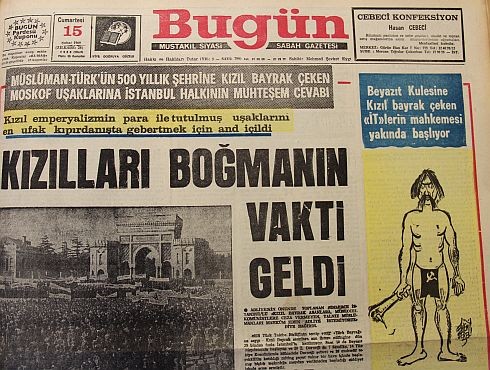
Bugün Newspaper
The newspaper Bugün was one of the principal instruments used in preparing the events of Kanlı Pazar. With the headlines it ran, it paved the road leading to Kanlı Pazar. For this reason, before recounting Kanlı Pazar itself, the newspaper Bugün must be examined, along with the mission it took on at the time and the actors behind it.
It was explained above how, toward the end of the 1960s, Islam increasingly showed itself as a political force. It was likewise only in these years that a segment of the youth began to describe itself as "Islamic youth." The newspaper Bugün occupied a special place in this politicizing environment. It was published between 1966 and 1971. Its chief columnist and most important figure was Mehmet Şevket Eygi. Necip Fazıl Kısakürek, who held a special place within the Islamist milieu, also wrote columns for this newspaper.
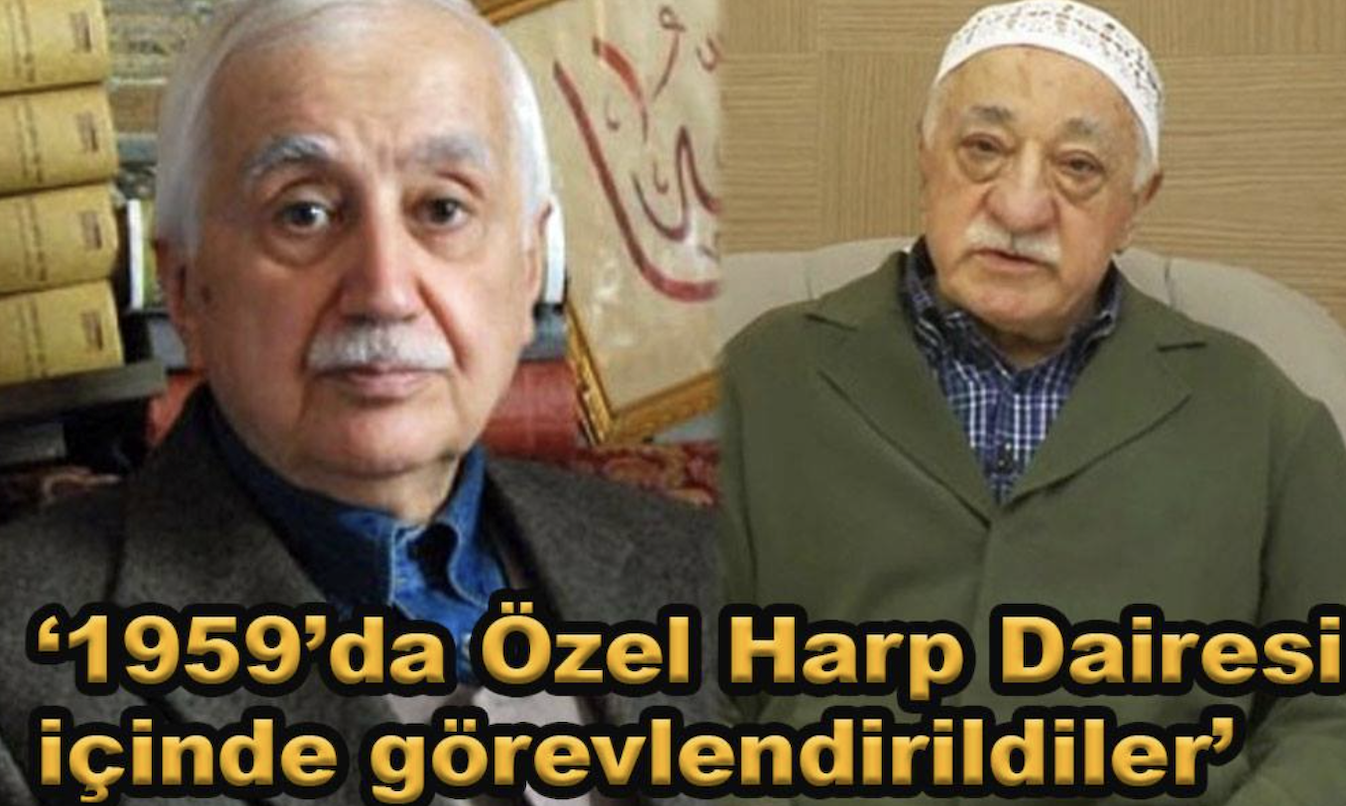
About fifty years after Kanlı Pazar, Eygi made headlines again over a different claim. İsmail Hakkı Pekin, former head of the General Staff's Intelligence Department, stated in 2018 that Eygi had been assigned to the Special Warfare Department in 1959. Eygi denied the claims.
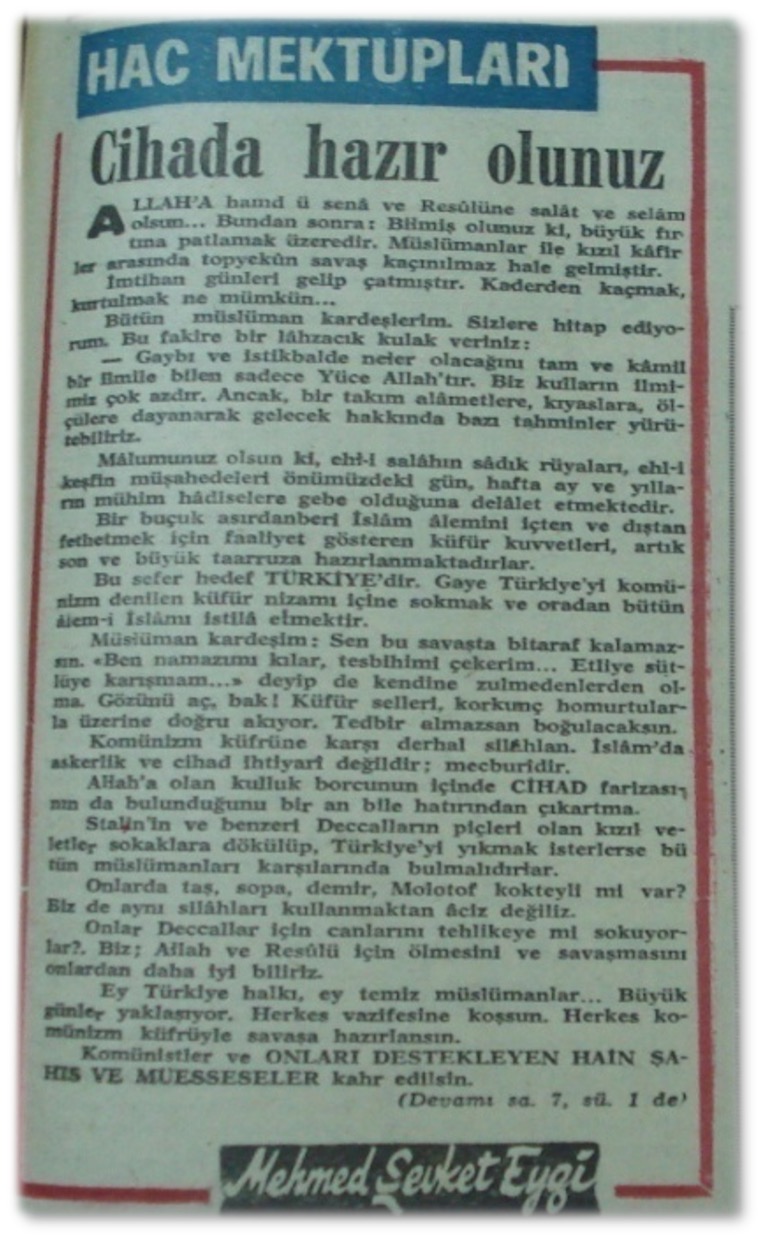
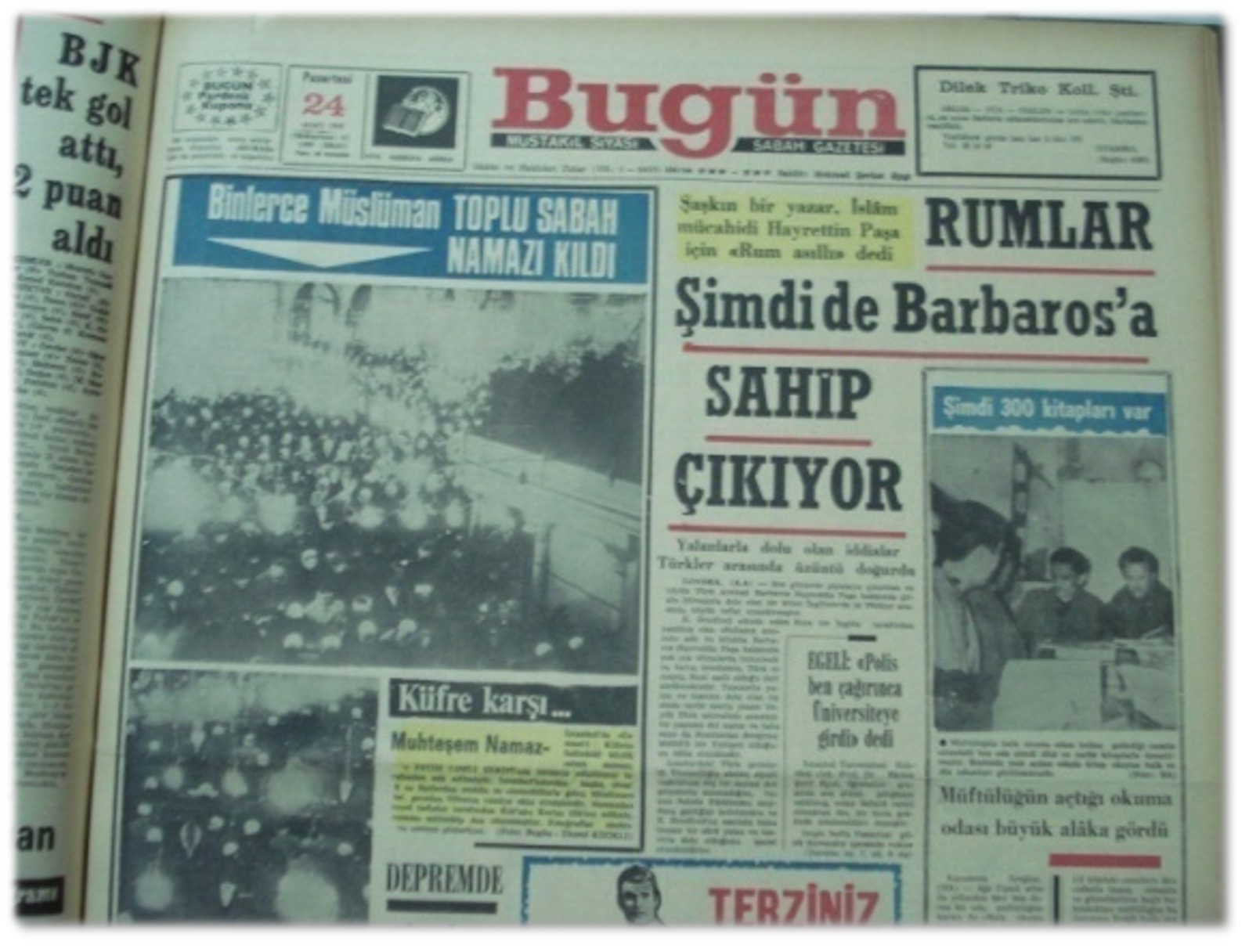
Bugün, with its calls to jihad and the "Cemaat-i Kübra" [Grand Congregation] communal prayers it organized, was, in those years, more than a newspaper — it was a focal point within the Islamist milieu. Through the communal prayers it pioneered and organized, one can speak of a loose "circle around Bugün." Bugün took on the role of spokesman for Islamists, trying to speak on behalf of the Islamist milieu as a whole.
Fethullah Gülen, too, speaks of how widespread the image was, in those days, that Bugün was the only newspaper representing Islam:343
In those days, Mehmet Şevket Eygi Bey was publishing the newspaper Bugün. Its circulation stood above 100,000. At a time when the best-selling newspapers only reached a circulation of 120,000, Bugün's sales of 100,000 was no small matter.
(…) Bugün had the image of being the only newspaper representing Islam in Turkey.
Ali Gevgilili describes the mission this newspaper took on as follows:344
A Sunni faction with roots reaching as far as Saudi Arabia, through the newspaper Bugün under Mehmet Şevket Eygi's direction, organized communal prayers spilling out into the streets on certain days of the week at Istanbul's large mosques. This was, at a deeper level, a new organizational model.
Bugün had taken on the function of programming Sunni orthodoxy on a nationwide scale, developing particular slogans, passwords, and tactics. In the final analysis, a call to Jihad stands on the stage. While this Sunni-rooted action supported the AP and Demirel, it could also write that, although Demirel was not the "expected man," he was the only option available against "the man whose arrival was feared." Eygi's increasingly rising voice in Bugün insistently repeated the following proclamation (Bugün, 16 May 1968, 18 May 1968, 14 April 1968, p. 1):
'They're supposedly going to stage a revolution.
If they go through with it, they'll see what comes of it…'
'Cowardice is death, lack of courage is captivity, and stinginess in the cause is baseness.
O children of this nation who wish to live free! Be watchful and ready against Communism!'
'… This country has an army, a gendarmerie, a police force, a judiciary. But if these forces cannot avert the dangers facing the nation, the state, and the country, the task falls to the people themselves. The worker, the peasant, the tradesman, the civil servant, the student take up their club, their axe, their stone, and do their duty.'
Bugün's proclamations — speaking of an emergency signal flashed by telephone in an instant to thousands, tens of thousands, hundreds of thousands of anticommunists across every corner of the city — did not go unanswered either. As an example, the "Rally to Damn America" that higher-education youth organized in Konya on 24 July 1968 could, in an atmosphere of this kind, turn into a scene resembling a civil war reminiscent of the communist massacre in Indonesia, through an uprising in which teachers' associations, bookstores, and workplaces belonging to the CHP and to circles regarded as progressive were destroyed.
The first communal prayers, which had begun at Dolmabahçe Mosque on 19 May 1968, increasingly took on their real political content by 16 February 1969. Youth and labor organizations, which had obtained a permit to march from Hürriyet Square to Taksim to protest the U.S. Sixth Fleet's visit to Istanbul, came under attack — the moment they reached Taksim — from Islamist militants who, at Bugün's call, had prayed before the Sixth Fleet at the Dolmabahçe and Beşiktaş Mosques, wielding clubs, stones, and knives. This was a bloody Sunday that left two dead and 104 wounded… Crying 'Rise up, O people of Islam, take action!', the newspaper Bugün had drawn a segment of Sunni forces — going, perhaps, even beyond the AP itself — into an international power struggle.
Pro-American, Hitler-Sympathizing Islamists — ed.
What might be meant by having "drawn [something] into an international power struggle"? We are speaking of the 1960s. What comes to mind, then, at the phrase "international power struggle" is the "two poles" of the "bipolar world" — namely, the United States and the Soviet Union. In this struggle between the two poles, the newspaper Bugün's position would be against the Soviet Union and alongside the United States. The paper's two favorite columnists state this quite openly, in any case. For Eygi, America is the "lesser of two evils"345:
In "Democracy-like" regimes under American guidance and tutelage, the people are fed and exploited like egg-laying hens. In the Marxist system, by contrast, "meat-chicken farming" predominates. In the 1960s and '70s, Muslims found themselves forced, unwillingly, to choose the "Ehven-i Şerreyn" [the lesser of two evils].
Necip Fazıl Kısakürek, for his part, explains why they had to side with America in his column in Bugün, under the title "The Necessity of Siding with America"346:
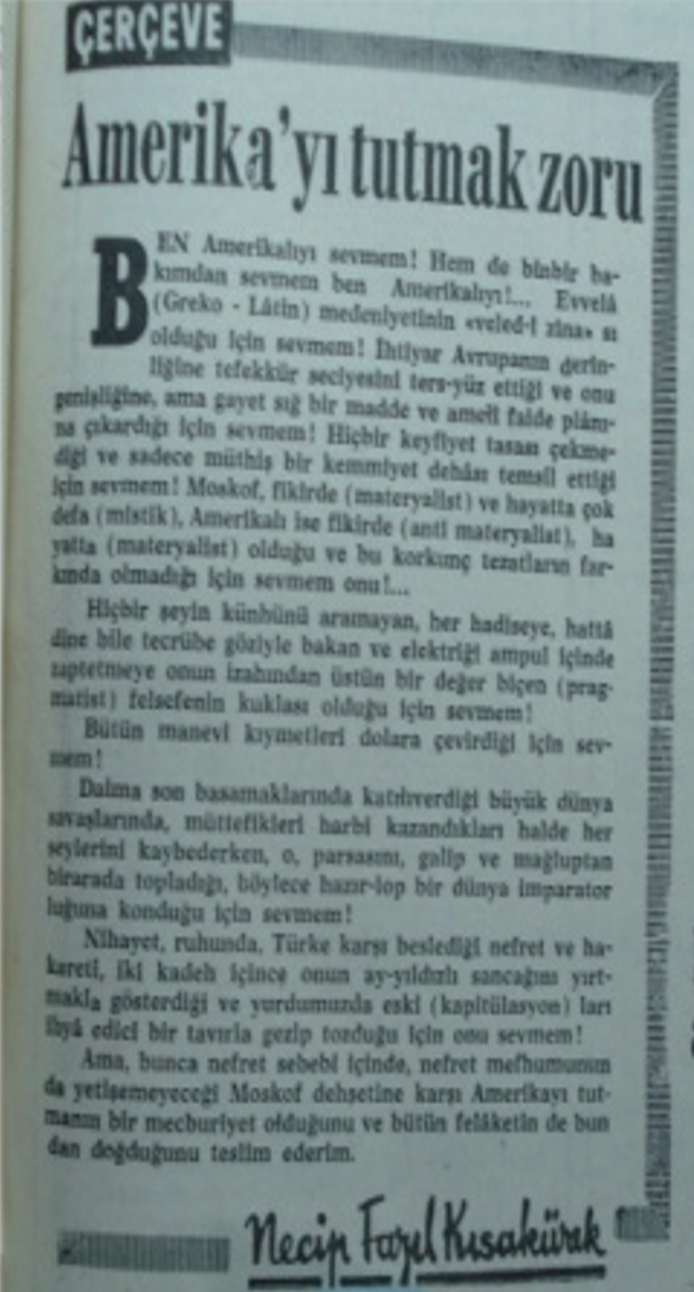
The Necessity of Siding with America
I do not love the American! I do not love the American for a thousand and one reasons!... First of all, I do not love him because he is the "bastard child" of (Greco-Latin) civilization! I do not love him because he inverted old Europe's capacity for depth of contemplation and instead pushed it out into breadth — but onto a rather shallow plane of matter and practical action! I do not love him because he carries no concern for quality and represents nothing but a formidable genius for quantity! I do not love him because the Muscovite is (materialist) in thought and often (mystical) in life, while the American is (anti-materialist) in thought and (materialist) in life, and is unaware of these terrifying contradictions!...
I do not love him because he is the puppet of a (pragmatist) philosophy that seeks the essence of nothing, looks upon every phenomenon — even religion — with the eye of experiment, and assigns capturing electricity inside a light bulb a value higher than explaining it!
I do not love him because, in the great world wars he always joined only at their final stages, while his allies won the war yet lost everything, he collected his take from victor and vanquished alike, and thus landed a ready-made world empire in his lap!
Finally, I do not love him because, once he has had a couple of drinks, he shows the hatred and contempt he harbors in his soul toward the Turk by tearing up our star-and-crescent flag, and because he wanders about our homeland in a manner that revives the old (capitulations)!
But, amid all these reasons for hatred, I acknowledge that siding with the American, against a Muscovite terror that not even the concept of hatred could match, is a necessity — and that the whole calamity arises from this very fact.
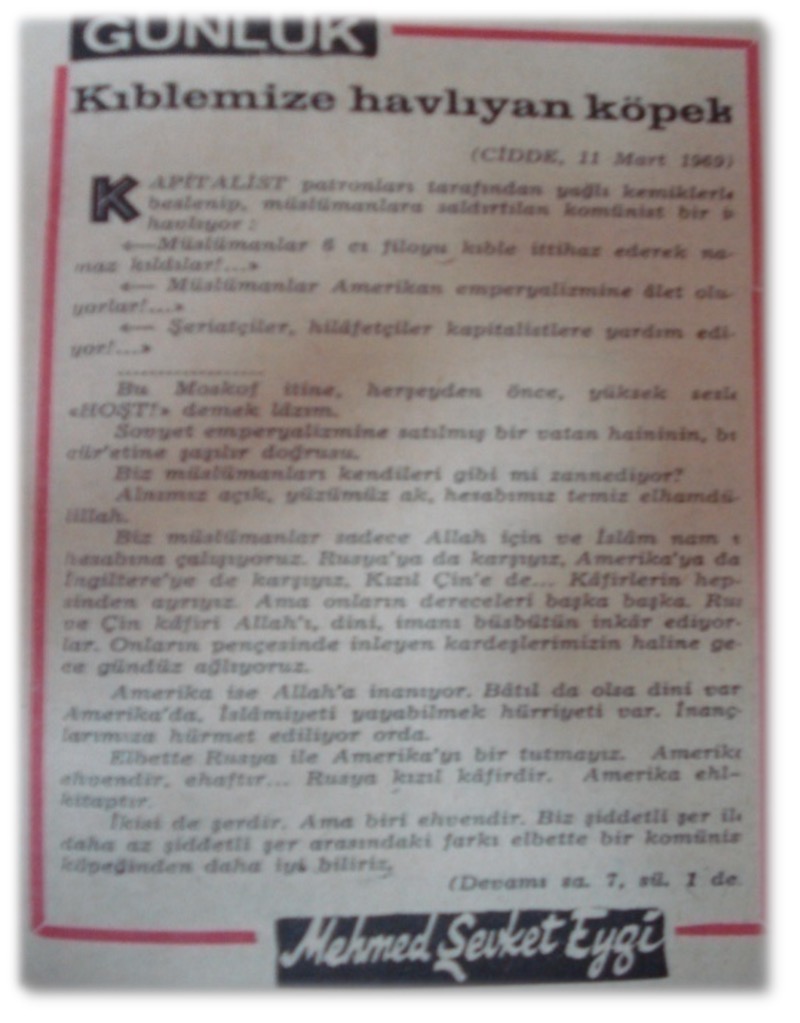
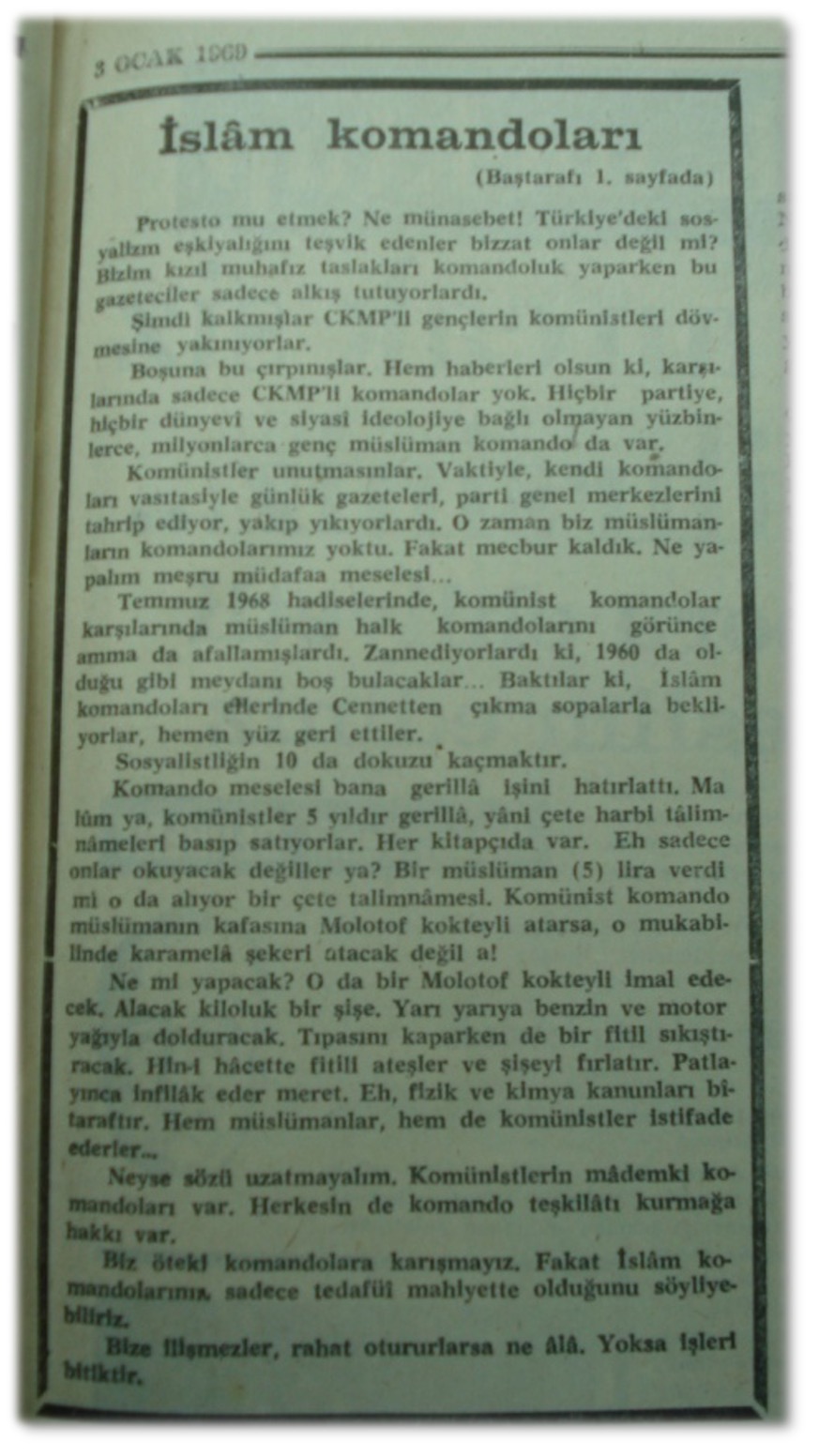
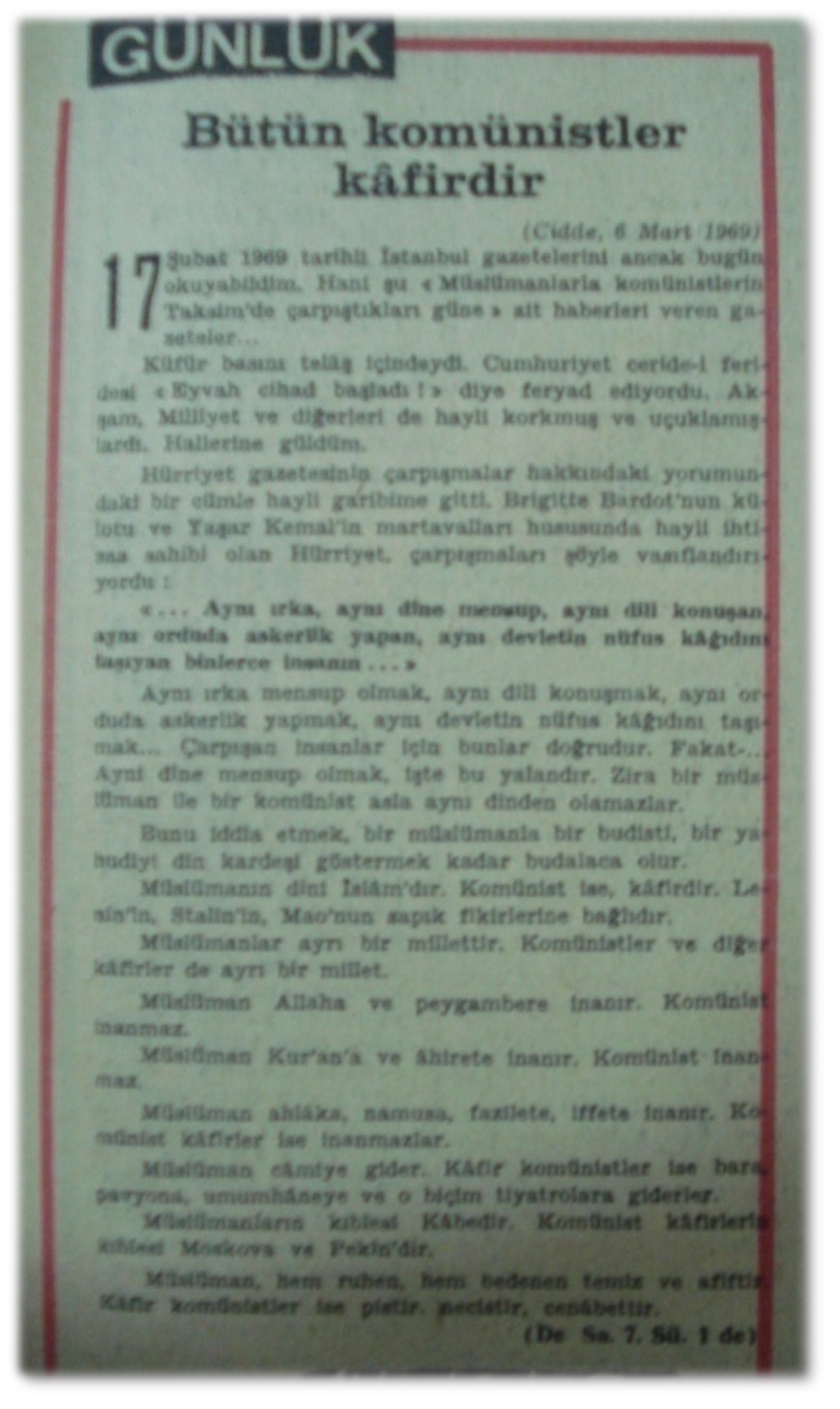
Necip Fazıl Kısakürek, "Amerikayı Tutmak Zoru," Bugün, 10 January 1969As can be understood from the accounts of both Eygi and Kısakürek, anticommunism forms the touchstone of the newspaper Bugün. They themselves tie their own pro-Americanism to this. Looking at Bugün's headlines, its anticommunism shows itself openly:
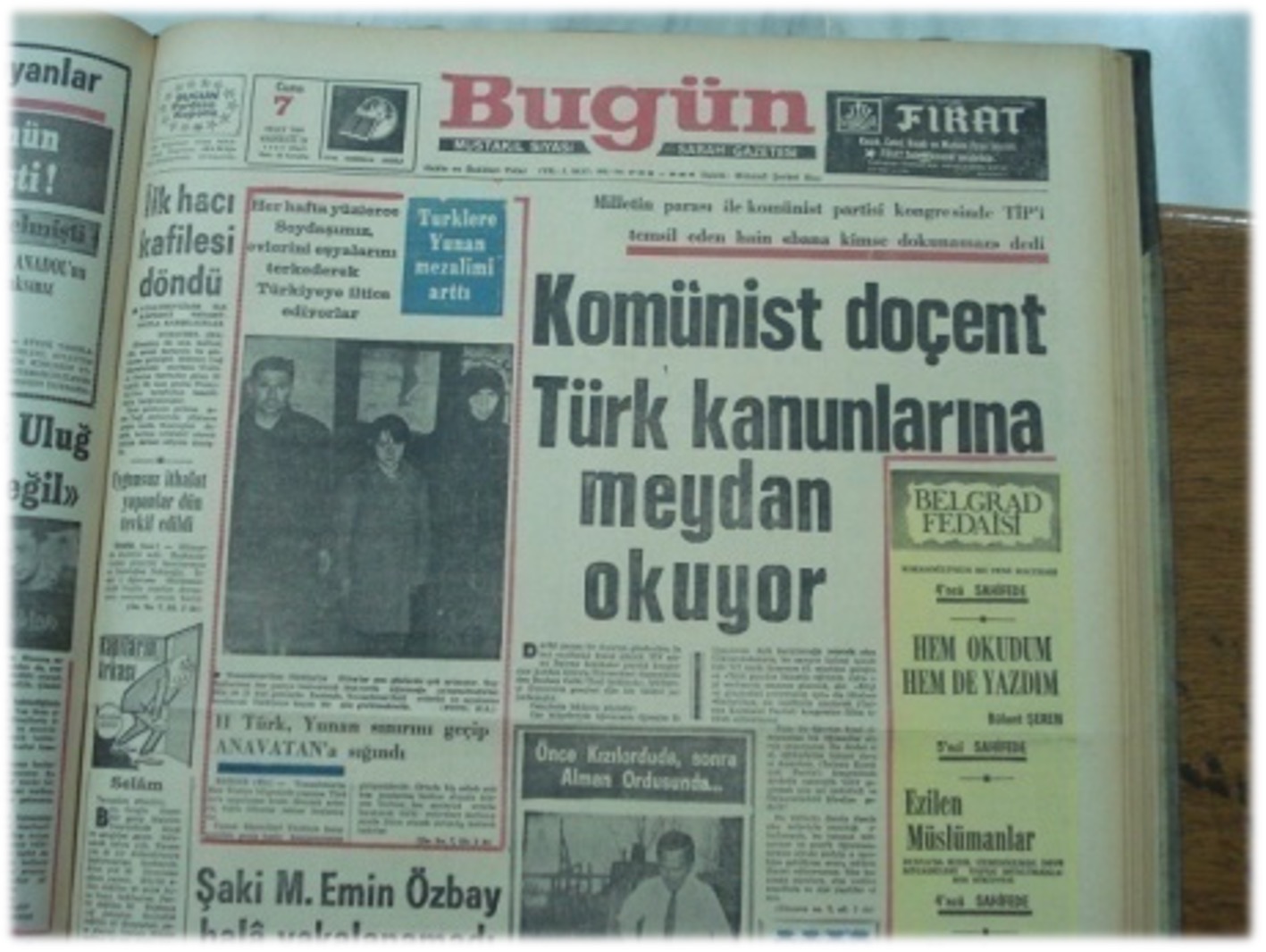
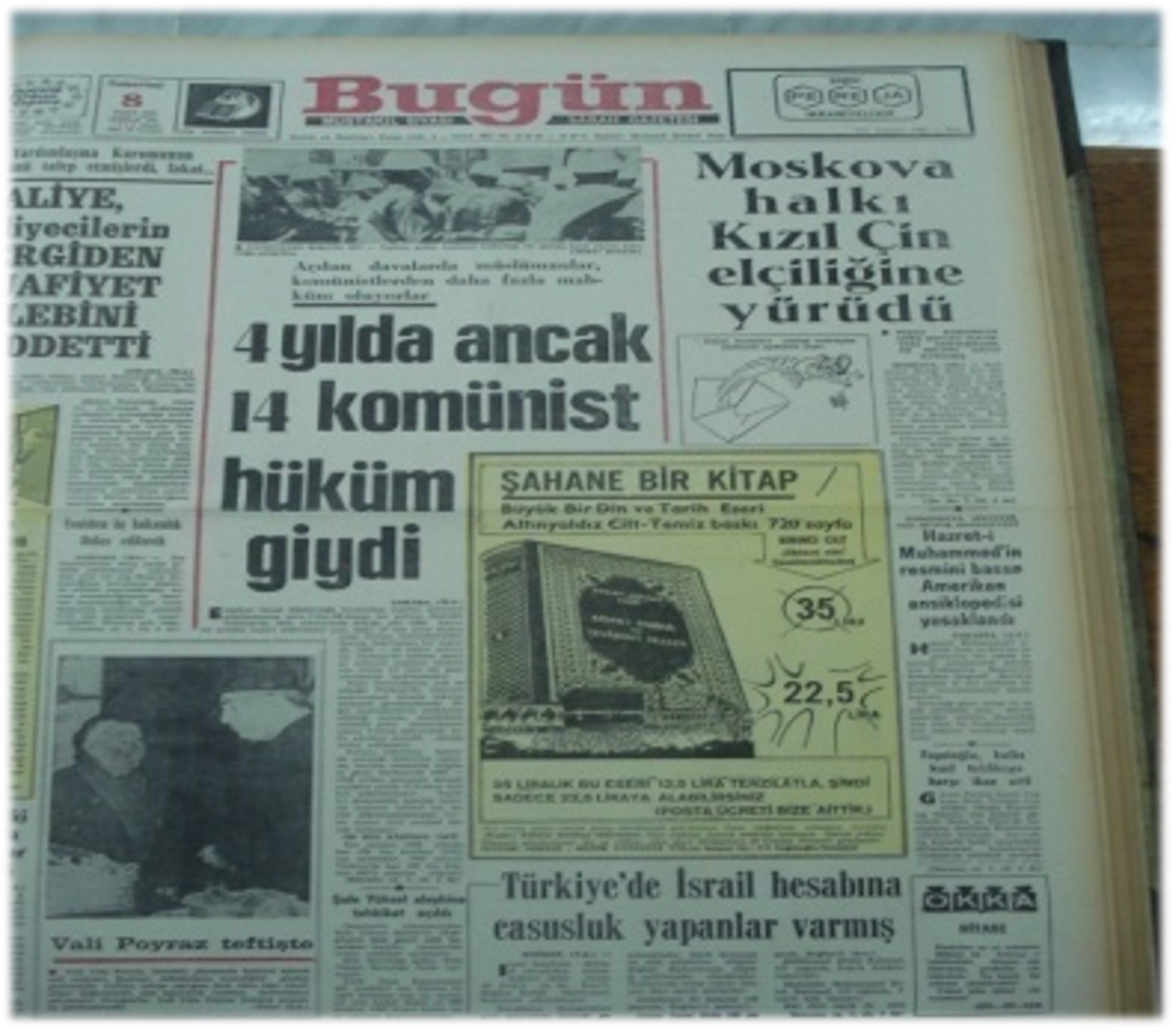
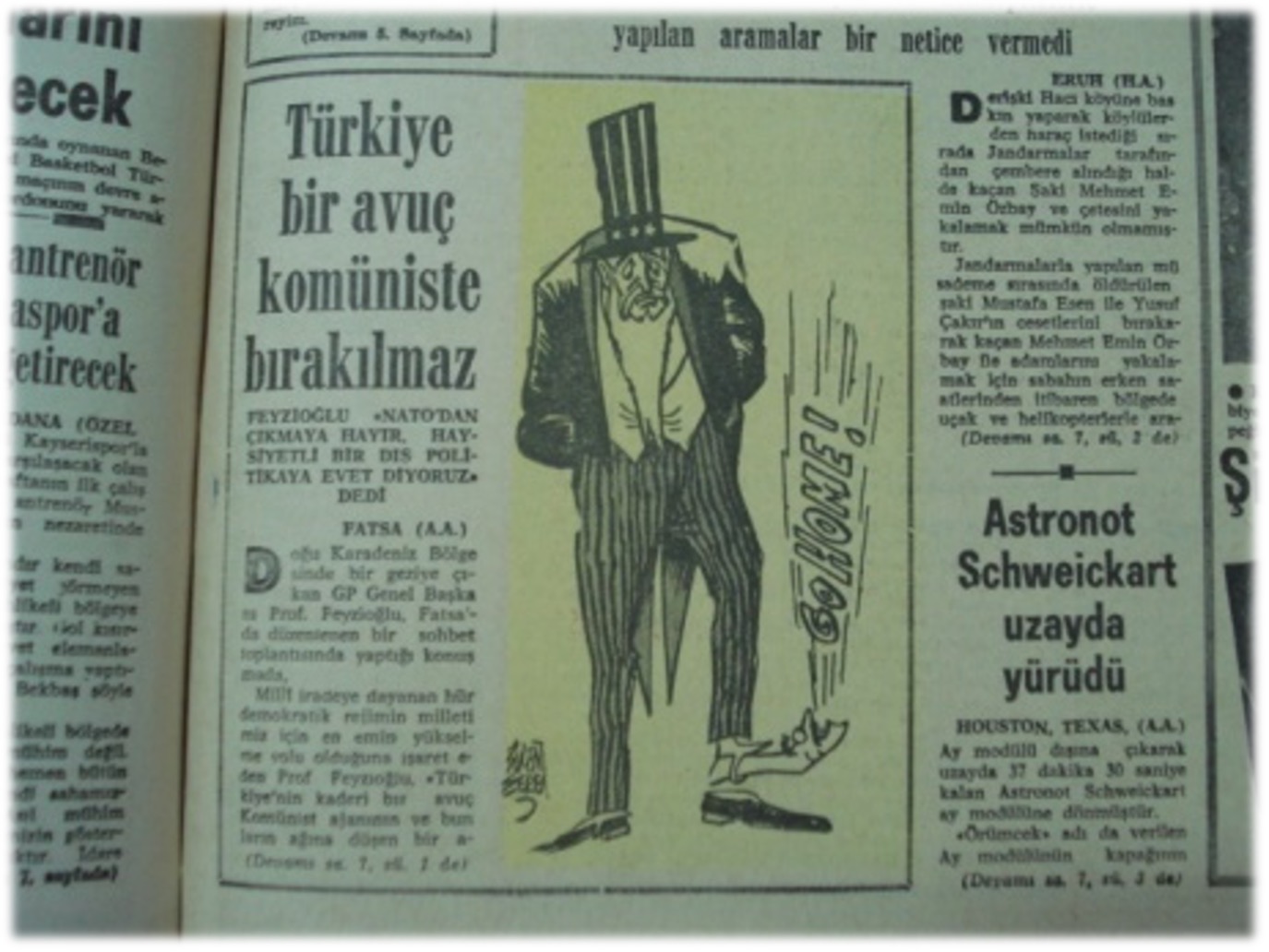
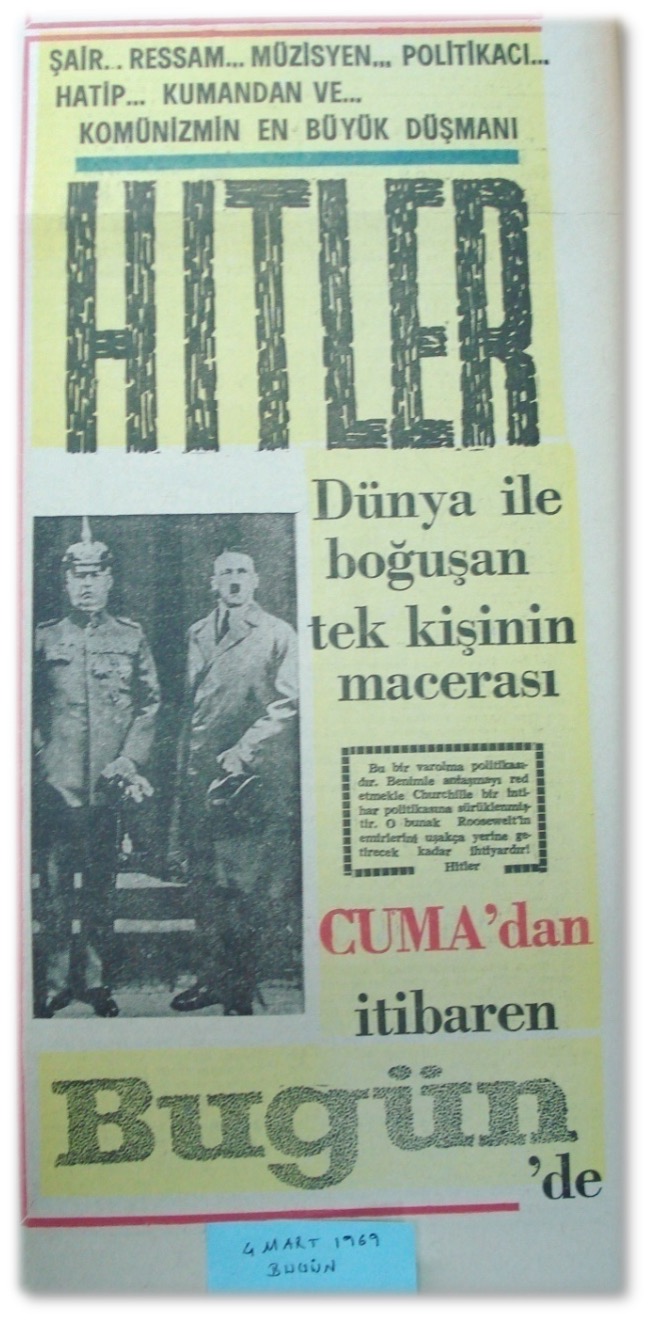
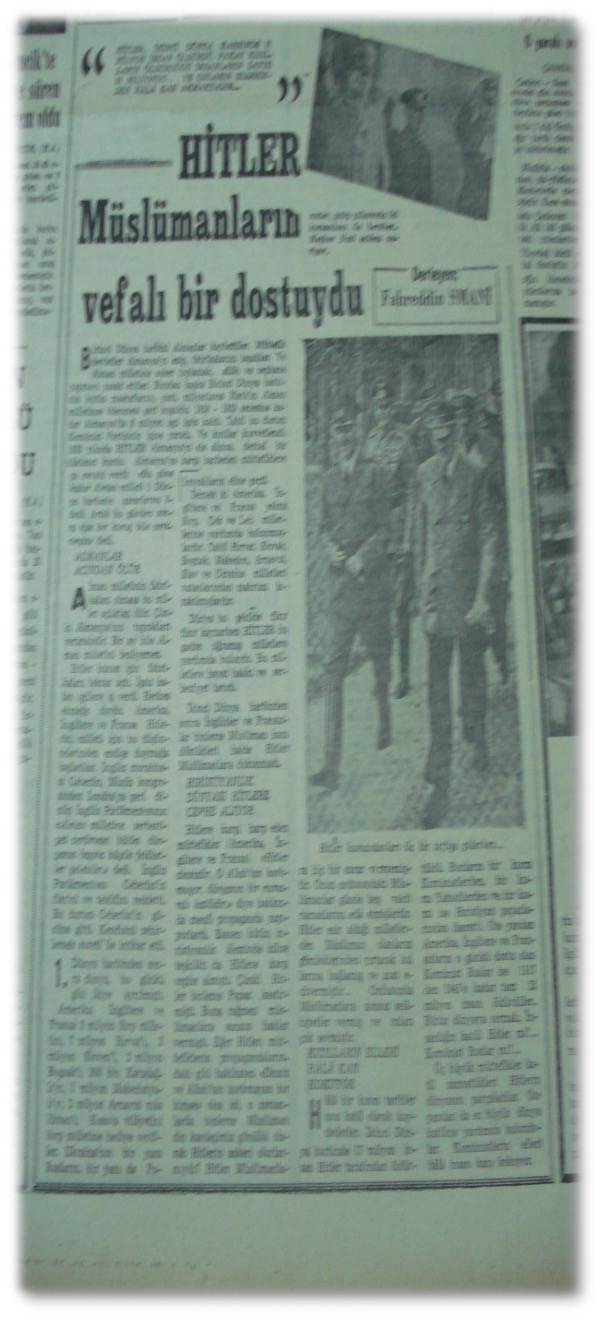
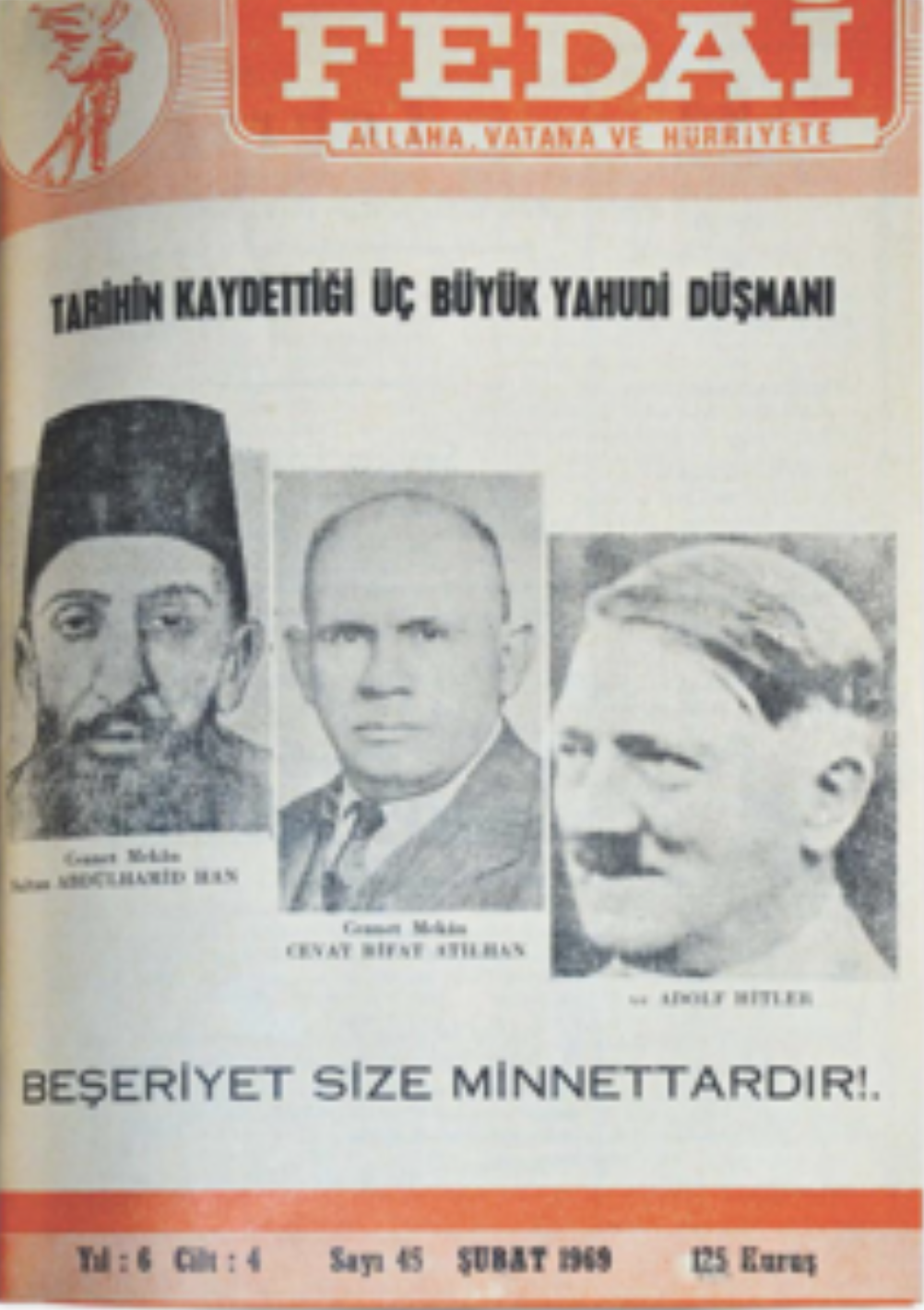
Anticommunism dragged the newspaper Bugün as far as defending Hitler. Bugün even published a series presenting Hitler as "Poet… Painter… Musician… Politician… Orator… Commander and… Communism's Greatest Enemy"347:
Bugün's Headscarf Provocation — ed.
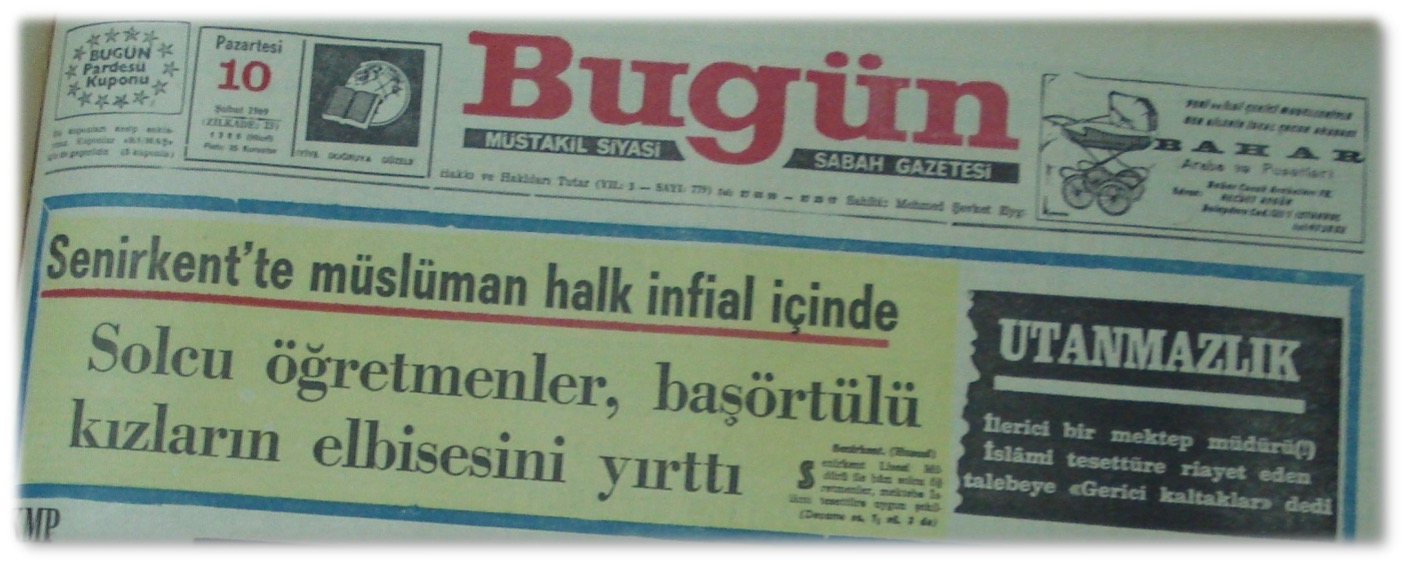
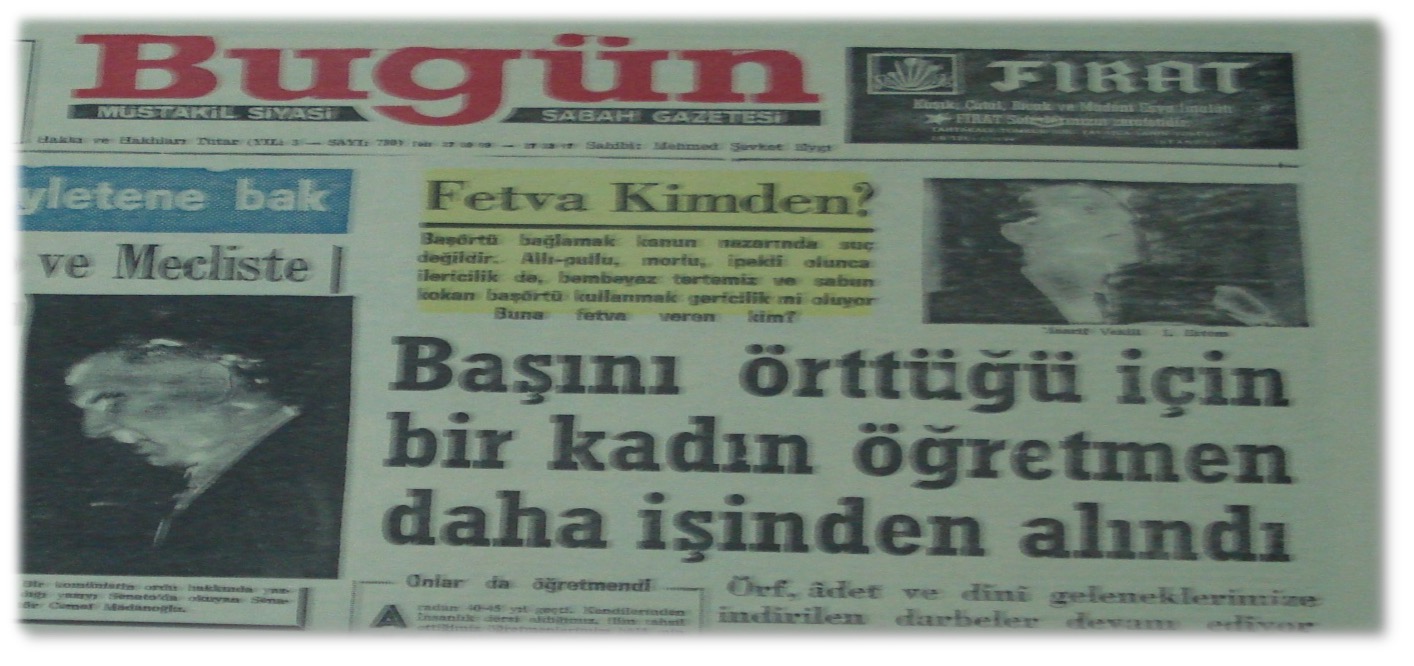
Looking at Bugün's headlines and the way it presented the subjects it ran on its front page, one finds that Islam was presented through the lens of anticommunism, and that a constant state of attack was maintained. The headscarf was used as a vehicle for this as well. Headlines such as "Muslims in Senirkent are outraged. Leftist teachers tore the clothes of girls wearing headscarves," "Shameless. A 'progressive' school principal (!) called a student who observed Islamic modest dress 'reactionary sluts'," and "Yet another woman teacher dismissed from her job for covering her head. Whose fatwa is this?" are examples of this pattern:
Bugün, Patron of the Right Against a Left "Dividing the Country"
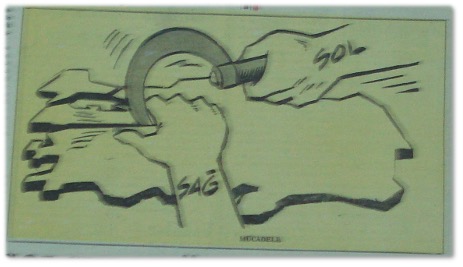
This cartoon, taken from Bugün, sets out the newspaper's view of the left and the right. According to Bugün, the "struggle" underway is one in which the left divides the country and the right stands in its way. As Bugün sees it and presents it, the left is trying to divide the country with the sickle of communism, while the right tries to stop it. The left is a "traitor to the homeland"; the right is a "patriot." While the actions of leftist youth are "treason" and "Russian provocation," the actions of rightist youth are to be applauded, or at the very least excused. This is the outlook found in Bugün. For this reason, Bugün issued calls to jihad against the left, supported the commandos, and never held back from provoking the masses against the left at every opportunity.